Malaysia has some of the most intensely flavoured durian in the world. It also exports a fraction of what Thailand ships. Those two facts are not a coincidence — they are two sides of the same decision made decades ago about how durian should be harvested.
The question of whether Malaysia should adopt plucked (pre-drop) harvesting to compete in the global export market is no longer academic. China's durian import volume has grown substantially through the 2020s, Vietnam secured GACC approval and moved aggressively into the China market, and Thailand continues to ship north of 400,000 tonnes of fresh durian annually. Malaysia, by comparison, exports roughly 22,000 to 35,000 tonnes per year. The gap is wide and growing.
But the answer is not as simple as "copy Thailand." There are real tradeoffs, and the industry's eventual path will likely require holding two different strategies at the same time.
How the Two Methods Work
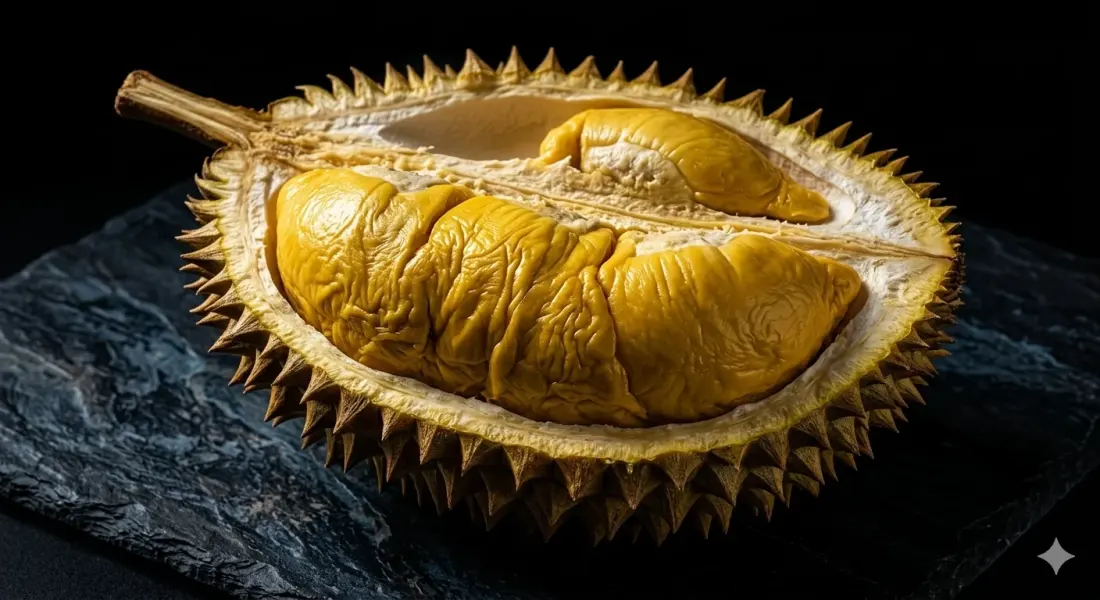
Natural drop — locally called masak gugur — means the fruit is left on the tree until it detaches on its own. At that point, the durian has completed its ripening cycle inside the husk: sugar levels are high, fat content is elevated, and the flesh has developed the layered, complex aroma that defines varieties like Musang King (D197), Red Prawn (D175), and Black Thorn (Ochee).
The result is a fruit with strong character. The flesh is soft, sometimes custard-like, and the aroma can be detected from a distance. For consumers who seek durian specifically for that experience, it is difficult to replicate with anything else.
The downside is logistical. Natural-drop durian has a shelf life of roughly 24 to 48 hours at ambient temperature before quality begins to degrade noticeably. To export it fresh, cold chain is required from the moment it hits the ground. Air freight is almost always necessary — which adds RM 15 to RM 25 per kilogram to the landed cost. That is a significant premium before a single consumer has touched the fruit.
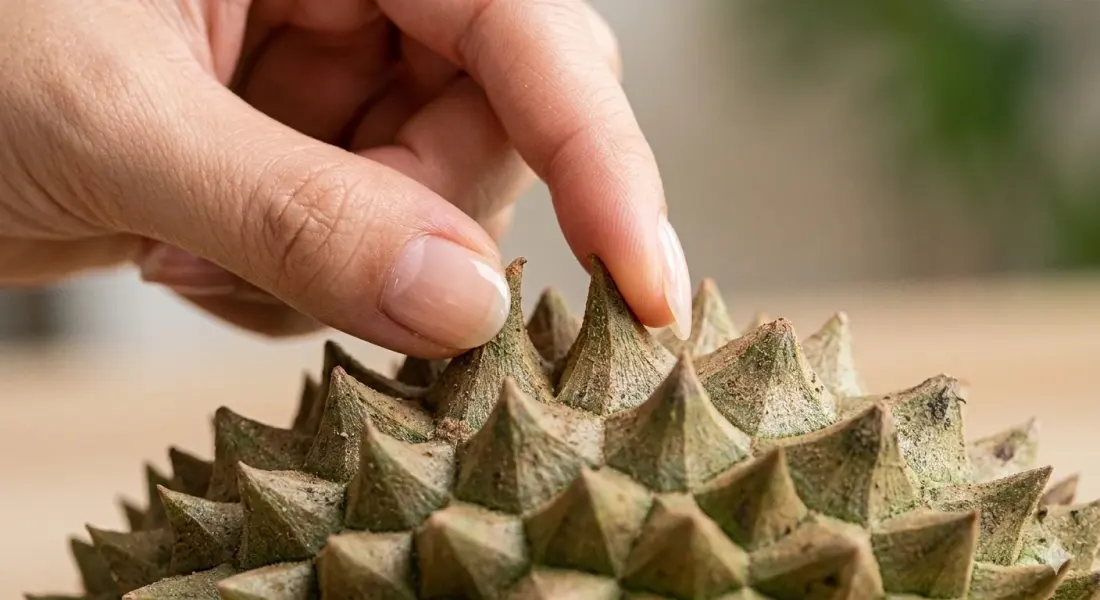
Plucked durian — harvested before natural detachment using physical maturity indicators — is a different product proposition. Thailand developed this system over many years, using markers such as spine separation from the husk surface, drying and browning of the peduncle, and shrinkage of the stalk as proxies for internal ripeness. None of these indicators are as precise as waiting for the fruit to fall, but they are good enough to produce consistent, commercially acceptable quality when applied rigorously.
The commercial payoff: a tougher husk, firmer flesh, and a shelf life that allows sea freight — typically 5 to 7 days — rather than air. Sea freight adds approximately RM 3 to 6 per kilogram. At scale, that difference is what makes Thai Monthong competitively priced in Guangzhou, Shanghai, and Chengdu in a way that Malaysian Musang King simply cannot be in the same volume.
Where Thailand and Vietnam Stand
Thailand accounts for approximately 60 to 70 percent of global durian export volume by value and weight, the majority of it shipped fresh to mainland China. This dominance was built not on producing the most complex-tasting variety but on solving the logistics problem: standardizing grading, developing the maturity index system, building cold chain infrastructure from farm gate to port, and training farmers and exporters to work within that system consistently.
Monthong is the primary Thai export variety. It is lighter than Musang King in flavour — less bitter, less pungent, smoother — which has actually broadened its consumer base among Chinese buyers who are trying durian for the first time or prefer milder profiles.
Vietnam entered the China market seriously in 2022, obtained GACC (General Administration of Customs of China) approval, and rapidly gained market share, particularly in the mid-price segment of the China market where Thai Monthong faces its strongest domestic competition. Vietnamese durian is largely also plucked-method, following Thailand's commercial playbook. The speed of Vietnam's growth has surprised some industry observers.
Malaysia remains the smallest of the three major exporters by volume, despite producing some varieties that command the highest per-kilogram prices. Malaysian fresh durian achieves average export prices 2 to 4 times higher per kilogram than Thai Monthong. But that premium applies to a volume that is orders of magnitude smaller.
Is Plucked Durian Simply Inferior?
Not necessarily, and this is where the question becomes more nuanced.
Natural-drop durian, under normal conditions, produces a more complex aromatic profile and softer texture than pre-drop fruit. That is generally accepted. But the gap between the two depends heavily on execution. Plucked durian harvested too early — before the internal starch-to-sugar conversion is sufficiently advanced — will taste flat and starchy. Plucked durian harvested at the correct maturity index, handled carefully, and kept in proper cold chain conditions can be genuinely good, even if it does not match the peak of a well-ripened natural-drop Musang King.
Thailand's achievement was not making plucked durian equal to natural drop. It was making plucked durian consistently good enough that a very large number of consumers are satisfied with it, and then making it available at a price and at a scale that natural-drop durian cannot match.
The export market, in practice, does not always select for the most intense flavour. It selects for the most reliable, transit-stable, consistently graded product that satisfies the majority of buyers. That is a different optimization target, and it is one that Thailand has pursued very deliberately.
What Would Change If Malaysia Shifted
A full shift to plucked harvesting would require Malaysia to solve several things simultaneously.
The first is technical: developing and implementing a standardized maturity index system calibrated to Malaysian varieties, particularly Musang King and Red Prawn. This is not trivial. Thailand's system was refined over decades and is still not universally applied by all farmers. For Malaysia, where farms tend to be smaller and more fragmented than Thailand's larger commercial operations, getting consistent adoption across thousands of independent smallholders would be a significant undertaking.
The second is infrastructural: shifting from air freight to sea freight requires cold chain logistics that function reliably across the entire supply chain — from harvest point to packhouse, from packhouse to port, from port to the destination market's distribution network. Malaysia's export infrastructure for durian is improving but is not at Thai or Vietnamese scale.
The third is reputational: Malaysia's durian identity in export markets — particularly among Singapore buyers, Hong Kong consumers, and higher-income Chinese buyers — is built on natural drop, strong aroma, and varietal integrity. Shifting to plucked-method production risks diluting that identity if not managed carefully. A Musang King that has been harvested pre-drop and sea-freighted 7 days will taste different from one that dropped naturally and arrived by air 36 hours later. If buyers cannot distinguish between the two, that is one problem. If they can, and they feel misled, that is a worse one.
The Dual-Market Argument
The most discussed alternative among Malaysian industry observers is not a full switch but a segmented approach.
Under this model, natural-drop production continues to serve the premium domestic market and the Singapore retail market, where consumers are willing to pay for the flavour difference and logistics costs are lower given proximity. These markets are also more forgiving of irregular timing — natural drop is seasonal and unpredictable, which is manageable for nearby buyers but difficult for buyers placing container orders weeks in advance.
For the larger China export market — particularly tier 2 and tier 3 cities where price sensitivity is higher and durian is still a growing category — a separate line of controlled pre-drop harvest, targeting specific varieties that respond better to early harvest, could be developed. This allows volume growth without asking Musang King farms to abandon their natural-drop identity.
This is not a novel idea — it describes something like what several Pahang and Johor producers are already exploring informally. But doing it at industry scale requires policy coordination, grading standards, and export certification that does not yet exist in a formalized way for plucked Malaysian durian.
September 2026 Update: The First Sea Shipment of Tree-Drop Durian
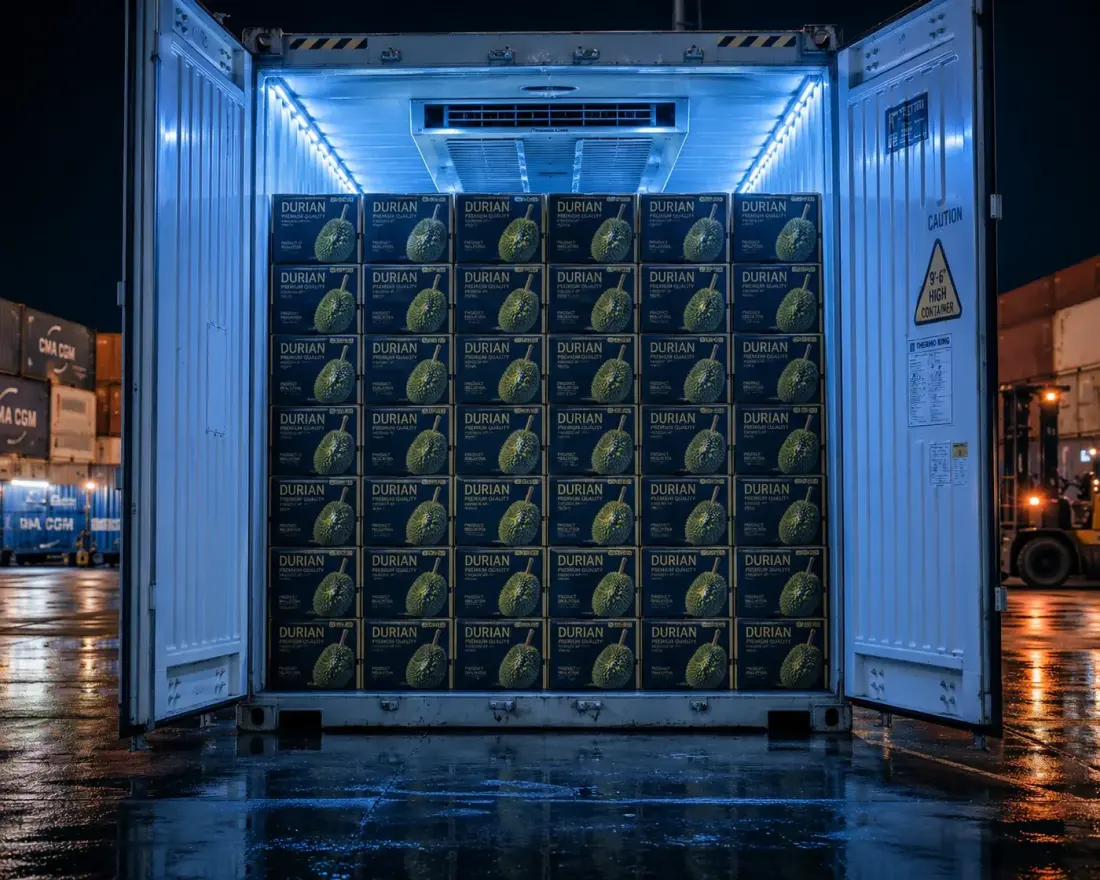
In September 2026, Hernan Corporation, working with Daikin Reefer and Yidu Group, shipped 2 tonnes of tree-drop ripe Musang King and Black Thorn from Malaysia to Dalian, China, by sea. The voyage took 12 days in a controlled-atmosphere (CA) container. According to the companies, the fruit arrived fresh and at a quality comparable to air-freighted durian. Hernan's CEO, Datuk Anna Teo, called it a breakthrough; it was the company's third trial in two years.
Why it matters. The argument in this article was that natural-drop durian ties Malaysia to expensive air freight, because ripe fruit can't survive a long voyage. A CA container balances oxygen and carbon dioxide to slow the fruit's respiration (by about half, the companies say), which is what made a 12-day trip possible without picking the fruit early. If this works at scale, Malaysia may not have to choose between natural drop and sea freight.
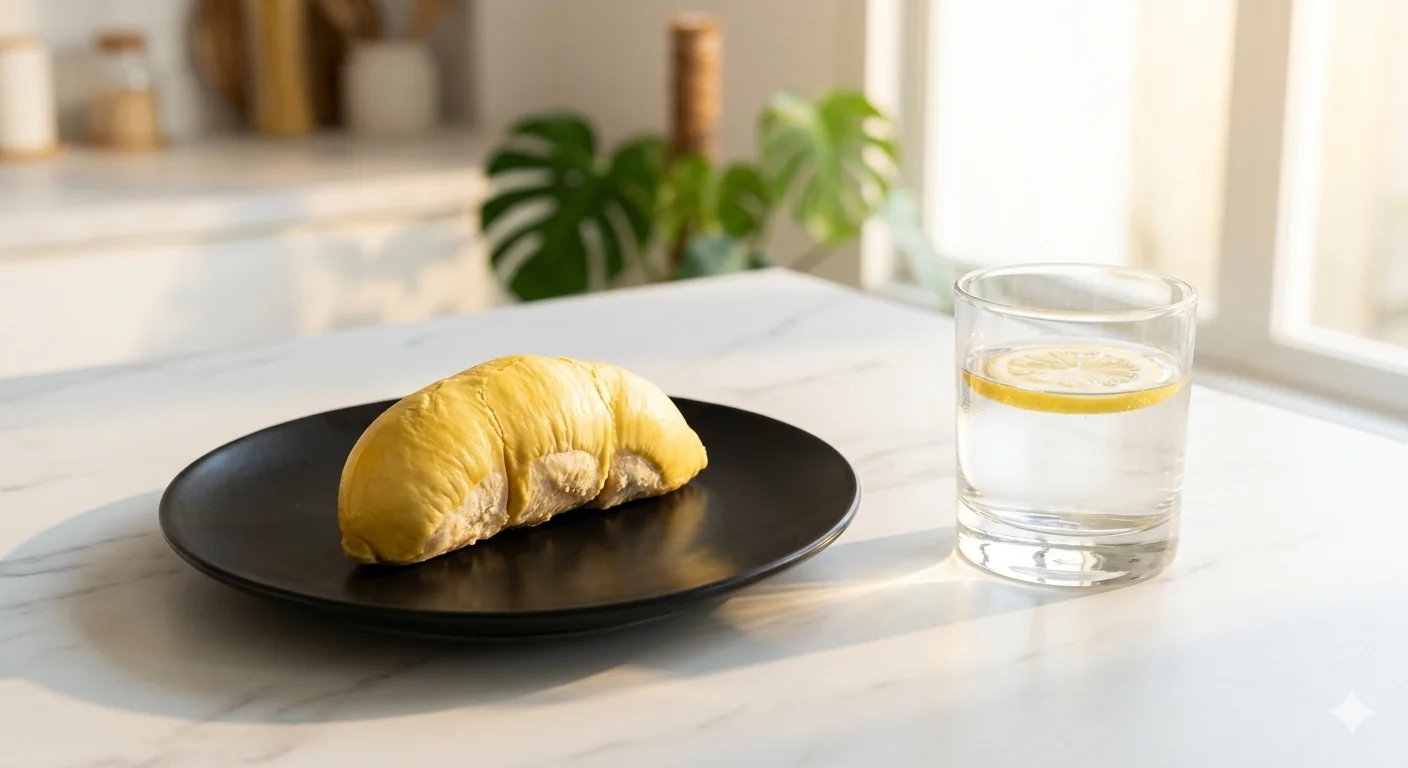
What we see as growers. A dropped durian changes fast. Left at room temperature, especially outdoors in hot weather, the flesh starts to turn watery and loses its freshness. That is why we sell same-day. So we read this trial with interest, not certainty: one 2-tonne shipment is a proof of concept, not a supply chain, and the companies themselves say conditions still need fine-tuning. We do believe the technology will keep improving, and this is the first real sign that ripe, dropped fruit can travel by sea.
What it could mean at home. If sea exports scale up, how much fruit stays in Malaysia will depend on where exporters choose to send it first, and fruit tends to go wherever it earns the most. In a heavy season, that could steady farm-gate prices; in a light one, it could pull premium fruit away from local stalls. For now it is a single trial, and nothing changes at the stall this season. More in will sea-freight durian raise prices in Malaysia?
Sources: The Star, 22 September 2026; Perishable News.
Practical Takeaway
Malaysia is not going to displace Thailand in global durian export volume. That would require farm scale, infrastructure, and government coordination that cannot be built quickly, and Thailand has a multi-decade head start.
What Malaysia can realistically pursue is a higher share of the premium segment within a growing market. China's durian consumer base is still maturing; a segment willing to pay for traceable, high-quality, varietal-specific durian will develop as the market grows. Malaysia is better positioned for that segment than it is for competing on volume and price.
The useful lesson from Thailand is not "pluck your durian" — it is "build your logistics system." Malaysia's air freight dependency for natural-drop exports is expensive partly because the cold chain from farm to aircraft is not as streamlined as it could be. Reducing that cost, even for premium natural-drop exports, would improve competitiveness without asking farms to change what they grow.
A dual-track model — natural drop for premium, controlled pre-drop for volume export — is worth formalizing. But it requires someone in the supply chain to lead the standardization work, and the industry has not yet converged on who that is.
Common Questions
It depends entirely on what you mean by "better." Malaysian varieties like Musang King have a stronger aroma, richer fat content, and more layered bitterness-sweetness than Monthong. But Monthong is milder, more consistent, and widely liked by buyers who find Musang King too intense. They are serving different preferences, not the same one.
The maturity index system needs to be calibrated to each variety. Thailand developed its indicators specifically for Monthong. Applying those same indicators to Musang King or Red Prawn requires separate research, trials, and grower training — and because Malaysian farms are smaller and more dispersed, adoption takes longer.
Partly tradition, partly consumer expectation, and partly economics. Malaysian consumers in the domestic market will reject durian that tastes pre-mature. Farmers who sell locally cannot afford to lose that customer trust. Farmers who export premium to Singapore face the same standard. Only for China bulk export does the calculus potentially shift.
Malaysian Musang King in China typically retails in a range that reflects its air freight cost — often several times higher per kilogram than Thai Monthong at the same point of sale. The freight cost differential alone (RM 15–25/kg air vs. RM 3–6/kg sea) explains a large part of that gap, before farm-gate price differences are even considered.
For the premium segment, not immediately. Vietnam is competing in the mid-price, bulk segment where Thai Monthong was already dominant — it is not yet producing high-quality varietal durian that competes with Musang King. The risk is indirect: as Vietnam grows its China market share, it reduces the market space for Malaysia to expand into lower-cost segments, pushing Malaysia further toward premium-only positioning.
It is very difficult with natural-drop fruit. The flesh is too soft to survive 5–7 days of sea transit even with cold chain, and the aromatic compounds degrade. Some exporters have experimented with modified atmosphere packaging and ultra-low temperature sea freight, but results have been inconsistent. If pre-drop harvest is used, a sea-freighted Musang King would be a different product from its natural-drop version.
A combination of farm area expansion (which is underway in Pahang, Kelantan, and Sabah), logistics infrastructure investment, and development of a formal pre-drop export certification system for varieties suited to sea freight. Volume doubling is achievable over a decade; doing it without degrading the premium reputation requires careful segmentation of which product goes where.
MARDI and FAMA have run programs on post-harvest handling and export market development, and there are periodic industry dialogues. But a formal dual-track export standard — distinguishing natural-drop premium from controlled pre-drop bulk — has not been officially codified. Industry observers describe the current situation as "informal experimentation at scale," which is not the same as a coordinated strategy.
Want to try fresh durian from our farm? We grow it at our own Bukit Serampang orchard in Tangkak, Johor, and sell it at our Melaka Mall stall. Stock varies daily — WhatsApp to confirm availability before you visit.
Ask About Today's Fruit