Key Takeaways
- D197 Musang King has a bitter-sweet (gam-pahit) flavour — the bitterness is a feature, not a defect.
- Ask for DOA registration D197 and a farm source — these are the only reliable authenticity checks.
- Main season in Johor is June–August; off-season runs December–February at lower volume.
- Fair farm-gate price: RM35–55/kg in season. Anything suspiciously low is worth scrutinising.
- Visual check: flesh should be turmeric-gold to deep gold, never pale white or grey.
Musang King is the variety every durian conversation eventually comes back to. It commands the highest prices, generates the most social media content, and suffers the most mislabelling in Malaysia's durian trade. Walk through any wet market during June and you'll see stalls selling "Musang King" at RM18/kg that is plainly not D197. Knowing what the real thing looks and tastes like isn't a matter of connoisseurship — it's basic consumer literacy.
We grow D197 at our farm in Bukit Serampang, Tangkak, Johor. What follows is what we know from harvesting it directly — not from marketing materials.
What Is Musang King? The DOA Registration Explained
Musang King is Malaysian Department of Agriculture (DOA) registered variety number D197. The name originates from Gua Musang in Kelantan, where the variety was first commercially propagated. Its Mandarin name is 猫山王 (Māo Shān Wáng) — literally "Cat Mountain King" — and its Malay name is Raja Kunyit (Turmeric King), referring to the flesh colour.
D197 trees are vegetatively propagated (grafted or budded from verified parent stock), meaning every genuine Musang King tree is a clone of registered parent material. Wild seedlings sold as "Musang King" or unregistered local varieties sold under the D197 name are misrepresentations — common and difficult to enforce, but real.
Honest note: DOA registration is not a guarantee of taste consistency. D197 from a young tree on sandy soil will taste different from a 30-plus-year tree on the loam of Bukit Serampang. Registration confirms genetic identity, not quality. You need both — verified D197 and a known, quality farm source.
The Taste Profile: What Real D197 Actually Tastes Like
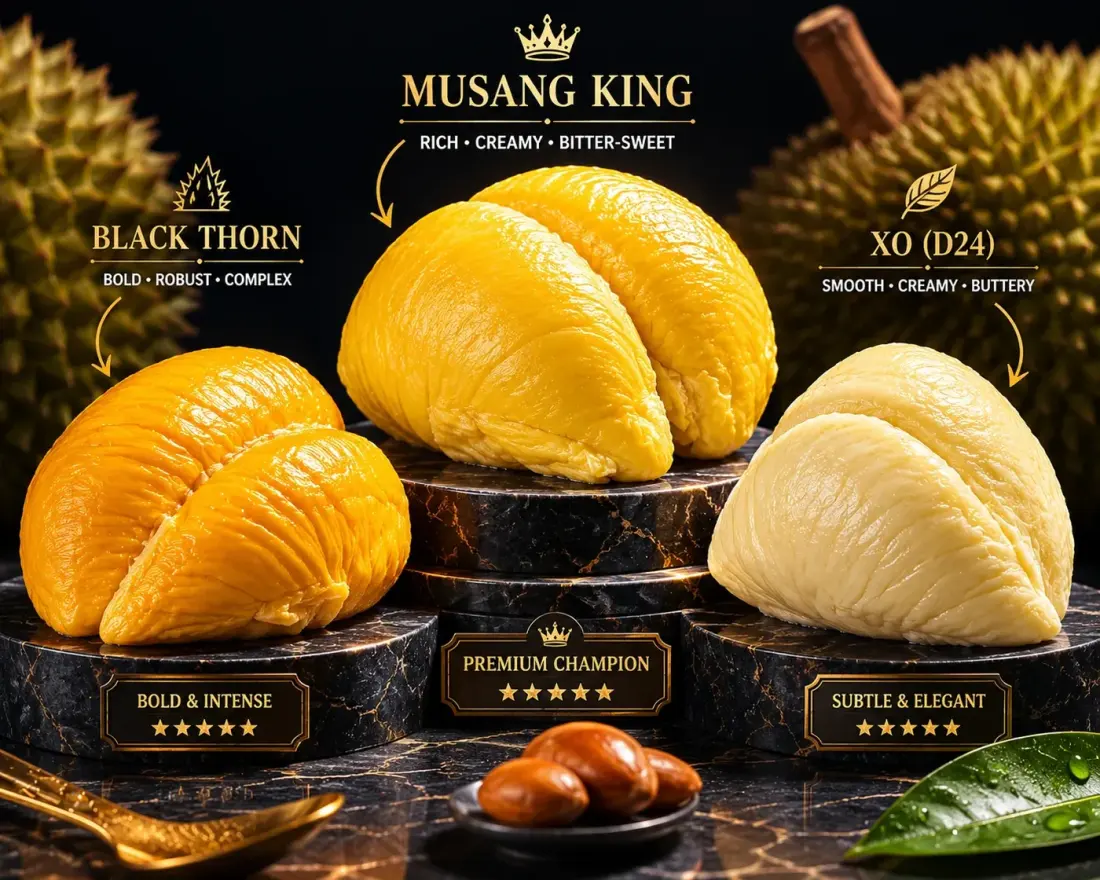
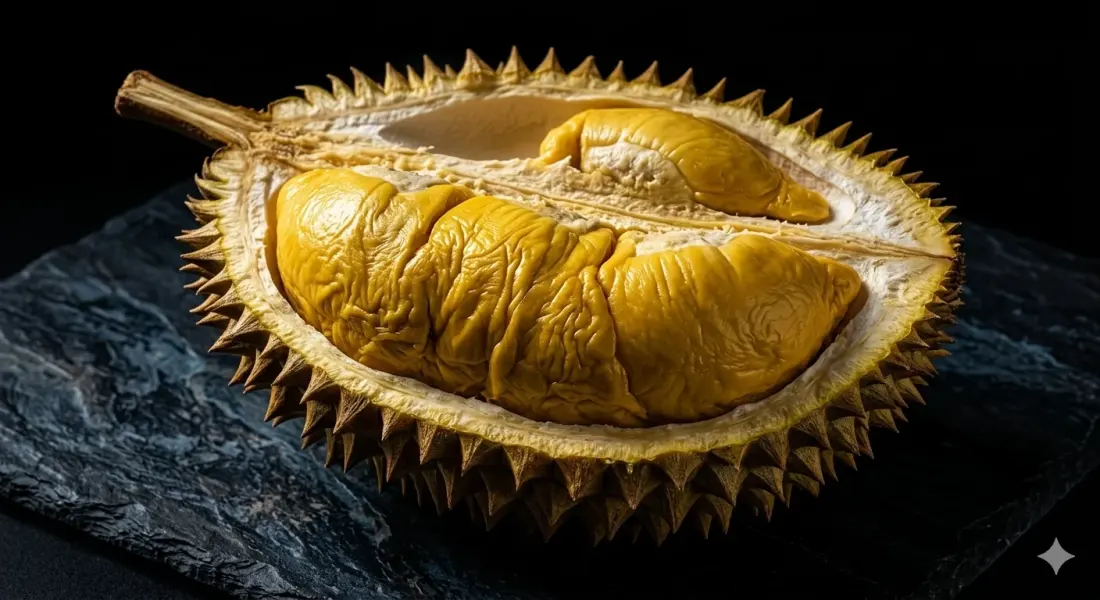
Genuine Musang King has a flavour profile described in Cantonese as gam-pahit (甘苦) — sweet-bitter. The flesh is dense and creamy with almost no fibre, pressing cleanly between the fingers. Aroma is pronounced and persistent: sulphuric compounds at the front, followed by a custard-like depth.
Brix (sugar content) measurements in fully-ripened D197 typically range from 37% to 48%. The high end requires optimal conditions: mature trees (15+ years), good season timing, and natural drop rather than forced harvest.
The Bitterness Is Not a Defect
First-time eaters expecting pure sweetness are sometimes surprised by the bitter finish. This is correct D197 character. The bitterness comes from volatile sulfur compounds and organic acids in the flesh and is part of what makes Musang King distinctive from sweeter varieties like D13 or D168. Experienced buyers actually seek out the bitter note as a quality marker — a Musang King that's purely sweet is often either a different variety, or harvested too early.
"A Musang King that tastes purely sweet is often not Musang King at all."
Flesh Colour: The First Visual Check
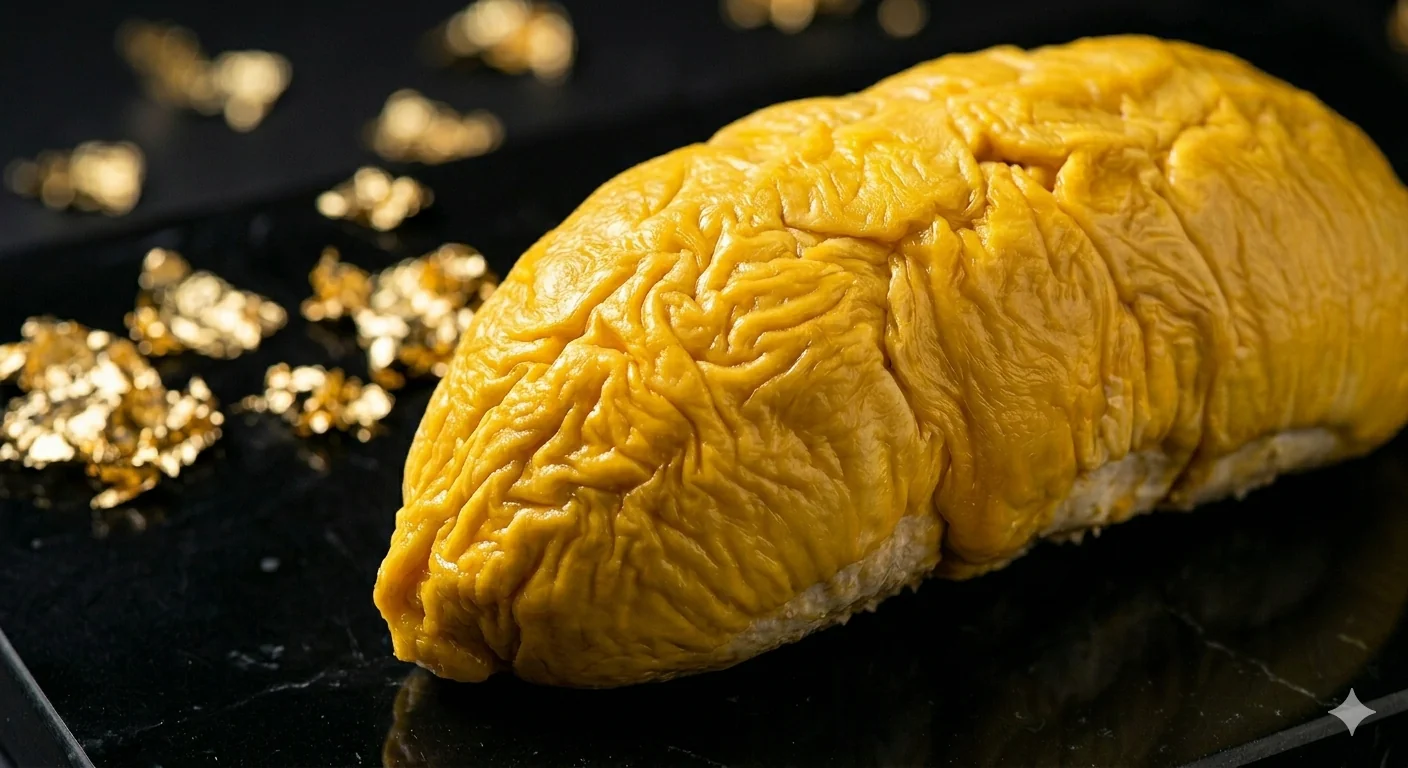
The single most reliable visual indicator is flesh colour. Genuine D197 should be turmeric-gold to deep amber-gold. The yellow is vivid — comparable to egg yolk. Pale yellow, cream-white, or grey flesh indicates either a different variety or very early-season fruit that hasn't developed properly.
How to Identify Real Musang King: A Practical Checklist
- Ask for D197 registration. A legitimate seller sourcing from registered farms can tell you this. If they don't know what D197 means, that's informative.
- Check flesh colour before buying. Ask to see a cut fruit or a photo from the same batch. Turmeric-gold — not cream, not pale yellow.
- Smell the husk. Musang King has a strong, distinctive aroma even through the shell. If you can't smell it, it's either not ripe or not D197.
- Star base pattern. The underside of the husk where the fruit tapers to a point typically shows a clear 5-pointed star pattern on genuine D197. This is not foolproof but is consistent with well-grown specimens.
- Question low prices. RM18–25/kg during main season is too low for genuine, quality D197. It may be real but harvested green, or it may be mislabelled.
- Know the farm source. The most reliable approach: buy from a grower or a stall that can name the orchard. Our stall at Melaka Mall sells only from our Bukit Serampang farm — we can describe the trees.
Musang King Season Calendar (Johor / Peninsular Malaysia)
| Period | Region | Supply Level | Price Range |
|---|---|---|---|
| June – August (Main) | Johor, Pahang | Peak — full supply | RM35–55/kg |
| May / September (Shoulder) | Johor, Pahang | Early or tail-end, smaller fruit | RM40–60/kg |
| December – February (Balik musim) | Pahang, some Johor | Limited — 15–25% of main season volume | RM55–80/kg |
| March – May (Off-season) | Peninsular Malaysia | Very limited or unavailable | RM70–100/kg if available |
Honest note on seasons: These are typical patterns, not fixed dates. Season timing shifts by 2–4 weeks year to year depending on the prior year's rainfall. A prolonged dry spell before the flowering period triggers heavier, earlier fruiting. The only reliable way to know availability is to contact a grower or stall directly.
What Drives Musang King Prices
Several factors push prices up or down independent of variety authenticity:
- Tree age. Older trees (20+ years) produce more complex, higher-Brix fruit. Young trees are cheaper to source but produce inferior Musang King. The price differential between young-tree and old-tree D197 is real but rarely communicated at the stall.
- Season timing. Peak-season fruit (July in Johor) is abundant and priced correctly. Early-season and tail-end fruit commands a premium despite often being lower quality.
- Supply chain length. Fruit sold direct from orchard to stall loses one to two middlemen markups. The same fruit will cost 20–40% more at a Kuala Lumpur supermarket than at a Tangkak roadside stall.
- Drop vs cut. Naturally fallen durian — harvested only when the fruit separates from the tree — commands a premium because it guarantees full ripeness. Forced-cut fruit does not.
How to Choose a Good Musang King at the Stall
Once you've confirmed you're buying genuine D197, these checks help you select a well-developed fruit:
- Weight vs size. A fruit that feels heavy for its size has dense flesh. Light-for-size fruit has thicker husk relative to flesh (lower yield).
- Stem condition. Fresh drop: stem end still moist with natural separation scar, not clean-cut. Cut stems may indicate forced harvest.
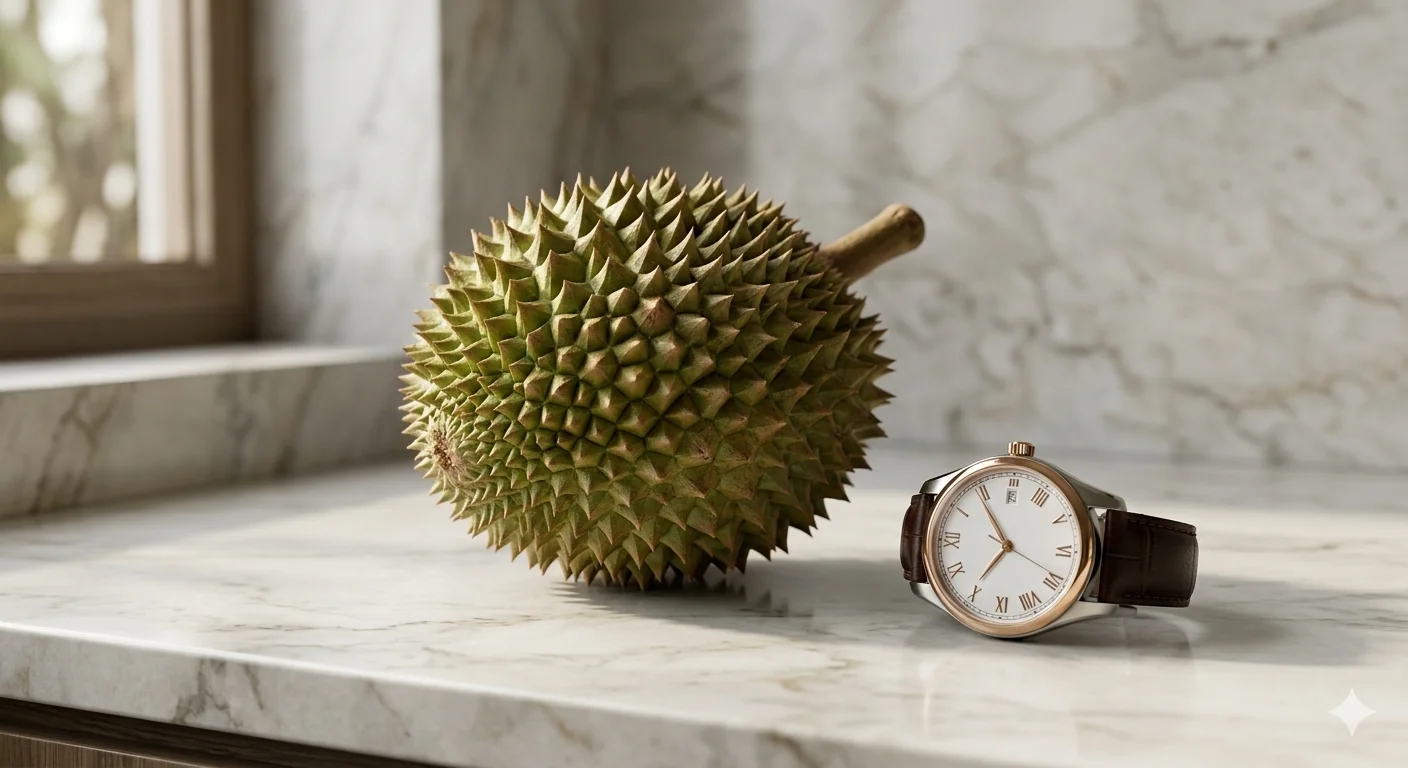
- Spine spacing. Musang King spines are arranged in clusters with clear groupings — five spines meeting at a point. Tight, uniform spines are a good sign.
- Sound. Shake the fruit gently. A slight, soft rattle (not loud knocking) suggests the flesh has separated from the shell — ready to eat. No sound means it's either still tight on the shell (not fully ripe) or overripe.
- Smell. Strong, complex aroma through the husk is correct. Faint smell means under-ripe. Sour or fermented smell means overripe.
Common Questions
Real D197 Musang King has a complex bitter-sweet profile — described in Cantonese as gam-pahit (sweet bitter). The flesh is turmeric-gold, dense, and creamy with a strong, persistent aroma. Brix readings range from 37% to 48% depending on tree age, soil, and season timing. It is never purely sweet — the bitterness is a hallmark, not a flaw.
Ask for the DOA registration number D197. Real Musang King comes from registered trees — the seller should be able to tell you the farm or at minimum the district. Visual checks: turmeric-yellow to deep gold flesh (not pale white), star-shaped husk base, pronounced aroma before cutting. Price is not a reliable indicator — both authentic and fake D197 are sold at RM35–55/kg.
Main season in Johor and Pahang is typically June–August. A shorter off-season (balik musim) run occurs around December–February but supply is limited. Exact timing shifts year to year depending on rainfall. In Tangkak, Johor where our trees are, main season peaks in July.
Farm-gate or direct stall prices for genuine D197 during main season: RM35–55/kg. Off-season prices: RM55–80/kg due to scarcity. Anything under RM25/kg during main season warrants scrutiny about authenticity or harvest method (cut vs drop).
Yes — all three names refer to the same variety: DOA-registered D197. Musang King is the English/Malay name; Mao Shan Wang (猫山王) is the Mandarin name; Cat Mountain King is a literal English translation of the Chinese. Same fruit, same registration.
Want to try genuine D197 from the tree? We grow Musang King at our own Bukit Serampang orchard in Tangkak, Johor, and sell it at our Melaka Mall stall. Stock is seasonal and varies daily — WhatsApp before you visit to confirm availability.
Check Today's Availability