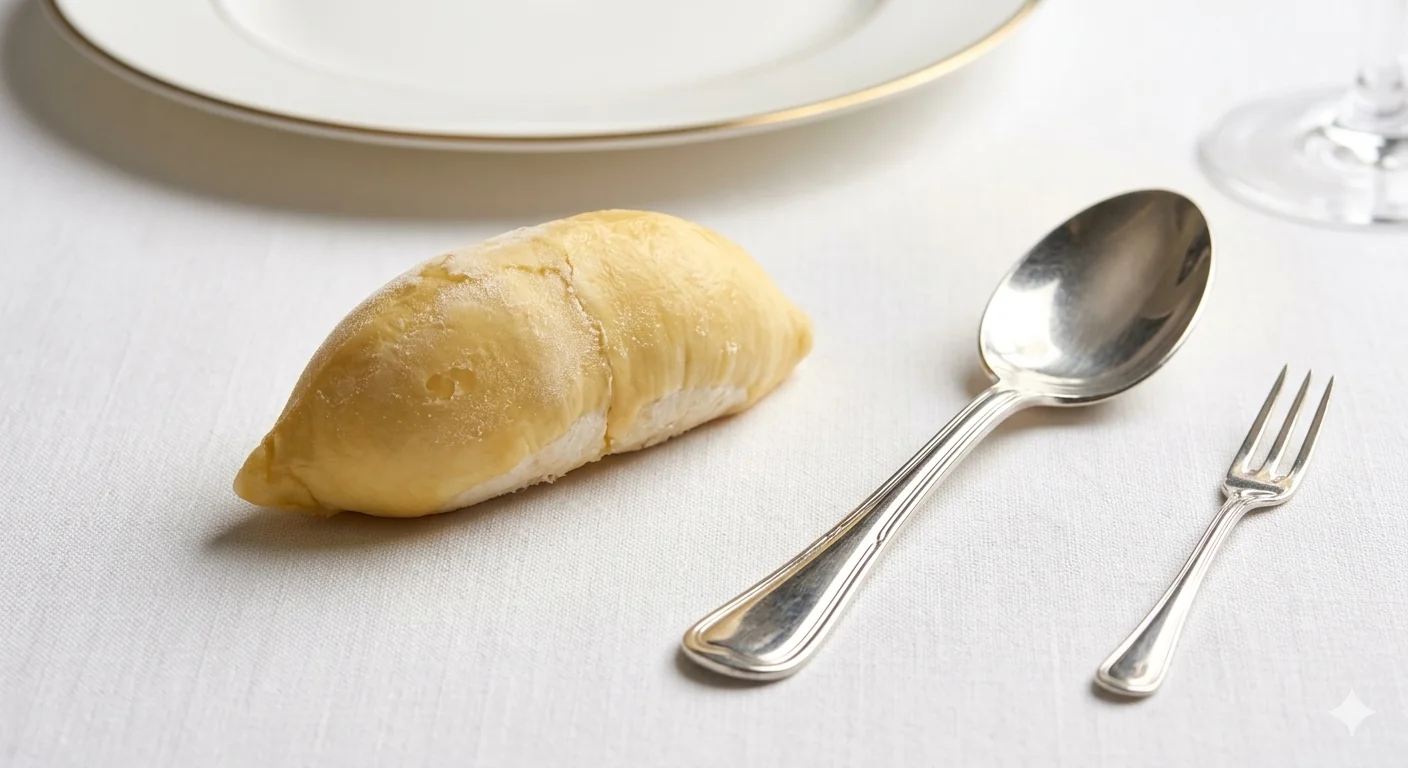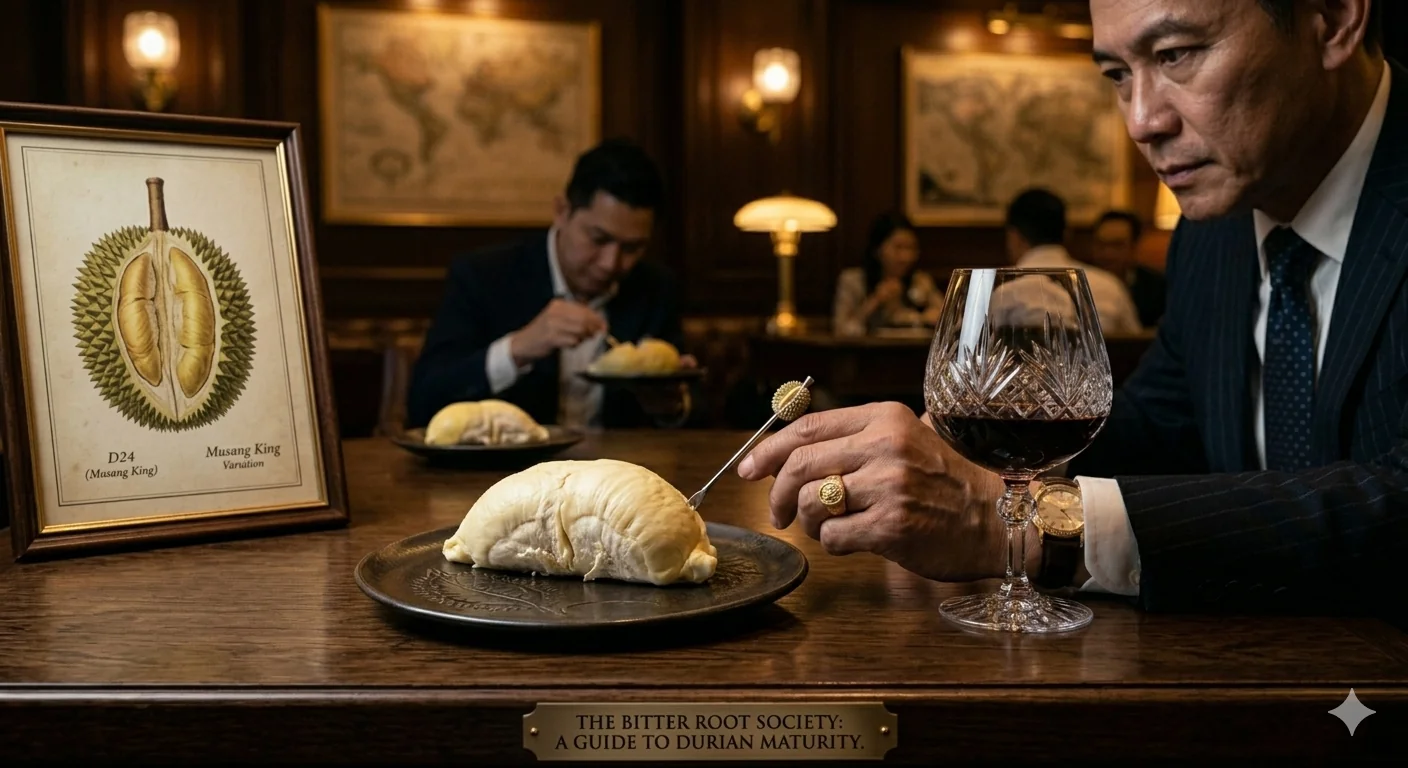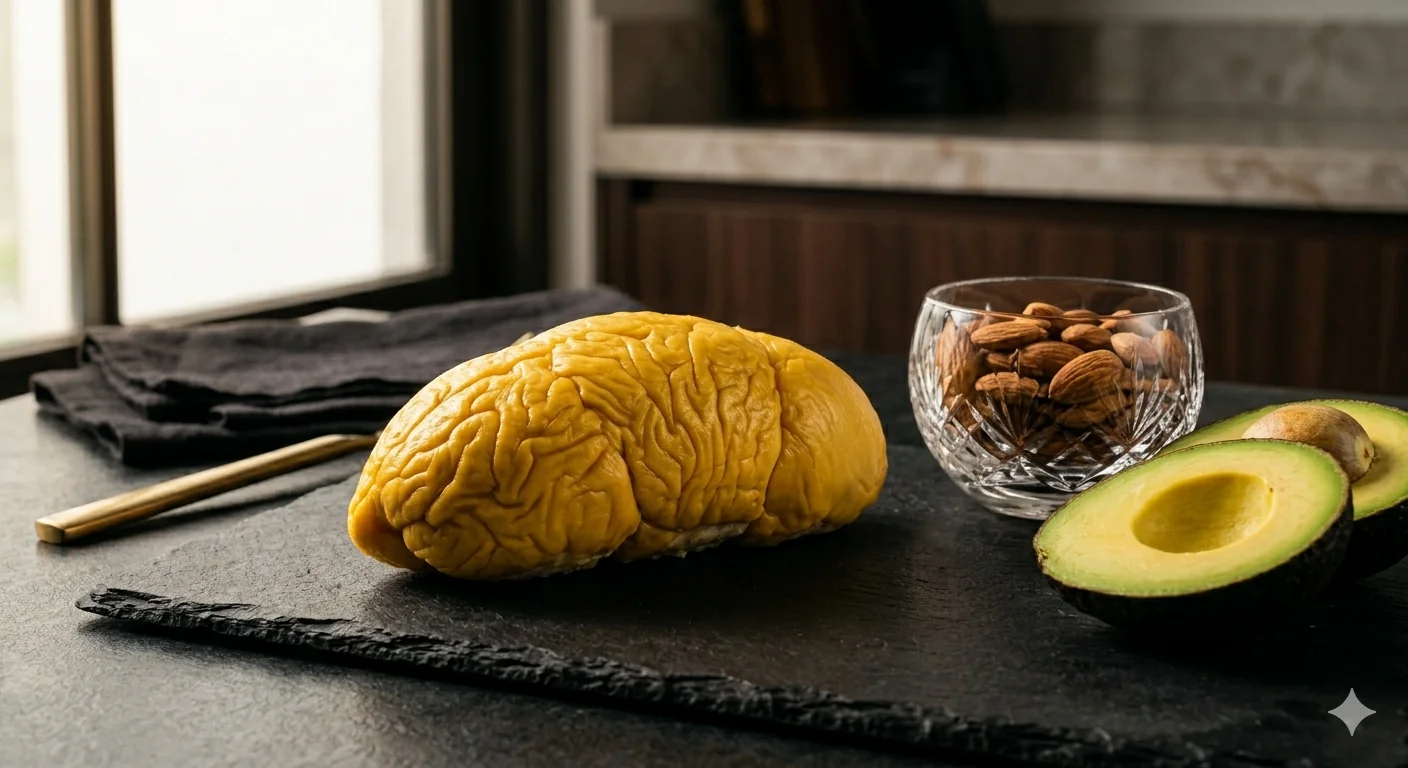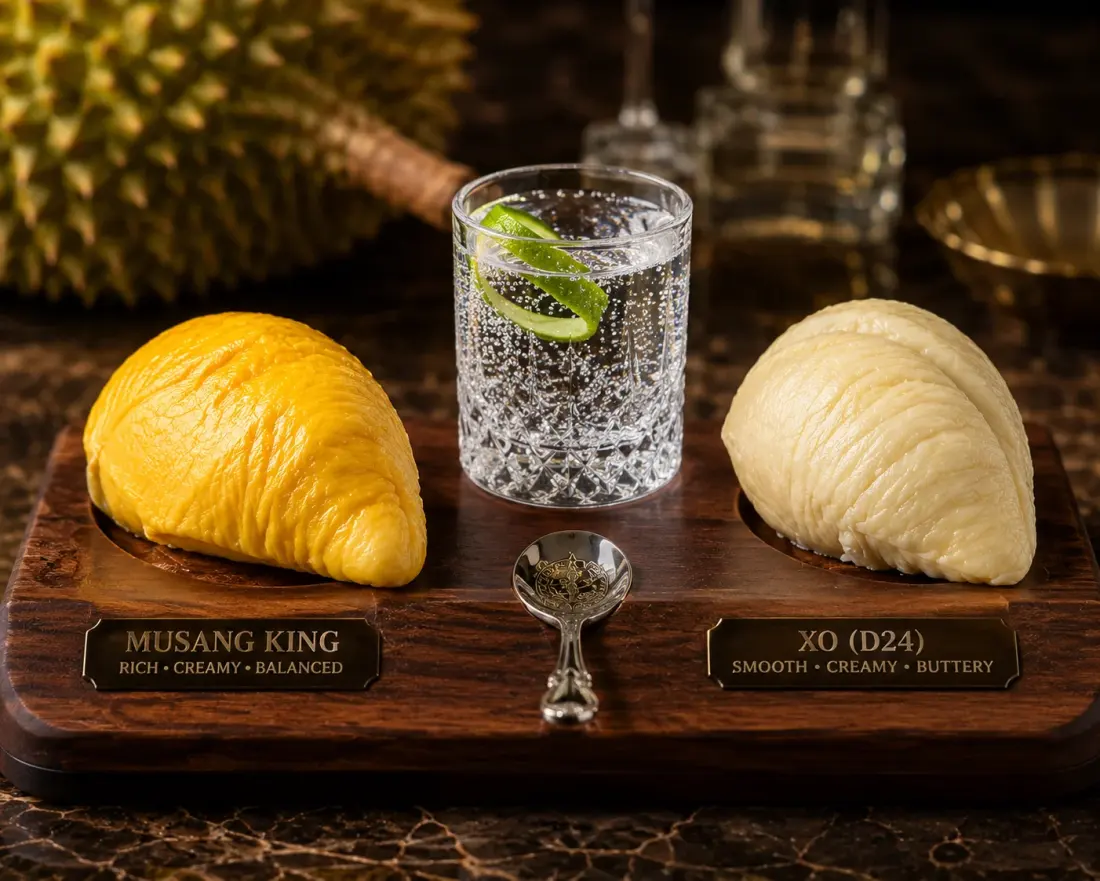
Short answer: Neither is better. Sweet durian is easy to enjoy; bitter-sweet durian such as Musang King rewards repeat tasting. The best way to find your taste is to try three or four varieties side by side, starting sweet and moving to bitter.
Walk into any durian stall in Malaysia and you will hear the same question over and over: "Which one is sweet?" It sounds simple, but the answer is not. Durian flavour is not a single note — it is a spectrum. Some varieties lean heavily sweet with a caramel richness. Others carry a bitter edge that regulars chase deliberately. Most sit somewhere in between.
This guide breaks down what actually makes a durian sweet or bitter, which varieties fall where on that spectrum, and how to match a durian to what your palate actually enjoys.
From our orchard
We grade every durian at our Melaka Mall stall A, B or C — but grade tells you quality, not taste. Taste comes from the variety. Of what we grow at Bukit Serampang, Udang Merah (D175) and IOI (D168) are where we point people who want sweet and mild. Musang King (D197) is for those who like a bitter-sweet finish. Black Thorn (D200) sits in between: rich and sweet with a light bitter edge. Not sure which way you lean? Tell us at the stall before we open anything.
What Makes Durian Sweet or Bitter
The taste of durian comes down to three things: sugar content, alcohol compounds, and the specific variety's genetics.
Sugar content in most commercial durian varieties ranges from about 12% to 18% by weight. Musang King, for example, typically sits in the 14–16% range, which gives it a pronounced sweetness. But sugar alone does not determine whether a durian tastes sweet. The presence of ethanol and other volatile compounds — produced as the fruit ripens — adds complexity. In some varieties, these compounds carry a bitter or fermented note that balances or even overtakes the sweetness.
Bitterness in durian comes primarily from certain organic compounds in the flesh. D24 (Sultan) has a well-known bitter-sweet profile — the first bite is sweet, then a clean bitter note follows. XO durian, which is left to ripen longer on the tree, develops a more pronounced bitter taste along with a boozier, more complex flavour. The bitterness is not a flaw. It is a characteristic that many experienced eaters prefer.
The Variety Spectrum
Here is a rough guide to where popular varieties fall:
- Musang King (Mao Shan Wang): Sweet-leaning, creamy, with a mild bitter finish. The most popular variety in Malaysia and Singapore right now.
- D24 (Sultan): Balanced sweet-bitter. The bitterness is more noticeable than Musang King. A favourite among older-generation durian lovers.
- XO: Bitter-leaning, with a fermented, almost alcoholic depth. The flesh is drier and the flavour lingers.
- D101: Mildly sweet, soft flesh, low bitterness. A good entry point for people new to durian.
- Black Thorn (Hei Mian Jian): Rich and sweet with a honey-like quality and a light bitter finish. Smaller seeds, denser flesh.
- Red Prawn (Ang Hae): Sweet, buttery, with a faint bitter undertone. The texture is smooth and sticky.
There are also wild durian species — like Durio kutejensis or Durio graveolens — that taste quite different from the common Durio zibethinus. Some wild types are almost entirely bitter. These are not usually sold at commercial stalls but are known in rural areas.
How to Match Durian to Your Taste
If you are new to durian, start with a sweet-leaning variety like D101 or Black Thorn. The flesh is approachable, the smell is less aggressive, and the flavour is mostly sweet with a creamy texture. Once you are comfortable, try D24 to experience the bitter-sweet balance.
If you already know you like bitter durian, go straight for XO or tree-ripened D24. Ask the seller for "durian tua" (old durian) — this means the fruit was left longer on the tree before dropping, which increases bitterness and complexity.
A practical tip: eat the sweet variety first, then the bitter one. If you eat bitter first, the sweet one will taste flat by comparison. This is the same principle as tasting wine from light to full-bodied.
Temperature also matters. Chilled durian (around 4–8 degrees Celsius) tastes sweeter and less pungent. At room temperature, the bitter and fermented notes come through more strongly. If you find durian too intense, try it cold.
Want to know what actually causes the bitterness? Read why durian tastes bitter.
Practical Takeaway
Do not let anyone tell you that sweet durian is "better" than bitter durian. They are different experiences. Sweet varieties are approachable and crowd-pleasing. Bitter varieties reward patience and repeated tasting. The best way to find your preference is to try three or four varieties side by side in one sitting — a common practice at durian buffets in Malaysia.
Bring a list. Start sweet, move bitter. Pay attention to what you reach for second.
Fresh durian, farm-direct. Stock changes daily — WhatsApp us before you visit.
Check Today's Stock