You cut open a Musang King, expecting that familiar bittersweet cream. Instead, the first bite hits with a sharp, unpleasant bitterness that makes you pause. It happens more often than people think, and the reasons are more nuanced than "the durian went bad."
After years of growing and tasting durian across different seasons, I can tell you that bitterness in durian comes from several distinct causes — some natural, some avoidable. Here is what actually happens inside the fruit.
1. The Fruit Was Picked Too Early
This is the single most common reason for bitterness. Durian that is harvested before full maturity has not completed its starch-to-sugar conversion. The flesh is still developing its fat content and volatile compounds that give durian its characteristic creamy sweetness.
When picked early, the fruit has:
- Higher levels of astringent tannins
- Lower sugar content (often below 20 Brix)
- Underdeveloped aroma compounds
- A pale, sometimes greenish-yellow flesh
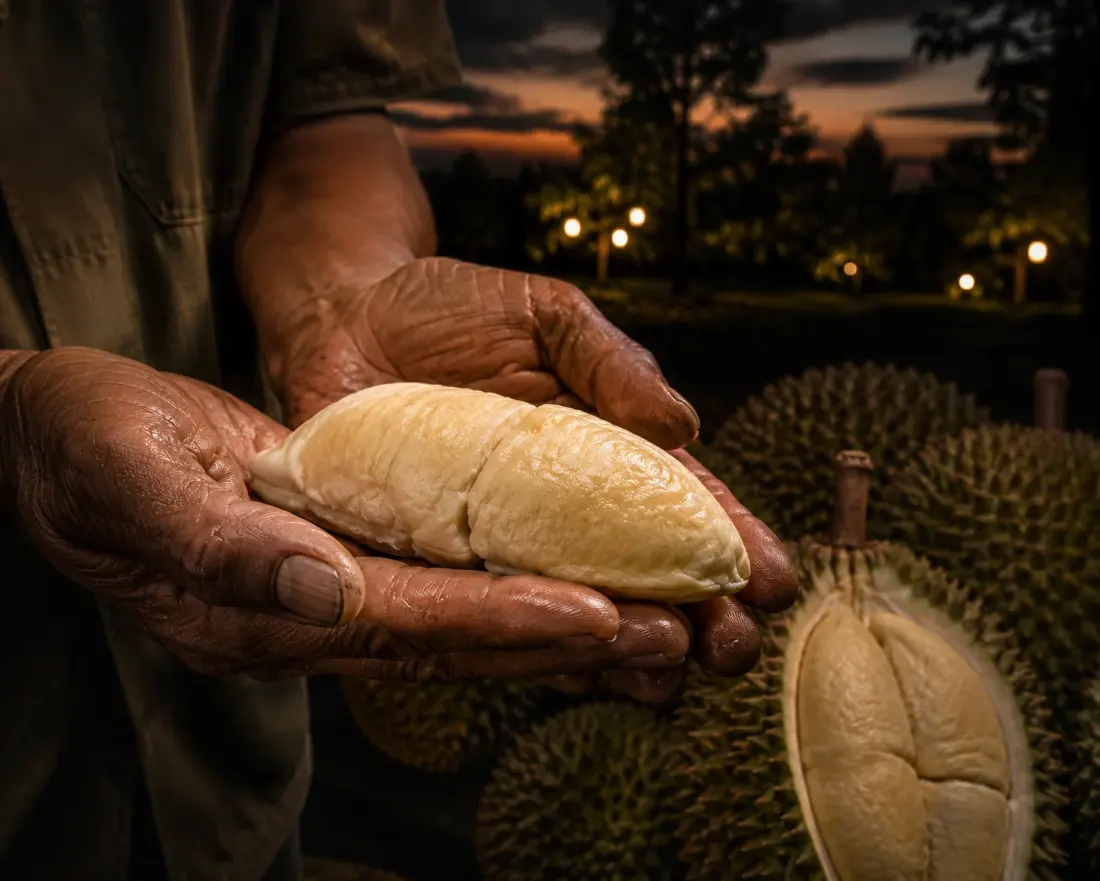
Early harvesting happens when exporters need to meet shipping deadlines or when farmers misjudge the drop timing. A durian that naturally falls from the tree has typically reached 28–35 Brix. One picked 3–5 days early can be 8–12 Brix lower, and the tannins dominate the flavor.
2. The Variety Naturally Carries Bitterness
Not all durian is bred to be sweet. Some varieties have a pronounced bitter note that is entirely normal:
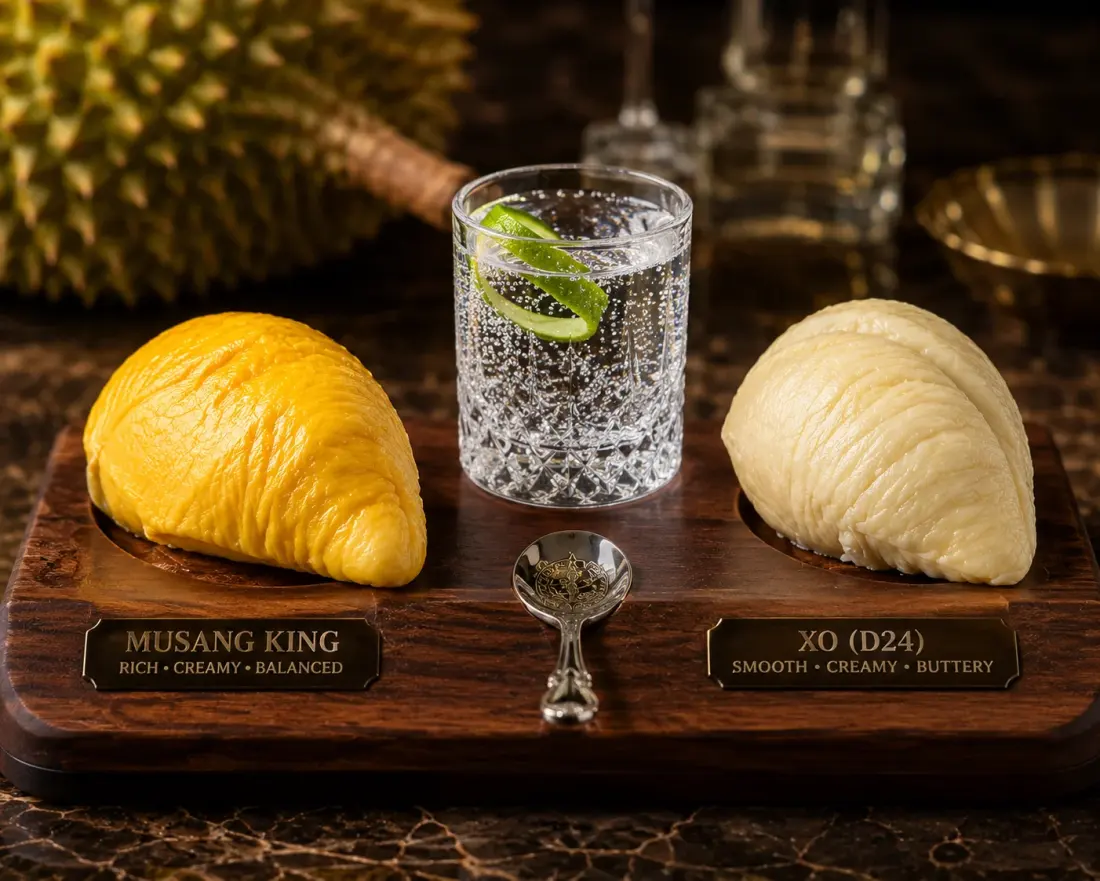
- D24 (Sultan): Known for a balanced bitter-sweet profile. The bitterness is part of its identity, not a defect.
- Bitter Gourd Durian (苦榴莲): Certain wild or semi-wild types from older trees carry stronger bitter compounds.
- XO variety: Fermented longer during development, which deepens the bitter notes alongside alcohol-like undertones.
If you are eating a variety known for bitterness and expecting Musang King sweetness, the experience will feel "wrong" even when the fruit is perfectly fine.
3. Stress Compounds from the Tree
Durian trees under environmental stress produce different chemical profiles in their fruit. Several stressors increase bitter compounds:
- Drought stress: When the tree does not receive consistent water in the 6–8 weeks before harvest, the fruit concentrates defensive compounds, including bitter phenolics.
- Excessive heat: Prolonged temperatures above 35°C during fruit development can alter the fatty acid composition, leading to harsher, more astringent flavors.
- Nutrient imbalance: Too much nitrogen relative to potassium in the final month pushes vegetative compounds into the fruit rather than sugars and fats.
Orchard owners who irrigate consistently and manage canopy cover tend to produce sweeter, more consistent fruit. It is one reason why durian from well-managed farms tastes different from fruit collected near the edge of a forest.
4. Post-Harvest Handling and Ripening
Even a perfectly mature durian can develop off-flavors after harvest:
- Temperature abuse: If stored above 30°C, the flesh can undergo uneven ripening. Some cells break down faster, releasing bitter-tasting amino acids and peptides.
- Freezer burn or ice crystal damage: Durian frozen at incorrect temperatures (above -18°C or with temperature fluctuations) develops ice crystals that rupture cell walls. When thawed, the damaged cells leak compounds that taste flat and bitter.
- Over-ripening: Durian left too long after opening or after full drop begins fermenting. The alcohol and acetic acid produced mask sweetness and introduce sour-bitter notes.
5. The Seed-to-Flesh Ratio and Seed Contact
A less obvious factor: the flesh directly surrounding the seed can taste slightly more bitter. This is because the seed itself contains different concentrations of phenolic compounds. In smaller fruits where the seed takes up more relative volume, this bitterness is more noticeable throughout each lobe.
Practical Takeaway
If you consistently encounter bitter durian, here is what to look for:
1. Buy tree-dropped fruit whenever possible — it has completed its full sugar development. 2. Know your variety — D24 and XO are supposed to have bitter notes. If you want pure sweetness, go for Musang King or Red Prawn. 3. Check the flesh color — deep golden yellow usually means full maturity. Pale or greenish tones suggest early harvest. 4. Smell before buying — mature durian has a strong, complex aroma. A weak or grassy smell often means the fruit is underdeveloped. 5. Store properly — if freezing, use a consistent -18°C or below. Consume thawed durian within 24–48 hours.
Bitterness is not always a flaw. Sometimes it is the variety expressing itself. But when it is unexpected, one of the five reasons above is almost always the cause.
Fresh durian, farm-direct. Stock changes daily — WhatsApp us before you visit.
Check Today's Stock