Short answer: Because its smell spreads through air-conditioning and lingers. Airlines ban fresh durian in the cabin, many hotels ban it in rooms, and Singapore's MRT bans it outright. To travel with it, take frozen pulp in checked baggage (check your airline first) or freeze-dried durian in the cabin.
If you've tried to bring durian through a Singapore MRT station or carry it onto a flight, you've run into one of the most consistently enforced food bans in the world. Airlines from AirAsia to Singapore Airlines prohibit fresh durian in the cabin. Dozens of hotels across Southeast Asia post signs at check-in: no durian above the lobby. Singapore's MRT bans it outright — station staff can simply turn you away.
This is not arbitrary. It's ventilation physics, commercial liability, and the chemical persistence of sulfur compounds in enclosed spaces — and this article explains all three.
From our orchard
Buying from our Melaka Mall stall before a trip? Eat it here, not on the plane. Fresh durian in the cabin is banned by most of the airlines below, and hotels in Melaka are no different. If you want to take durian home, check with your airline before you pack anything.
Why Airlines Ban It
The ventilation problem. Commercial aircraft recirculate 40–50% of cabin air through HEPA filters. The filters trap bacteria, viruses, and particulates. They do not remove volatile sulfur compounds. Sulfurous molecules — the ones responsible for durian's smell — pass through HEPA filters and recirculate through the cabin for the duration of the flight.
Even on a one-hour flight from Kuala Lumpur to Singapore, one undeclared durian in the overhead bin will make the smell pervasive within 30–45 minutes. Passengers complain. The aircraft can't be ventilated in flight. The cabin crew can't remove the odour. It becomes a service problem.
The liability problem. Airlines have documented passenger complaints about durian. When smell-related complaints lead to gate returns, diversions, or significant service interruptions, there are real costs. Banning the fruit eliminates the liability cleanly.
Which airlines explicitly ban fresh durian in cabin:
- AirAsia
- Singapore Airlines and SilkAir
- Scoot
- Malaysia Airlines (MH)
- Thai Airways
- Garuda Indonesia
- Vietnam Airlines
- Cathay Pacific (in cabin; restricted in hold)
What about checked baggage? Most airlines allow properly packed frozen durian pulp or sealed durian products in checked baggage. The hold is pressurized and temperature-controlled but not connected to cabin air circulation. A vacuum-sealed, frozen durian product in the hold is generally acceptable. Always check with the airline directly before travelling.
Why Hotels Ban It
Hotels cite two practical reasons:
1. HVAC distribution. Hotel ventilation systems draw air from corridors and rooms. In older buildings, air from a durian-filled room can enter the HVAC return ducts and reach adjacent rooms within minutes. Guests in room 814 who haven't touched durian start calling the front desk because room 812 checked in with three whole fruits.
2. The 3-day linger problem. Once durian sulfur compounds saturate carpet, bedding, and curtains, the smell persists for 3–5 days after check-out. Housekeeping cannot turn the room over in a normal 4-hour window. The room may need 1–2 additional cleaning cycles with enzyme-based treatments before it can be re-let. This represents RM 300–800 in lost revenue per room per incident.
The ban is an economic calculation, not a cultural bias.
Fines: Some hotels in Singapore charge SGD 200–500 for bringing durian into rooms. The Ritz-Carlton Singapore, Orchard Hotel, and others have explicit durian policies.
Public Transport Bans
| Location | Rule | What happens |
|---|---|---|
| Singapore (SMRT, LRT, buses) | Fresh durian prohibited on all public transport | No fixed fine posted; staff refuse entry |
| Kuala Lumpur (Rapid KL) | Prohibited on LRT, MRT, Monorail | Staff refuse entry |
| Bangkok BTS Skytrain | Durian prohibited | Varies |
| Hong Kong MTR | No durian or similar foods | HKD 2,000 fine |
How to Travel With Durian Legally
Air travel:
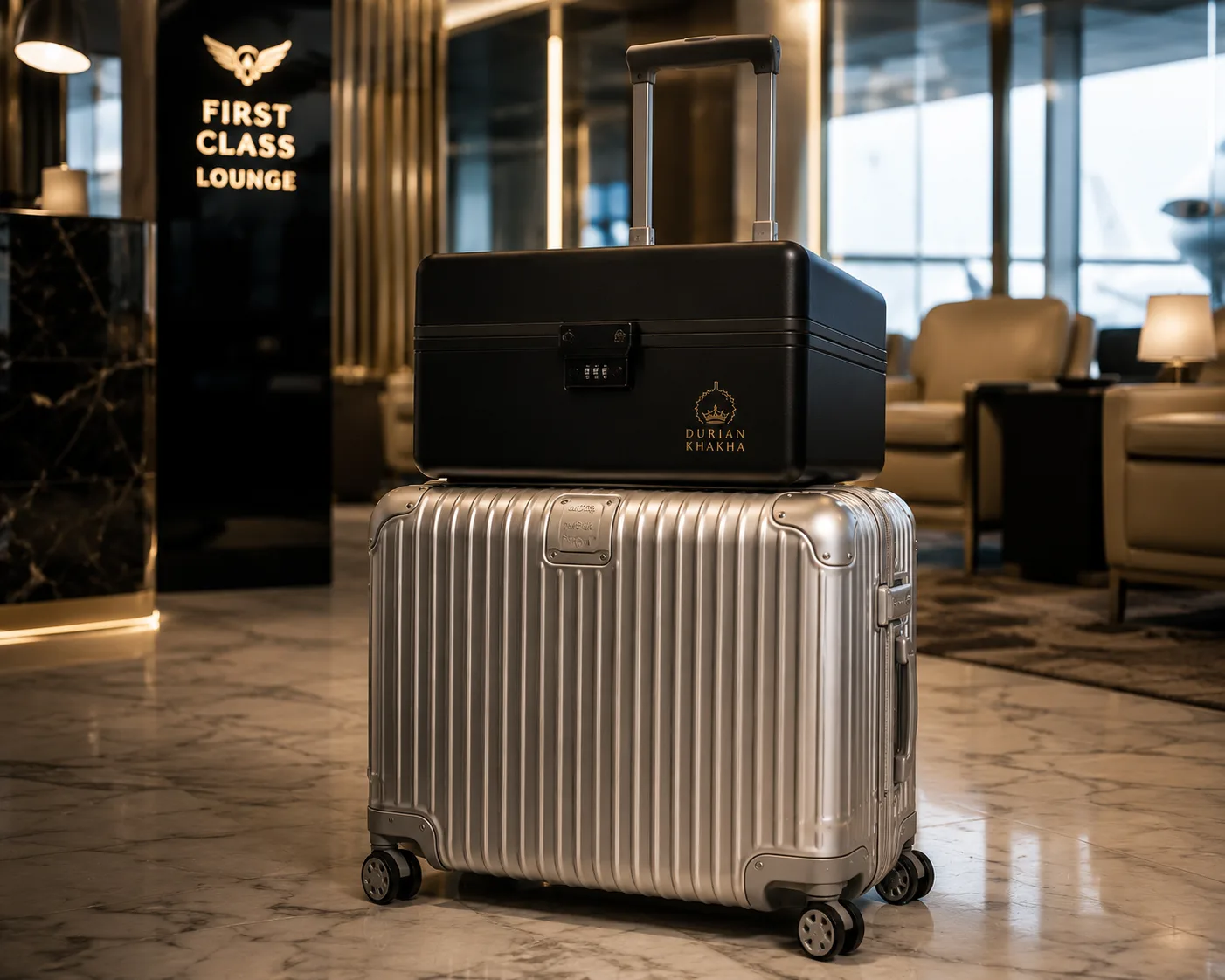
- Frozen pulp in checked baggage. Purchase vacuum-sealed, frozen durian pulp or paste from a certified vendor. Pack inside a hard cooler with dry ice. Declare to airline if required. This is the most reliable legal method for air travel.
- Freeze-dried durian products. Durian chips, durian powder, and freeze-dried durian in sealed retail packaging are treated as packaged food. Generally permitted in both cabin and checked baggage.
- Whole frozen durian in checked baggage. Some airlines permit whole frozen durian (flash frozen at -18°C) in sealed packaging in the hold. This is airline-specific — AirAsia explicitly permits it in checked baggage with proper packaging; verify with carrier.
- Do not carry fresh durian on board. It is against airline terms of service and cabin crew will remove it at the gate.
For China export via air freight: Durian from GACC-registered Malaysian farms can be shipped as air cargo in -18°C frozen condition to China. This requires farm registration, cold chain documentation, and phytosanitary certificates. Commercial shipment, not personal travel.
Hotel stays:
- Book hotels that explicitly permit durian (some Penang and Pahang hotels near orchards advertise this).
- Eat durian at outdoor hawker stalls or the hotel's outdoor terrace, not in your room.
- If you must bring durian into the room: seal tightly in double zip-lock bags, eat quickly, dispose of all waste in a sealed bag, place waste in corridor rubbish immediately. Ventilate the room.
Practical Takeaway
For air travel: frozen pulp in checked baggage or freeze-dried products in cabin. Never fresh durian in the cabin.
For hotels: eat durian at hawker centres, not in air-conditioned rooms.
For public transport: never. Walk. It's fine.
Common Questions
Security scanners identify contents by density and shape, not smell. Security will likely pass durian through. The ban is enforced by airline staff at the gate and in the cabin, not at the security checkpoint. But if cabin crew or gate agents detect fresh durian, they will ask you to check it or discard it.
Frozen durian products in checked baggage are allowed by most airlines, subject to airline-specific rules. AirAsia, for example, permits frozen durian in the hold. Verify with your specific carrier for each flight.
Cabin crew will ask you to store it — which is impossible, as it's banned. They will either request you check it at the gate (for a fee) or discard it. Repeat incidents can result in being flagged as a problem passenger.
No. Commercially packaged, shelf-stable durian products (candy, chips, wafers) have low or no detectable volatile sulfur compounds. They are treated as normal packaged food and are not subject to the fresh durian ban.
Japan, Australia, and New Zealand have phytosanitary restrictions on fresh tropical fruit imports. Australia requires deep inspection and treatment for fresh durian. Frozen processed durian is generally permitted. Check the destination country's biosecurity authority before importing.
Singapore's public transport network is extremely high-frequency and enclosed. A single durian incident can affect thousands of passengers across multiple train cars before the source is identified. The 'no durian' signs don't list a fixed fine; staff simply refuse entry or ask you to leave.
Generally yes, at outdoor areas or restaurants within the airport. Some airports (Don Mueang, Thailand) prohibit durian airside (beyond security). Check airport-specific rules. Most international terminals have dedicated outdoor eating areas where durian is permitted.
Want to try fresh durian from our farm? We grow it at our own Bukit Serampang orchard in Tangkak, Johor, and sell it at our Melaka Mall stall. Stock varies daily — WhatsApp to confirm availability before you visit.
Ask About Today's Fruit