Malaysia grows over 300,000 tonnes of durian a year, but finding the genuinely good stuff — not the overpriced tourist trap or the frozen reject — takes a bit of knowing where to look. Whether you want to stand under a tree in Pahang or have Musang King delivered to your doorstep in Penang, here is how to buy durian in Malaysia without wasting your money.
Offline: Where the Real Action Is
1. Pahang — Raub and Bentong
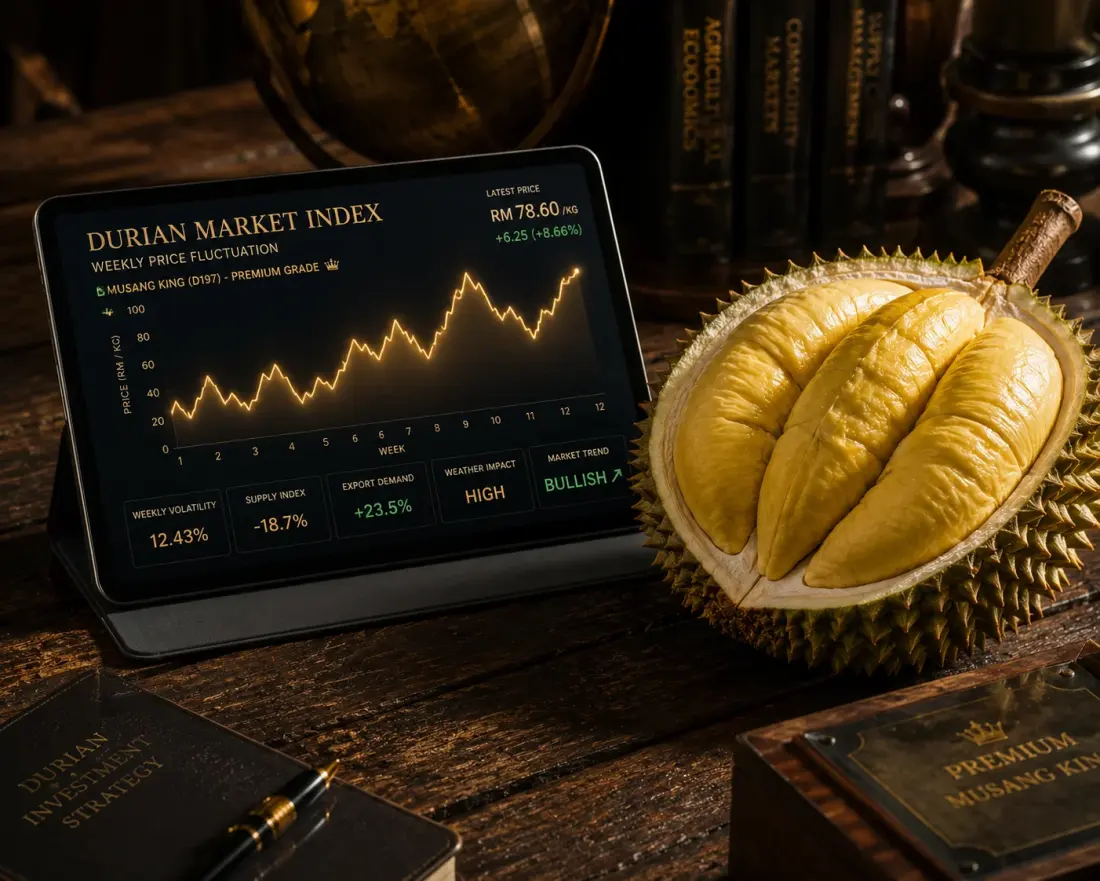
Raub is the durian heartland. The old trees along Jalan Tras and Jalan Dong produce Musang King (D197) and D24 that taste noticeably different from plantation-grown fruit. During peak season (June–August), roadside stalls open from around 3pm when the day's drop arrives. Expect to pay RM30–60 per kg for Musang King, depending on the year's yield. Bentong, about an hour from KL, has a similar setup but with more tourist-oriented pricing. Go early in the morning for first pick.
2. Penang — Balik Pulau
Balik Pulau's hilly terrain produces durians with a slightly different flavour profile — often described as more bitter-sweet and complex. The stalls along Jalan Balik Pulau are family-run, many operating from the same orchards for generations. Prices here tend to be RM20–45 per kg for named varieties. The season here can start slightly earlier than the east coast, sometimes late May.
3. Johor — Near Kota Tinggi
Less crowded than Pahang, Johor orchards offer good D24 and Black Thorn (D200) at competitive prices. The soil here is different — more sandy — which some growers say produces a creamier texture. Worth the trip if you are already in the south.
4. Night Markets and Pasar Malam
Some pasar malam vendors sell durian, but quality varies wildly. The fruit is often pre-opened and left under heat lamps, which accelerates oxidation. If you go this route, look for vendors who crack the durian in front of you and whose stall has high turnover. Avoid any that smell sour or alcoholic — that means the flesh has started fermenting.
5. Durian Shops in KL and Selangor
Shops like Durian SS2 (Petaling Jaya) and Ah Seng Durian have built reputations over years. They source from multiple orchards and grade their fruit visibly. You pay a markup — typically RM50–80 per kg for Musang King — but you get consistency and a place to sit and eat. Good for first-time visitors who want a guided experience.
6. Melaka — Melaka Mall
Our own stall is at the main entrance atrium of Melaka Mall. Everything we sell is natural-drop fruit from our family orchard in Bukit Serampang, Tangkak, Johor. Every durian is graded A, B or C, and if a fruit we sell you turns out bad, we replace it one for one. WhatsApp us to check what came in today.
Online: Convenience with Caveats
1. E-commerce Platforms (Shopee, Lazada)
Durian sellers on Shopee and Lazada range from legitimate orchard-direct operations to resellers with no quality control. Look for sellers with:
- Orchard photos and location details
- Recent reviews with photos (not just text)
- Clear variety labelling (D197, D24, etc.)
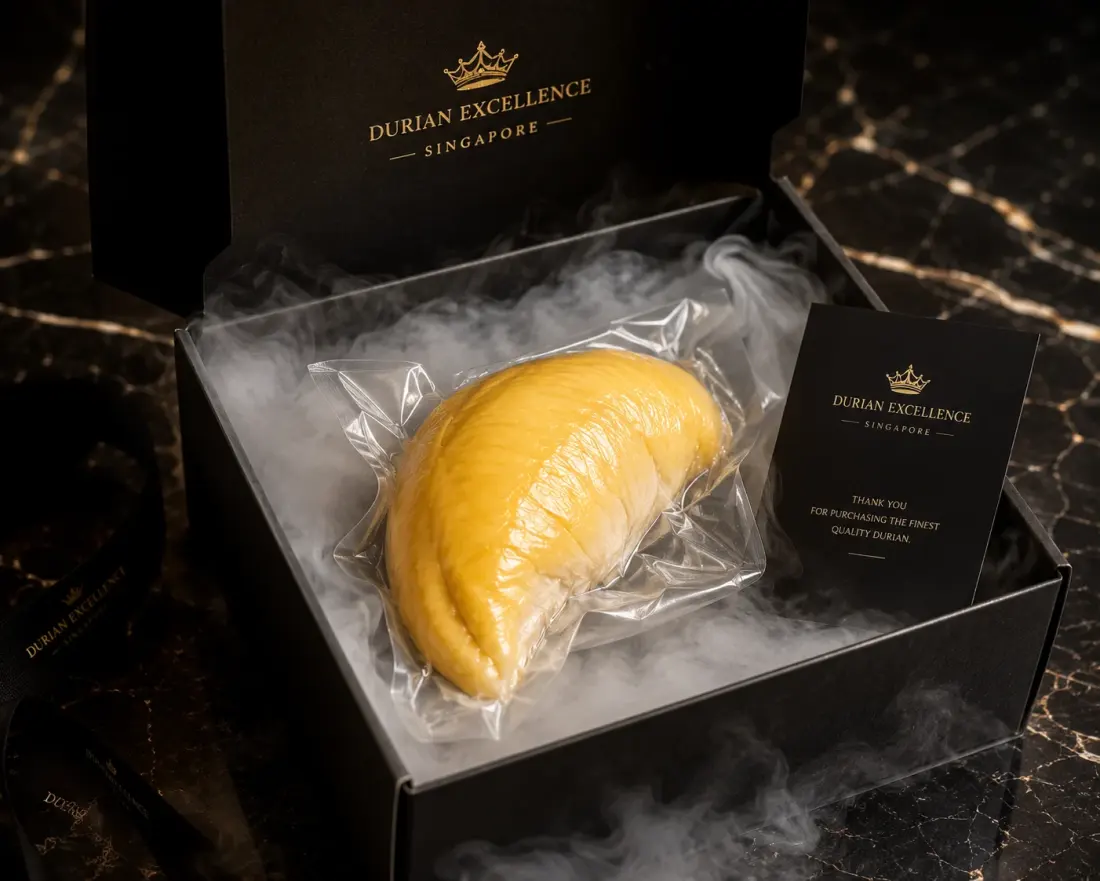
- Vacuum-sealed packaging with cold chain delivery
Musang King pulp (frozen) typically sells for RM60–120 per kg online. Fresh whole durian delivery is rarer and riskier — the fruit can crack in transit, and you cannot inspect it before paying.
2. Orchard-Direct WhatsApp/Telegram Orders
Many Pahang and Johor orchards now take orders via WhatsApp. This is often the best online option because you are buying closer to the source. The typical process: they send photos of that day's harvest, you choose a weight range, they pack and courier it same-day or next-day. Prices are usually 10–20% below retail shop prices. Ask for Pos Laju or J&T express with ice packs.
3. Specialty Durian Delivery Services
Branded durian delivery services offer curated selections with guaranteed variety authenticity. They source, grade, and deliver. You pay for the curation — expect RM70–150 per kg for top-grade Musang King — but the consistency is reliable. Good for gifts or if you are outside the Klang Valley.
4. Frozen Durian from Supermarkets
AEON, Jaya Grocer, and Village Grocer stock frozen durian pulp from several brands. The quality is acceptable for cooking or smoothies but will not match fresh. Check the expiry date and ensure the packaging is intact — freezer burn ruins the texture.
How to Judge Quality Before You Buy
- Smell: A ripe durian should have a strong, complex aroma — sweet, slightly alcoholic, with a creamy undertone. No smell means underripe. Sour or sharp smell means overripe or fermented.
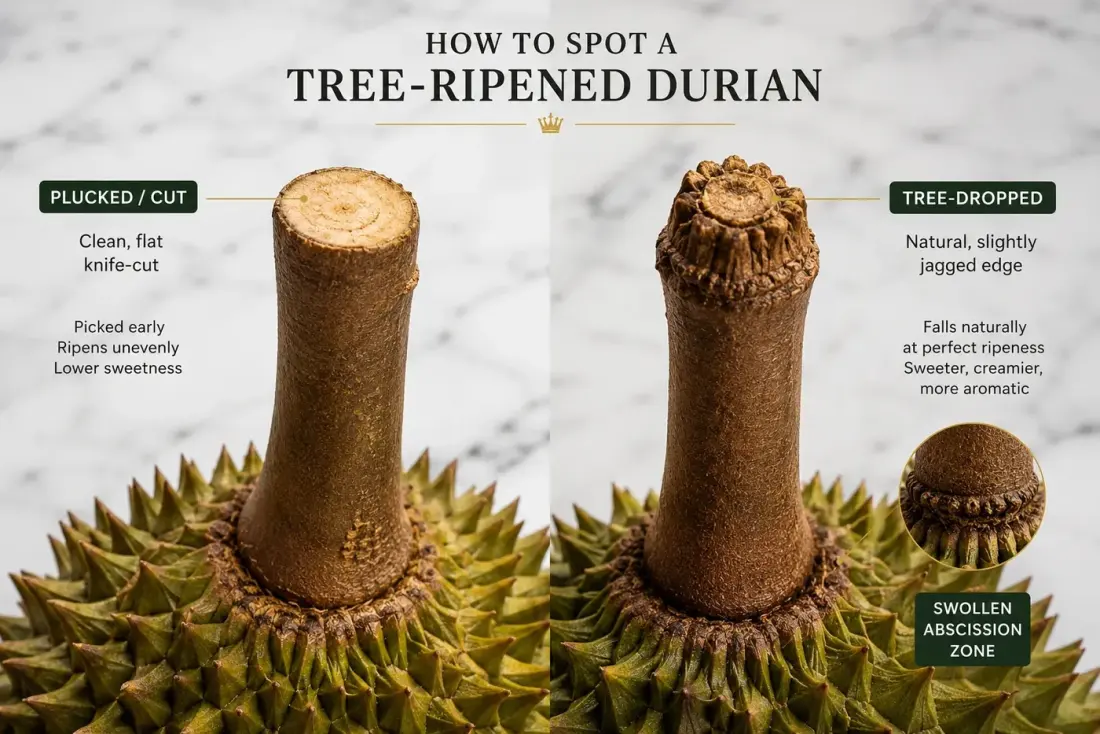
- Stem: A fresh, slightly green and moist stem means the fruit dropped recently. A dry, brown, shrivelled stem means it has been sitting for a few days.
- Sound: Shake it gently. A slight rattle means the flesh has separated from the husk — that is what you want.
- Colour: Musang King flesh should be deep butter-yellow to orange. Pale yellow often means underripe. Brown patches mean bruising.
Practical Takeaway
If you are in Malaysia during season (June–August), go to an orchard or a reputable roadside stall in Pahang or Balik Pulau. Nothing beats eating durian within hours of it dropping. If you are buying online, stick to orchard-direct WhatsApp sellers or established specialty delivery services. Avoid random Shopee sellers with no provenance. For frozen, supermarket brands are fine for cooking but manage your expectations.
Fresh durian, farm-direct. Stock changes daily — WhatsApp us before you visit.
Check Today's Stock