You've heard the stories. Someone told you it smells like garbage. Someone else said it's the most delicious thing they've ever eaten. Both are telling the truth. Durian is one of the few foods on earth that genuinely divides people at first encounter, and the reason comes down to this: the smell hits you before the taste does, and your brain has to reconcile the two.
This guide is for people who have never tried durian and want an honest, practical picture of what to expect — not the hype, not the horror stories, just what actually happens when you open a durian and take a bite.
The Smell: What You'll Notice First
The durian smell is not one smell. It's a layered combination that most people struggle to describe because they've never encountered anything quite like it.
The first layer is sulfurous — think caramelized onions left on the stove a bit too long, mixed with a faint whiff of something sharp. This is the part that makes people pull their heads back. The compounds responsible are mostly disulfides and trisulfides, the same family of chemicals found in onions and garlic, but in a combination that's unique to durian.
The second layer is sweeter and more complex. Ripe durian gives off notes that people compare to ripe cheese, fermented fruit, or even turpentine. Some people detect a faint banana-like sweetness underneath. This layer is more noticeable in cultivars like Musang King, which has a stronger, more pungent aroma compared to milder varieties like D24.
The third layer is the lingering one. After you've eaten durian, the smell stays on your hands, in the room, and even in your breath for hours. This is why hotels and public transport across Southeast Asia ban it. The volatile compounds bind to surfaces and release slowly.
A practical note: the smell of a whole, uncut durian is significantly milder than the smell of an opened one. The thick husk does a surprisingly good job of containing most of the aroma. The moment you crack it open, that's when the full force hits.
The Taste: What Actually Happens in Your Mouth
Here's where the divide really happens. If you can get past the smell, the taste is a completely different experience.
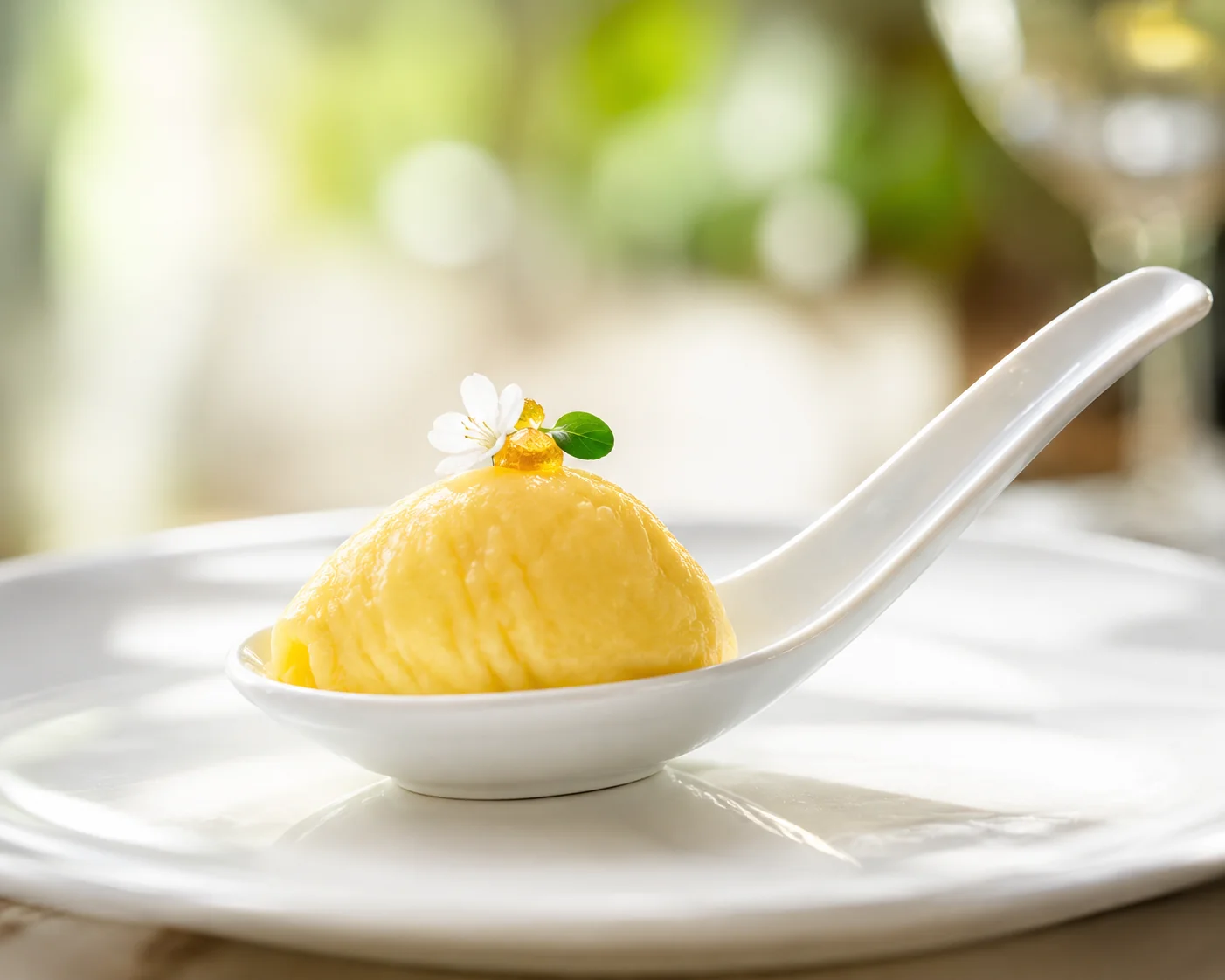
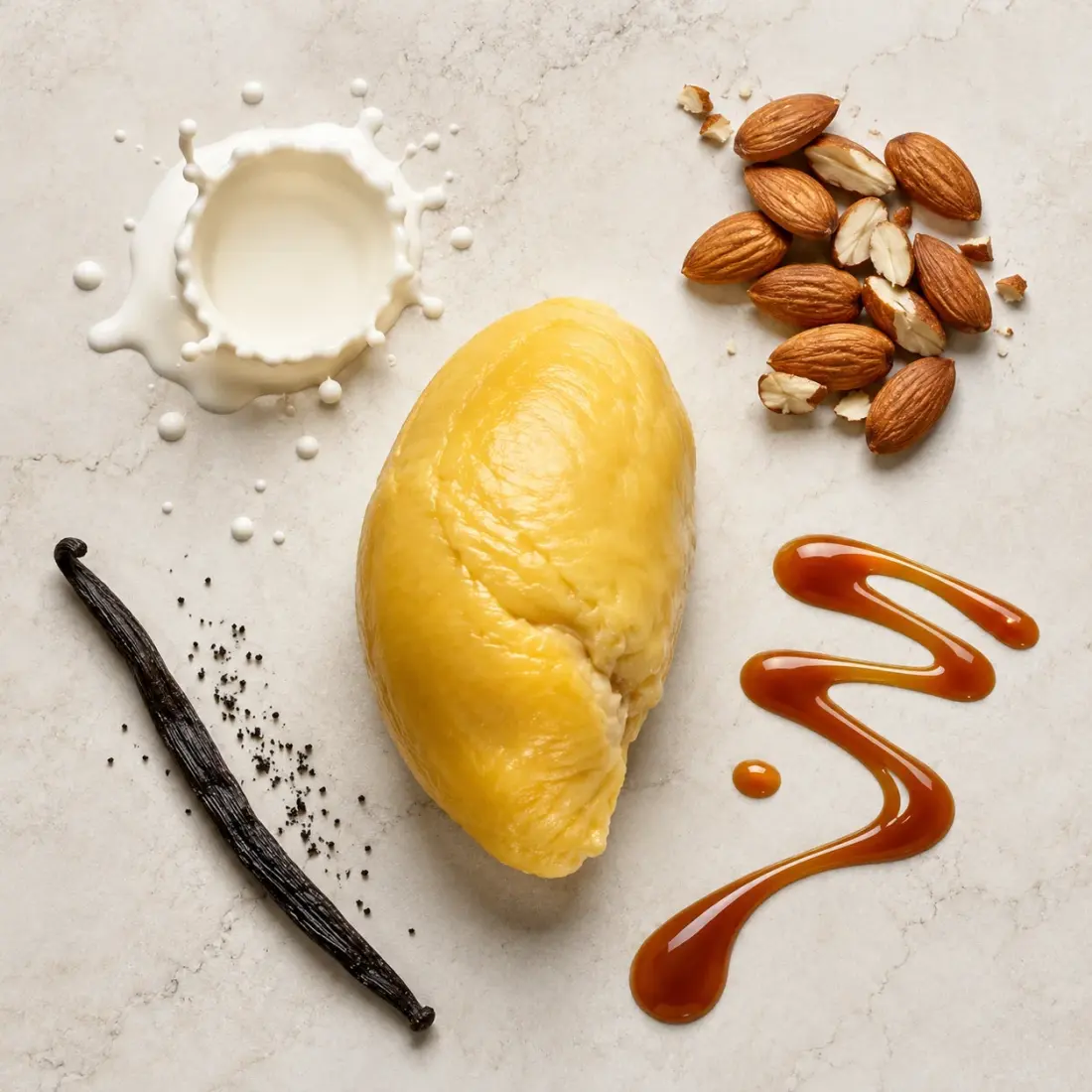
Texture first. A well-ripe durian has creamy, almost custard-like flesh. The pulp slides apart in your fingers and coats your palate. Musang King tends to be slightly more fibrous with a bitter undertone, while D24 is smoother and more uniformly sweet. The texture is closer to thick yogurt or soft cheese than to any typical fruit.
The sweetness. Durian flesh contains roughly 20–27 grams of carbohydrates per 100 grams, depending on the cultivar and ripeness — comparable to a ripe mango or banana, but the sweetness in durian is less sharp. It's rounded, almost buttery. Some cultivars, like Black Thorn, push toward the higher end and can taste almost like caramel.
The bitterness. This is what catches first-timers off guard. Many cultivars, especially Musang King, have a distinct bitter note that runs underneath the sweetness. It's not unpleasant — think dark chocolate or strong coffee. The interplay between sweet and bitter is actually what experienced durian eaters find most compelling. A durian that's purely sweet is often considered flat or one-dimensional.
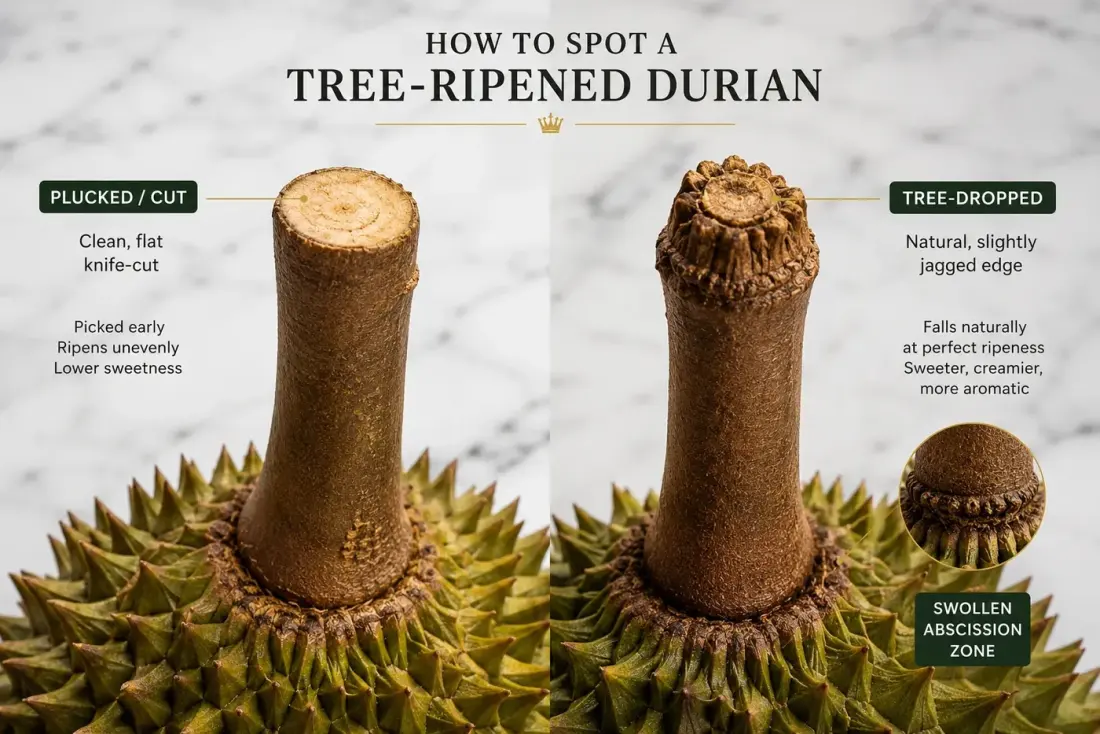
The aftertaste. After swallowing, there's a lingering warmth and a faint alcoholic note. This comes from the fermentation that naturally occurs as the fruit ripens on the tree. Fully tree-ripened durian has a more pronounced fermented quality, which is why some exporters harvest early — to reduce this characteristic for markets that prefer milder flavours.
Why Smell and Taste Don't Match
This is the part that confuses most first-timers. The smell suggests something rotten or sharp. The taste is creamy, sweet, and complex. The disconnect is real and it's rooted in how our senses work.
Your nose processes the volatile sulfur compounds and sends a "warning" signal. But once the fruit is in your mouth, your taste buds detect sugars, fats, and amino acids that tell a completely different story. The fat content of durian flesh (around 3–5%) carries flavour compounds across your palate in a way that the smell alone doesn't predict.
Most people who try durian more than once report that the smell becomes less offensive over time. This isn't just tolerance — your brain starts associating the smell with the pleasant taste experience, and the two signals begin to align.
What Affects Flavour
Not all durians taste the same. Several factors shape what you'll experience:
- Cultivar. Musang King is bitter-sweet and pungent. D24 is sweeter and creamier. Red Prawn leans toward a sticky, honey-like sweetness. Black Thorn is intensely sweet with a dark, almost wine-like depth. There are over 200 registered cultivars in Malaysia alone, and each has a distinct profile.
- Ripeness. Under-ripe durian is starchy, less aromatic, and lacks the creamy texture. Over-ripe durian becomes boozy and sour, with a sharper smell. The ideal window is when the fruit has naturally fallen or been harvested at full maturity and consumed within 24–48 hours.
- Growing conditions. Soil composition, rainfall, and altitude all affect sugar content and flavour intensity. Highland-grown durians (like those from Pahang's highlands) often have a more concentrated flavour compared to lowland fruit.
- Post-harvest handling. Flash-frozen durian (common for export) preserves most of the flavour and texture, though some of the volatile aroma compounds are lost. Fresh, never-frozen durian eaten within hours of harvest is a noticeably different experience.
Practical Takeaway for First-Timers
If you're trying durian for the first time:
1. Start with a milder cultivar. D24 or Red Prawn are more approachable than Musang King. The bitterness in Musang King can be overwhelming if you're not expecting it.
2. Eat it at room temperature. Cold durian (straight from the fridge) mutes the aroma but also flattens the flavour. Let it sit for 15–20 minutes after removing from cold storage.
3. Use your hands. The tactile experience of pulling apart the flesh is part of it. Don't be afraid to get messy.
4. Have water nearby. The richness can be heavy. Some people eat durian with mangosteen or plain water to cleanse the palate — this is a common pairing in Malaysia, though the idea that mangosteen "cools" the body after durian is traditional belief with limited scientific support.
5. Give it two tries. Many people who dislike durian the first time find they enjoy it on a second attempt, once the smell-taste disconnect is no longer jarring.
Fresh durian, farm-direct. Stock changes daily — WhatsApp us before you visit.
Check Today's Stock