Walk into any durian stall in Penang or Johor and ask for "the orange-fleshed one," and you might get two very different fruits depending on who is serving you. Udang Merah D175 and D226 Hock 13 — a variety still widely known by its older name D13 Golden Bun — share a visually similar orange flesh colour and a creamy sweet profile that trips up beginners constantly.
The confusion runs deeper than appearance. Years of inconsistent naming in the market, combined with a genuine profit motive for sellers to misrepresent the cheaper variety as the pricier one, means this is one of the durian category's most persistent identification problems.
Here is what actually separates the two, and how to know which one you are buying.
The Naming Mess: D13, Golden Bun, and D226
Before getting into flavour, it helps to understand why "D13" and "D226 Hock 13" appear to be two different things but usually are not.
For many years, this Johor-origin variety circulated in the market under several names:
- D13 — the old DOA-era reference code used by farmers and traders
- Golden Bun — the commercial nickname, widely used in retail
- Hock 13 — named after a particular nursery or orchard lineage
- D226 Hock 13 — the updated registration reference under the revised clone numbering system
These all typically refer to the same commercial lineage. The confusion arises because newer documentation uses D226 while older sellers and markets still say D13. Some buyers assume they are completely different durians. They are not.
The practical implication: if a seller says "D13," "Golden Bun," or "Hock 13," they are most likely referring to D226. Ask to confirm. The DOA clone reference is D226.
Origin and Growing Region
Udang Merah D175 has its roots in Penang, particularly the Balik Pulau area. The microclimate there — elevated terrain, moderate temperatures, and specific soil composition — is frequently cited by farmers as a factor in the variety's distinctive flavour profile. Trees grown in Balik Pulau's laterite hill soils under traditional management tend to produce the most characteristic expression of the D175 profile.
D226 Hock 13 is more associated with Johor, particularly the flat lowland orchards of that region. Johor's terrain and climate differ significantly from Penang's hills — lower elevation, different soil types, higher ambient temperatures. These differences in growing conditions produce a different fruit, even before any variety-level genetics come into play.
Both varieties can be grown elsewhere in Malaysia with varying results. The origin association reflects where each variety was selected and where its character is typically most pronounced.
Physical Differences
The two varieties can be distinguished before opening, though it takes practice.
Udang Merah D175:
- Shape: noticeably elongated compared to many other varieties
- Shell: brownish-green, darker base colour
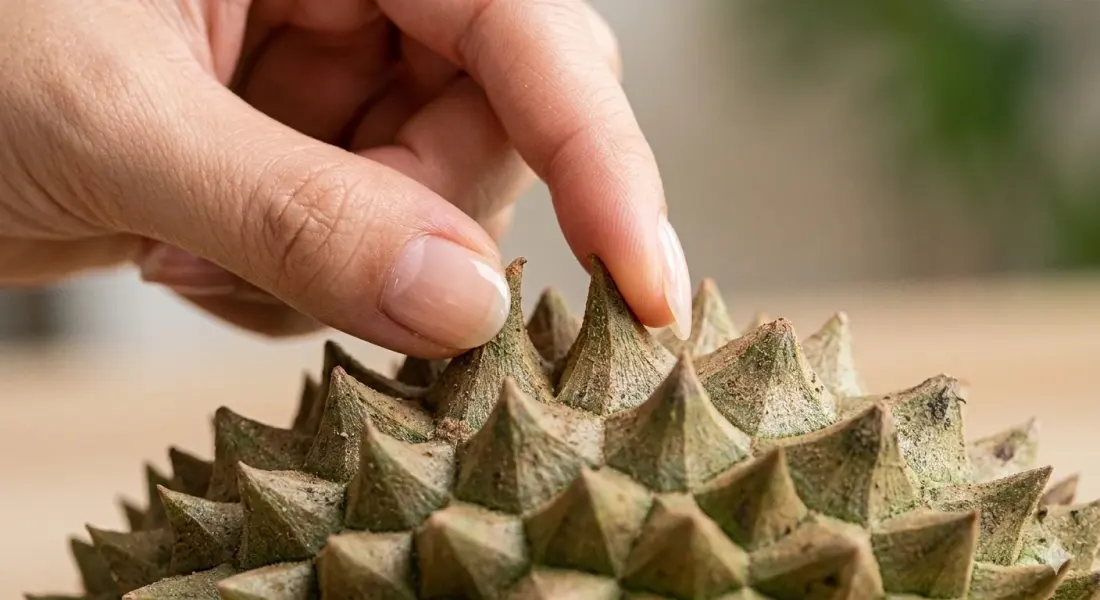
- Thorns: smaller, sharper, more closely spaced
- Weight: tends toward the lighter end for its size
D226 Hock 13:
- Shape: more rounded, blockier overall
- Shell: brighter green
- Thorns: larger, blockier, more spread out
- Base: noticeably flatter at the bottom
When both varieties are placed side by side by someone who knows what to look for, the differences are visible. For most retail buyers picking a fruit from a pile, these distinctions are genuinely difficult to see — which is precisely why misrepresentation is possible.
Flavour Profile
This is the distinction that matters most.
Udang Merah D175 is known for:
- Rich, full creaminess — flesh tends to be softer, almost custard-like at peak ripeness
- A bitter note, often described as mild to moderate — not aggressive, but distinctly present
- A complex aftertaste with something resembling wine or ripe berry
- Stronger sulfur compound presence — more pronounced aroma, closer to Musang King territory than to lighter varieties
Brix (sugar content) at natural-drop ripeness: typically 30–35°, but the flavour complexity comes from the balance of sweetness with bitterness and aromatic compounds, not sweetness alone.
D226 Hock 13 is known for:
- Sweeter, lighter, more accessible flavour — the dominant note is sweetness rather than complexity
- Low bitterness — this is one of its most distinct characteristics
- Floral or vanilla-adjacent notes in the aftertaste
- Softer aroma compared to D175 — fewer intense sulfur compounds
- Slightly firmer flesh at comparable ripeness
Brix: typically 29–33°. High sweetness but without the bitter-sweet counterpoint that defines D175.
The practical framing: D175 is closer to the complex end of the Malaysian durian flavour spectrum; D226 Hock 13 sits closer to the accessible, sweet end. Neither is objectively better — they serve different preferences.
The Mislabelling Problem
D175 consistently commands a higher market price — wholesale typically 20–40% more than D226 at the same market, and often more when fresh-drop Penang fruit is involved. This price gap creates a clear incentive for some sellers to present D226 as D175.
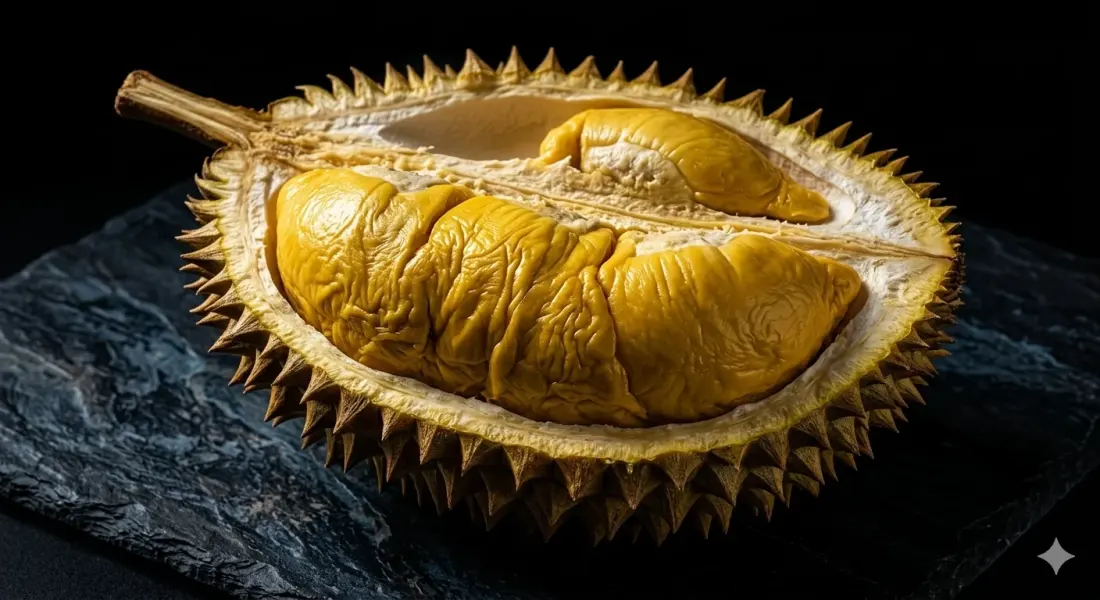
Once cut open, both varieties show orange flesh. Inexperienced buyers who do not know what they are looking for have almost no way to verify the identification after opening. The shape and thorn differences, which are visible before opening, are the buyer's best pre-purchase check.
What to look for before buying:
- Ask the origin: genuine D175 should come from Penang (Balik Pulau area most associated). D226 from Johor is still a good durian — but it is not the same thing.
- Check the shape: elongated vs rounded.
- Check the thorn size: smaller and sharper (D175) vs blockier (D226).
- Smell before cutting if possible: D175 tends toward stronger aroma.
Practical Takeaway
Both Udang Merah D175 and D226 Hock 13 are legitimate, enjoyable durian varieties with distinct identities. The problem is not the durians — it is the naming confusion and occasional mislabelling that frustrates buyers.
If complexity, creaminess, and that distinctive bitter-sweet balance matter to you: D175 is worth the price difference, and worth asking specifically about origin.
If you want high sweetness, lower bitterness, and consistent approachability at a somewhat better price: D226 Hock 13 is a genuinely good fruit — buy it knowingly rather than as a consolation.
Common Questions
In almost all market contexts, yes. D13 is the older reference code, D226 is the updated registration number. Both names refer to the same commercial variety. Some sellers still use D13 out of habit.
Durian flavour varies significantly by harvest timing, tree age, soil, and season. Two D226 fruits from different orchards or different harvest dates can taste noticeably different. Peak natural-drop ripeness gives the strongest expression; pre-drop harvested fruit tastes lighter.
It becomes much harder. The flesh colour of both is orange — but D175 flesh tends to be softer and more custard-like, while D226 flesh is slightly firmer. The smell test also helps: D175 has a stronger, more complex aroma. Without side-by-side comparison, most people cannot reliably distinguish them once opened.
At most Malaysian markets, yes — D175 commands a premium because of its reputation and the supply constraints from Penang's limited growing area. During peak season when supply is high, the price gap narrows. Outside peak season, D175 can be 30–50% more expensive or unavailable.
Udang Merah means "red prawn" in Malay. The name refers to the deep orange-red colour of the flesh, which resembles the colour of cooked prawn. It is an informal descriptive name, not an official variety designation.
Possibly, or the seller may simply use "Red Prawn" generically to refer to any orange-fleshed durian. It is worth asking specifically: "Is this D175 from Penang, or D13/D226?" The key distinguishing factor is origin and variety code, not just flesh colour.
D226 Hock 13. Its high sweetness and low bitterness make it easy to enjoy without prior durian experience. D175's bitter-sweet complexity is an acquired taste that regular durian eaters tend to appreciate more.
Roughly, yes — both peak during Malaysia's main durian season (typically June–August and November–January, varying by region). Penang's season sometimes runs slightly later or earlier than Johor's due to different microclimates.
Want to try fresh durian from our farm? We grow it at our own Bukit Serampang orchard in Tangkak, Johor, and sell it at our Melaka Mall stall. Stock varies daily — WhatsApp to confirm availability before you visit.
Ask About Today's Fruit