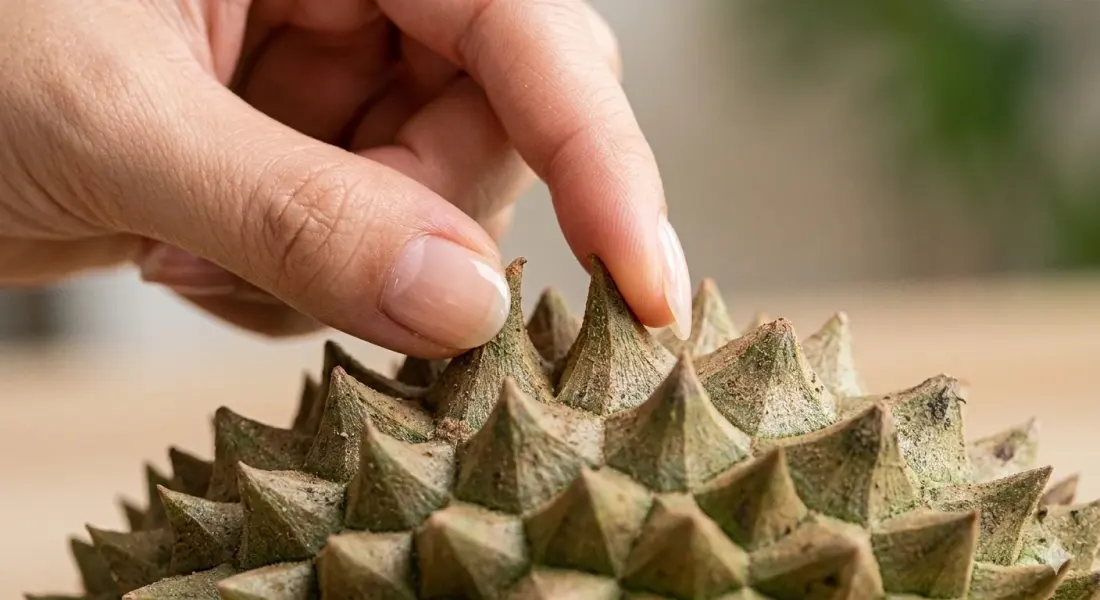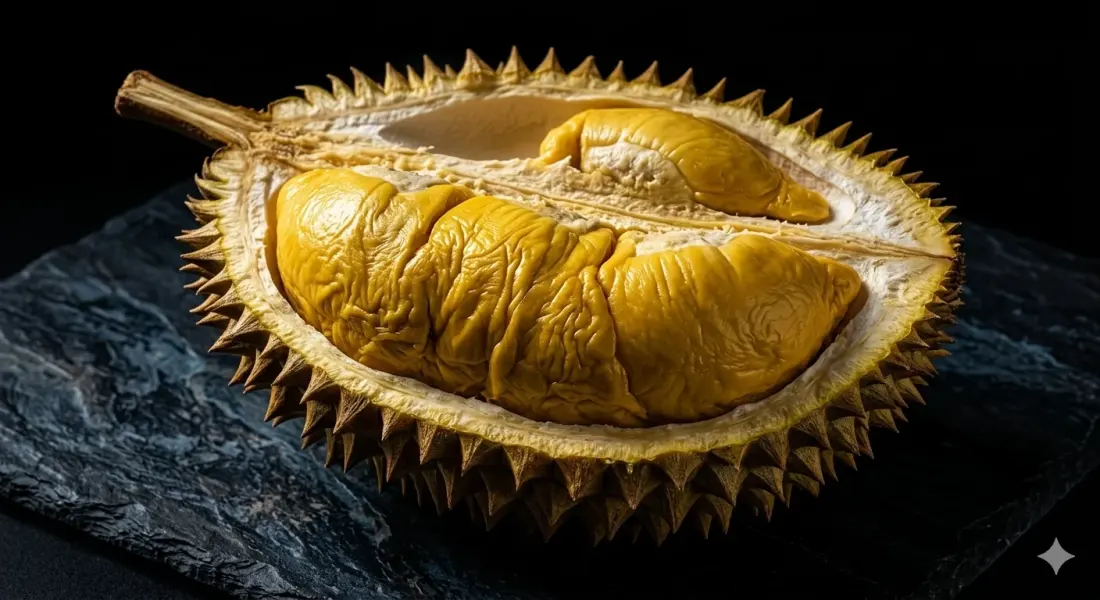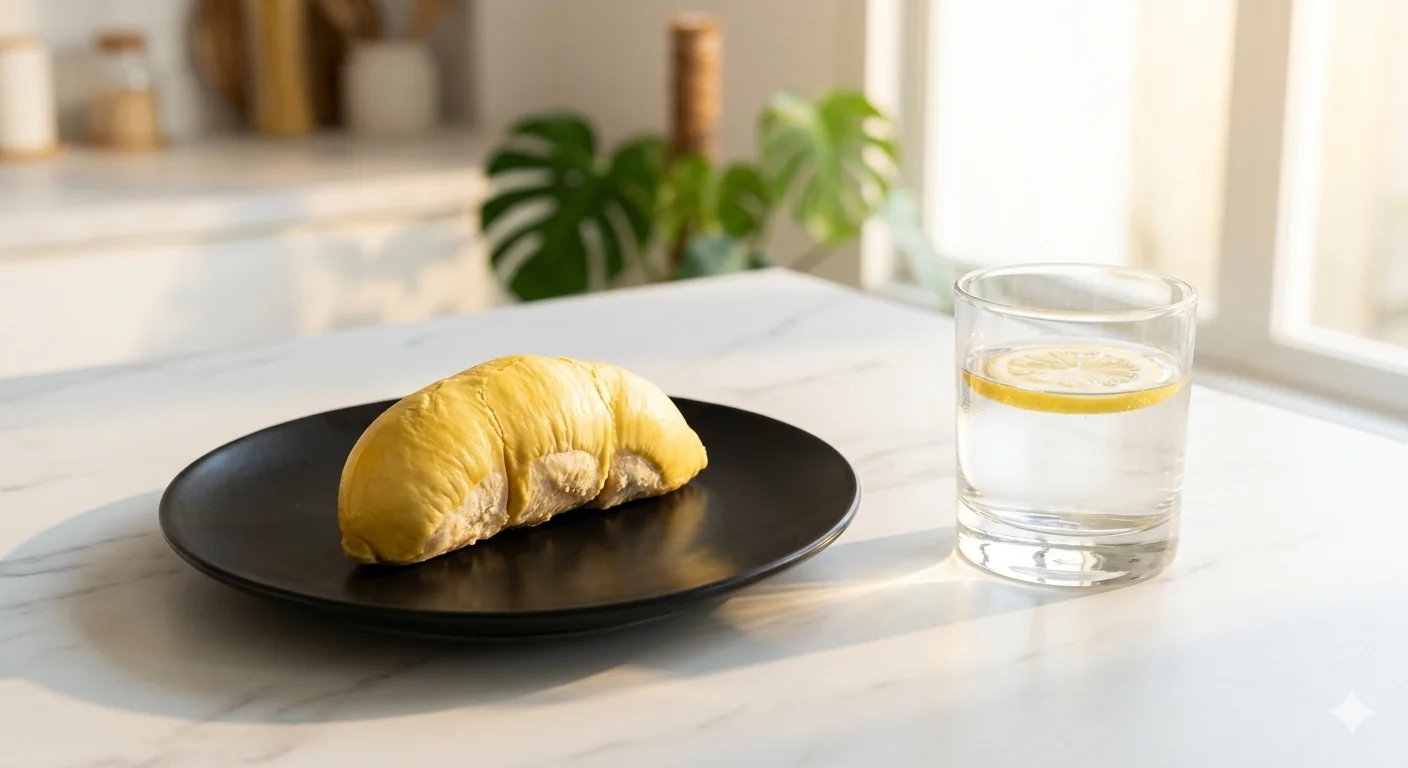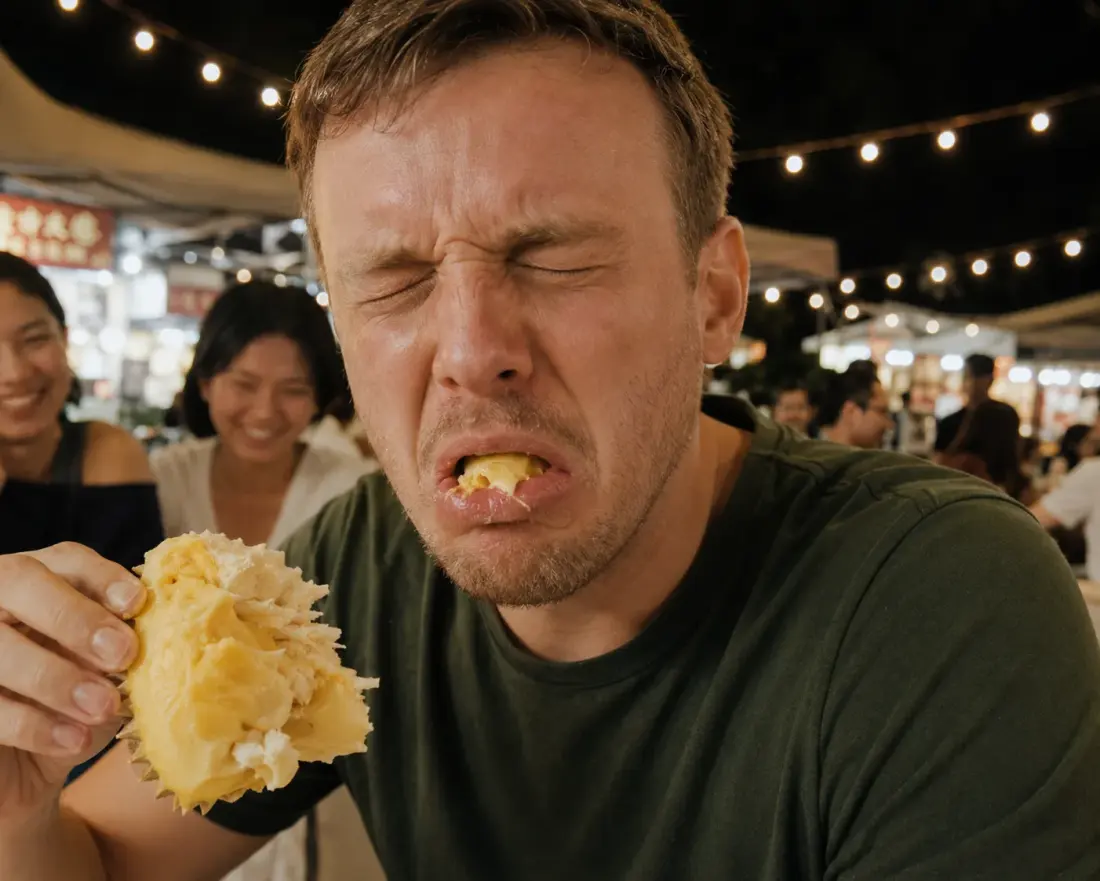
There is a remarkably consistent formula that plays out in thousands of YouTube videos: the smell, the dramatic gagging, the moment of commitment, the surprised acknowledgment that it's somehow sweet, or the full dramatic spit-out. "Durian challenge" videos routinely accumulate 10 million views or more, and they have been doing so for over a decade without the format getting stale. If you've spent any time in durian-growing regions, the performance is both familiar and slightly absurd. Understanding why it keeps working tells you something interesting about biology, cultural conditioning, and how the internet economy of disgust functions.
The Biology Of The Initial Reaction
The smell of durian is produced primarily by volatile sulfur compounds: ethanethiol, diethyl disulfide, propanethiol, and several others. These same compound classes appear in natural gas (added specifically to make leaks detectable), in decomposing organic matter, and in some fermented foods. Evolution has tuned human olfactory receptors to respond to these compounds with a fast aversion signal — the same pathway that makes you recoil from spoiled meat.
This is not irrational. The rapid disgust response to sulfurous compounds is a functional biological alarm that protected humans from contaminated food for most of evolutionary history. When someone unfamiliar with durian smells it for the first time, the olfactory system is doing exactly what it was designed to do — and it's producing a very strong alarm signal.
The aversion is not a cultural failure or a weakness. It is a predictable neurobiological response in someone who has not learned to override it.
Why Southeast Asians Don't Have The Same Reaction
The answer is habituation. Repeated exposure to a stimulus that does not cause harm gradually reduces the strength of the aversion response. This process is especially effective in early childhood — the olfactory system is more plastic, and associations formed early become deeply ingrained.
Most Southeast Asians who grow up in durian-consuming households encountered the smell repeatedly as children, paired consistently with positive experiences (family, celebration, treat foods). The olfactory system learns: this compound cluster does not predict harm; it predicts reward. Over time, the initial aversion is not just suppressed — in many people it inverts entirely, and the smell becomes appetitive.
A foreign adult encountering durian for the first time has none of that learned override. The alarm system fires at full strength. This is precisely what makes the challenge video format work.
The Dunning-kruger Dimension
There's an underappreciated problem with most durian challenge videos: the durian being tasted is usually not good.
For logistical reasons, content creators in Western cities typically use frozen supermarket durian imported from Thailand, or occasionally low-grade fruit from specialty Asian grocery stores. This fruit has been frozen, shipped thousands of kilometres, and by the time it's opened on camera has often been sitting at room temperature long enough to be past its optimum. The flavour profile is flat, the texture is compromised, and the sulfur compounds that were always present are now more prominent relative to the diminished sweetness and creaminess.
Saying "durian is disgusting" based on a frozen supermarket sample is roughly equivalent to saying "cheese is disgusting" after eating the oldest, most pungent wedge of a variety you've never encountered before, at room temperature, with no context. The conclusion may be accurate for that specific sample — but it doesn't describe the category.
Fresh, grade-A Musang King durian eaten within hours of opening is a genuinely different experience: sugar content 37–48 Brix, custardy texture, and an aroma where the bittersweet and creamy notes dominate rather than the sulfurous ones. Many people who have had this specific experience — and that includes first-time tasters — do not have the reaction the challenge videos predict.
The Cultural Relativism Angle
Durian is not unusual in that its acceptability is culturally conditioned. The pattern repeats across food cultures:
Blue cheese: mould-covered, sharp-smelling dairy product that many East Asians find deeply unpleasant. Western connoisseurs consider it sophisticated.
Natto: fermented soybeans with strong ammonia-adjacent smell and sticky texture. Most non-Japanese find it challenging on first encounter.
Surströmming: fermented Baltic herring, famously so pungent that opening a can indoors is restricted in some apartment buildings. A delicacy in northern Sweden.
Hákarl: fermented Greenlandic shark that smells primarily of ammonia. A traditional food in Iceland.
In every case, the food is normal to those who grew up with it and deeply alien to outsiders. What smells like rot to one nose smells like dinner to another. The difference is entirely in the learned associations — which is exactly what the habituation research on durian would predict.
Durian gets more attention because it is tropical, it is visually dramatic, and its smell is particularly intense. But the underlying dynamic is the same.
The Content Creator Economy Angle
Disgust is one of the most reliable emotion-to-engagement converters on video platforms. Studies of social media engagement consistently find that negative valence reactions — particularly disgust and surprise — drive comment rates and watch time more effectively than neutral or moderately positive content.
The durian challenge format checks every box: anticipatory tension (will they eat it?), visible extreme reaction (guaranteed engagement from the disgust response), and an outcome that can go either direction (spit it out for full drama, or eat the whole thing for a surprising resolution). The narrative structure is close to perfect for the medium.
The issue is that this engagement incentive has nothing to do with accuracy. A content creator who finds the experience genuinely pleasant doesn't have a challenge video — they have a food recommendation video, which performs worse. The format selects for, and rewards, negative reactions.
This creates a feedback loop: most durian challenge videos feature unpleasant durian under suboptimal conditions, eliciting a genuine negative reaction, which gets rewarded with views, which encourages more similar videos, which continues to represent durian in the worst possible light to international audiences.
The Tourism Paradox
Despite — or arguably because of — this overwhelmingly negative content representation, durian tourism to Malaysia and Thailand has grown significantly alongside the durian challenge phenomenon. Search interest in "durian where to eat," "durian Malaysia tour," and related terms spiked in parallel with the peak YouTube challenge years.
This is not paradoxical if you think about it from a curiosity-generation perspective. The challenge video's primary emotion might be disgust, but it's also introducing a very large audience to a food they've never encountered and might never have thought about. For a subset of those viewers, the response is not "I will never try this" but "I want to know if it's actually that bad." That subset is big enough to be economically significant.
Durian tours, "durian 101" experiences, and guided tastings at orchards in Penang and Pahang have all grown as tourism products — and a meaningful portion of the customers are people who came specifically to form their own opinion about the thing they saw on a challenge video.
What The Challenge Videos Get Wrong
To be precise about it:
- The quality of durian used is usually not representative. Frozen Thai durian at room temperature in a Western city is not what durian enthusiasts are describing when they talk about the experience.
- The reaction to the smell is biological, not evidence of quality. The aversion response to sulfur compounds is hardwired and has nothing to do with whether the food tastes good to experienced eaters.
- The "completed" tasters — the ones who eat the full piece — regularly describe sweetness, creaminess, and complexity. That part of the video rarely becomes the headline.
- Variety matters enormously. Musang King, D24, D101, Black Thorn — each has a different flavour profile. A challenge video doesn't specify variety any more than it specifies roast level for a coffee tasting.
Practical Takeaway
If you've only encountered durian through challenge videos, you've encountered a specific format optimized for maximum negative reaction, using suboptimal fruit, with no cultural context. That's the least favourable possible introduction to a food that half of Southeast Asia considers one of the great pleasures of the year.
The actual first-time experience with good durian — fresh, high-grade, eaten in context — is closer to the experience described by the people who grew up eating it than to the content you've watched. Whether it eventually becomes something you enjoy depends on how many times you're willing to try it.
Common Questions
The underlying biology is — sulfur-compound aversion is a widespread human response. But the degree varies between individuals, and repeated exposure from childhood largely overrides it. The reaction is not universal in cultures where durian is common.
Many don't, on first try. But the conversion rate with repeated exposure is significant. Most Southeast Asians who eat durian regularly didn't love it on the very first taste — they acquired the preference over time. Tourists who try good fresh durian have a higher conversion rate than challenge-video watchers who had frozen supermarket fruit.
Freezing damages cell walls, which releases some of the sulfur compounds from their bonded state and allows them to oxidize. The sweetness remains reasonably intact, but the texture suffers and the aromatic balance shifts toward the sulfur notes. Good fresh durian has the creamy and bittersweet notes dominating the sulfur, not the other way around.
Yes, this has been documented in several follow-up videos. The pattern is usually: initial challenge video with strong negative reaction, followed by a Malaysia/Thailand trip video where better fruit is tried and a notably more positive assessment is given. The follow-up video typically gets fewer views than the original challenge.
Try it at a durian stall that opens the fruit in front of you, at a market or roadside vendor. Ask for Musang King or D24. Eat it fresh, not from a prepackaged container. Don't eat a whole seed's worth on your first try — start with one lobe. Be somewhere with ventilation.
Habituation varies between individuals. Some people have olfactory receptor sensitivity toward sulfur compounds that is high enough that even repeated exposure doesn't fully suppress the aversion. The same variation exists with cilantro, bitter compounds, and other foods where there is known genetic variation in olfactory or taste receptor expression.
Some proportion of on-camera reactions are performed or exaggerated because the format rewards extreme reactions. The initial smell reaction is usually genuine — the sulfur compounds are objectively pungent to uninitiated noses. The eating reactions are harder to verify.
Want to try fresh durian from our farm? We grow it at our own Bukit Serampang orchard in Tangkak, Johor, and sell it at our Melaka Mall stall. Stock varies daily — WhatsApp to confirm availability before you visit.
Ask About Today's Fruit