Most people who eat durian regularly have heard at least one warning from a dentist, a parent, or a well-meaning friend. The fruit is sticky, intensely sweet, and carries a strong smell — so it's easy to assume it must be doing something bad to your teeth. Some of that concern is valid. But some of the most common claims — like the idea that durian stains your teeth yellow — simply don't hold up.
Here's what the science and practical experience actually say about durian and your enamel.
The Acidity Question
Tooth enamel begins to demineralize when the pH in your mouth drops below approximately 5.5. This is called the critical pH threshold. Durian flesh falls in the pH range of 4.8 to 5.6, depending on variety and ripeness. That means durian sits right on or just below this threshold — mildly acidic, but not aggressively so.
For comparison, orange juice has a pH of around 3.5 to 4.0. Cola drinks sit near 2.5. Durian is meaningfully less acidic than most popular fruit drinks or sodas. If you regularly drink orange juice or consume citrus-heavy foods, durian's acidity is not the biggest risk on your table.
Still, "less acidic than orange juice" isn't the same as "safe to eat without thinking."
The Sugar Problem — And Why It Matters More Than The Acid Alone
This is where durian stands apart from most other acidic fruits. Musang King flesh typically registers a Brix reading of 32 to 38 degrees — that is a very high sugar concentration. Thai Monthong is somewhat lower, around 28 to 33 Brix. For context, watermelon is usually around 10 to 12 Brix. Ripe mango sits around 14 to 18 Brix.
High sugar doesn't damage enamel directly. What it does is feed the bacteria — primarily Streptococcus mutans — that live in dental plaque. These bacteria metabolize sugar and produce lactic acid as a byproduct, which is what actually lowers oral pH and attacks enamel. So the damage pathway is: durian sugar → bacterial fermentation → acid production → enamel erosion → cavity formation.
The concern compounds when you combine moderate acidity with very high sugar content. Each of those factors is individually manageable. Together, they create a more sustained acidic environment in the mouth.
Why The Texture Makes It Worse
Durian has a dense, creamy, sticky texture that clings to teeth, especially to the crevices between molars and along the gumline. Compare this to eating a slice of watermelon — the high water content of watery fruits actively helps rinse the mouth as you chew. Durian does not have this self-rinsing quality.
The longer a food stays in contact with teeth, the more time bacteria have to feed on the sugars and generate acid. Durian's dwell time on tooth surfaces is meaningfully longer than most other fruits. This is one of the more overlooked aspects of its dental risk profile.
The Yellow Staining Myth
Let's address this directly. Durian does not stain teeth yellow. The flesh of durian is cream to pale yellow — it contains no dark pigments of the kind found in coffee, red wine, tea, turmeric, or soy sauce. Those foods cause surface staining because their chromogens (colour compounds) bind to the protein pellicle on enamel. Durian simply does not carry these compounds in meaningful quantities.
If you've noticed your teeth looking worse after a season of heavy durian eating, the more likely culprits are: enamel erosion making the underlying dentin (which is naturally yellow) more visible, dehydration from durian's warming properties reducing saliva flow, or simply eating durian alongside other staining foods like kopi or teh tarik.
Sulfur Compounds — No Direct Enamel Risk
Durian's distinctive smell comes from a complex mix of sulfur-containing organic compounds — things like diethyl disulfide and propanethiol. These compounds are what makes durian polarizing to non-eaters. However, there is no credible evidence that sulfur compounds in food at the concentrations found in durian flesh cause enamel damage. The concern about sulfur is primarily about breath and social consequences, not dental erosion.
What You Should Actually Do After Eating Durian
The standard advice — "brush your teeth right after eating acidic food" — is actually wrong and potentially harmful. When enamel has been exposed to acid, it temporarily softens. Brushing within 30 to 60 minutes of eating durian can abrade this softened enamel and cause more damage than the acid alone.
The correct protocol:
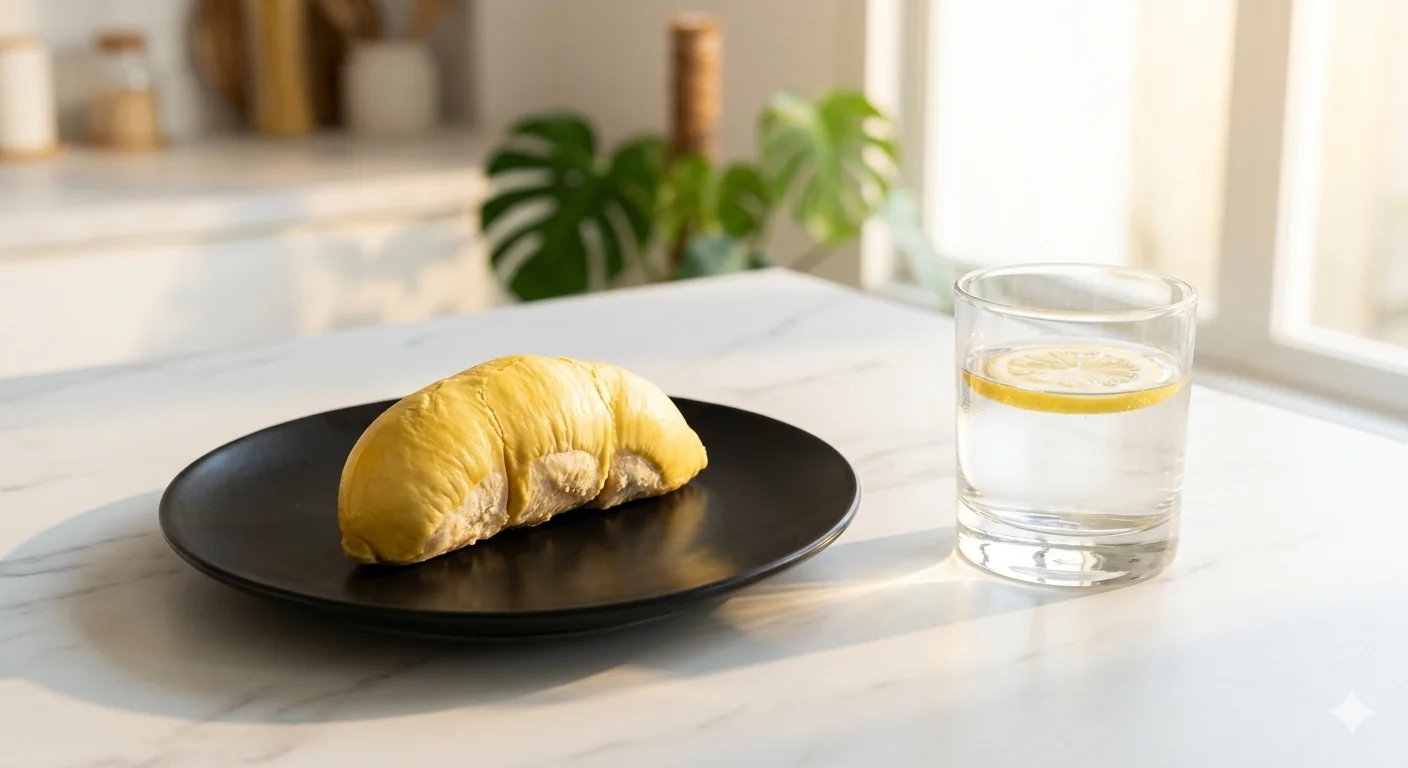
- Rinse your mouth thoroughly with plain water immediately after eating. This dilutes sugars and raises oral pH.
- Chew sugar-free gum if available — this stimulates saliva production, which is your mouth's natural buffer.
- Wait at least 30 to 60 minutes before brushing. By then, saliva has neutralized enough of the acid for brushing to be safe.
- When you do brush, use a fluoride toothpaste. Fluoride actively helps remineralize enamel that has been mildly demineralized.
Specific Populations Who Should Be More Careful
People with existing enamel erosion: If your enamel has already thinned — from acid reflux, frequent vomiting, or heavy citrus consumption — durian's acidity adds to an already compromised situation. Limit portion sizes and always rinse immediately.
Diabetics: Musang King at 37–48 Brix is a significant glycemic load. This is well-documented and not primarily a dental issue, but elevated blood sugar also affects saliva composition and reduces the mouth's natural ability to neutralize acid. If you have Type 2 diabetes, treat durian as a high-glycemic dessert and portion accordingly.
Children with developing teeth: Deciduous (baby) teeth have thinner enamel than adult teeth and are more vulnerable to acid erosion. Limit how often young children eat durian and always rinse their mouths afterward.
Practical Takeaway
Durian is not going to rot your teeth if you eat it occasionally with some basic habits in place. The real risk comes from frequency, portion size, and poor oral hygiene afterward. The acid content is real but mild compared to most fruit juices. The sugar content is genuinely high. The sticky texture extends exposure time. Rinse with water, wait before brushing, and keep portion sizes honest. That's the full picture.
Common Questions
No — wait at least 30 to 60 minutes. Acid temporarily softens enamel, and brushing too soon can physically wear it away. Rinse with water immediately instead.
Durian itself doesn't stain teeth. Its flesh has no dark pigments. If your teeth look yellower after eating a lot of durian, it's more likely enamel thinning (making the naturally yellow dentin underneath more visible) or other foods you're eating alongside it.
It depends on the comparison. Durian has higher sugar than most fruits, which is a concern. But hard candies, carbonated drinks, and citrus-heavy desserts expose teeth to more severe acid. Sticky sweets in general are problematic for the same dwell-time reason as durian.
These are often worse than fresh durian because they combine durian's sugar with additional refined sugar, sometimes acid from other flavourings, and in the case of pastries, sticky carbohydrates that cling even more. The same rinsing rules apply, but more urgently.
Tooth sensitivity usually indicates exposed dentin or gum recession — conditions where acid exposure is more directly uncomfortable. Durian's mild acidity can trigger sensitivity. Rinsing with water right after eating helps.
There's no universal number. If your oral hygiene is consistent, you rinse after eating, and you're not already dealing with erosion or sensitivity, a few times per week is unlikely to cause measurable harm. Daily heavy consumption without rinsing is a different story.
The folk practice of drinking water from the durian shell after eating is partly aligned with the rinse advice — you're consuming water, which dilutes oral sugar and acid. Whether the shell itself adds neutralizing minerals is not well-established. The water is the useful part.
Talk to your dentist, but in general — limit frequency, always rinse, and avoid eating durian right before bed when saliva flow drops significantly overnight.
Want to try fresh durian from our farm? We grow it at our own Bukit Serampang orchard in Tangkak, Johor, and sell it at our Melaka Mall stall. Stock varies daily — WhatsApp to confirm availability before you visit.
Ask About Today's Fruit