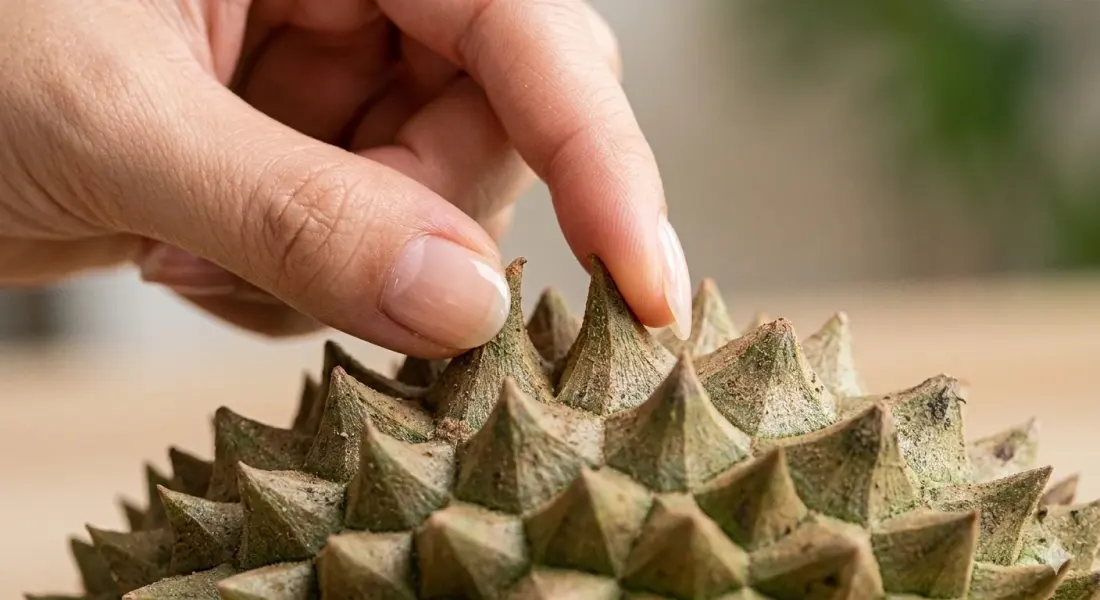
Most irrigation decisions on durian farms are made by feel — the farmer walks the orchard, presses a finger into the soil, looks at the sky, and makes a call. This works, especially for experienced growers who know their land well. But it has a hard limit: a person can only sense moisture at one depth, in one spot, at the moment they check.
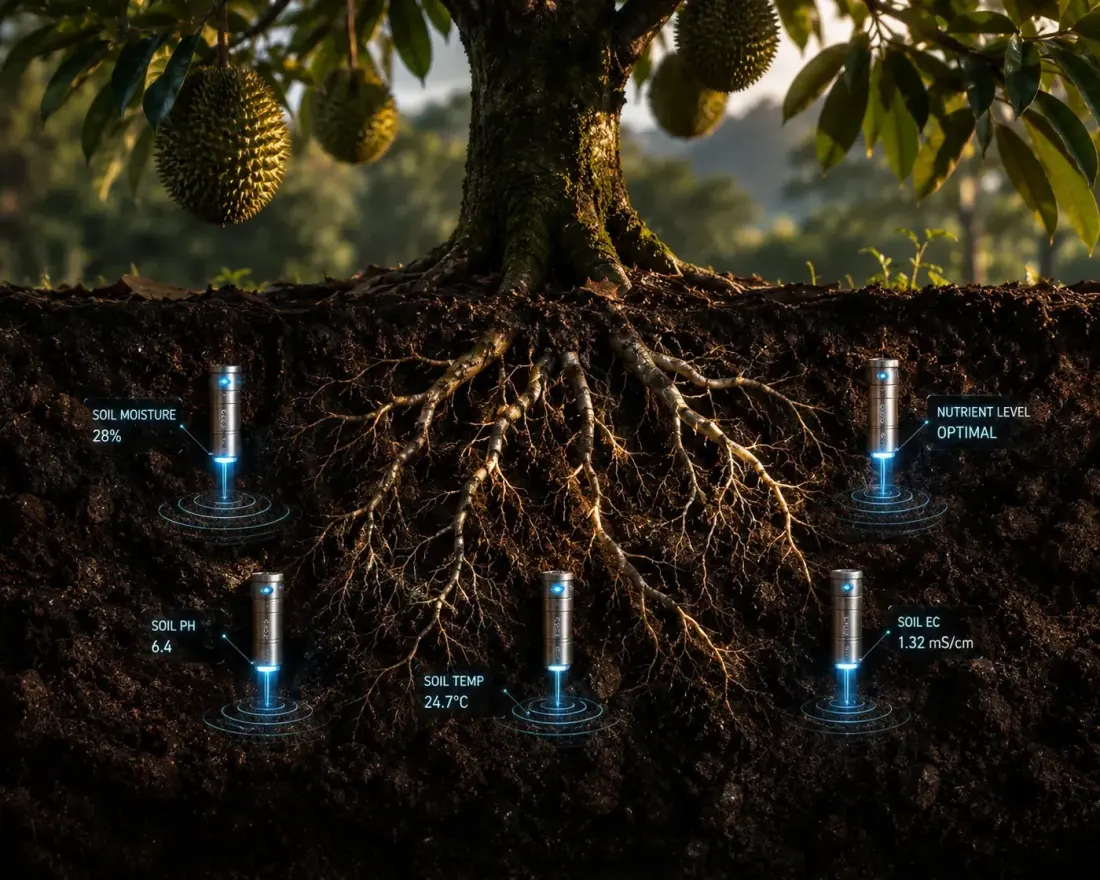
Soil intelligence systems change that. A network of sensors buried at multiple depths gives you continuous, real-time data on what the soil is actually doing — not at the surface, not in one representative spot, but across the root zone of your trees. Combined with automated irrigation control, this becomes the foundation of precision irrigation: water delivered when the plant needs it, in the amount it needs, without waste.
Here's what the technology looks like in practice, what the data means, and where the investment sits.
What "soil Intelligence" Actually Means
The term refers to real-time, multi-depth data from IoT sensor networks embedded in the orchard soil. Each sensor node typically carries several instruments:
Moisture sensors at 10–20 cm depth monitor the active root zone — this is where most water uptake happens, and this depth provides the primary irrigation trigger. When volumetric water content here drops below 20%, it's time to irrigate. When it climbs above 45%, you have a drainage problem.
Sensors at 30–50 cm depth act as drainage indicators. Saturation at this depth when the topsoil is fine usually means the subsoil is not draining properly — a chronic issue in some Malaysian orchard soils that no amount of surface irrigation management can fix without addressing drainage infrastructure.
Electrical conductivity (EC) sensors detect salt accumulation from fertilizer runoff and buildup. When EC readings climb persistently, you're over-fertilizing or under-leaching — either way, the tree's nutrient uptake is being compromised.
Soil temperature sensors round out the picture. Soil temperature below 20°C significantly slows nutrient uptake. In highland durian areas, this matters more than coastal growers might expect.
The target soil moisture range for durian is 25–35% volumetric water content in the root zone. Below 20% is the irrigation trigger. Above 45% is the drainage alert.
The Counterintuitive Part: Deliberately Drying Your Soil
The most important application of soil moisture control in durian farming is not regular irrigation management — it's pre-flowering stress induction.
Durian flowering is triggered partly by drought stress. Experienced farmers have known this for generations. The precision irrigation approach formalizes and quantifies it: intentionally drop soil moisture to 15–18% volumetric water content and hold it there for 3–4 weeks. This is the drought signal the tree responds to by setting flower buds.
The soil sensor makes this controllable. Without sensor data, a farmer is guessing at soil moisture levels during the stress period. Too wet and the stress period is ineffective; too dry for too long and the tree suffers actual damage. Sensor data lets you hit the target range deliberately and hold it there consistently. This is a research-backed technique with demonstrated outcomes in Malaysian trial sites.
Smart Controller Integration
Sensor data alone is information. Combined with automated valve control, it becomes action.
The system works like this: sensors transmit moisture readings to a cloud processing platform. The platform compares readings against the programmed thresholds. When the root zone drops below the trigger point (or rises above the drainage alert), the controller sends a signal to open or close irrigation valves on the drip or microjet system.
In multi-zone orchards — which most commercial operations should use, since soil conditions vary across any meaningful acreage — each zone has its own sensor network and independent valve control. A zone with heavier clay soil that retains moisture longer gets less frequent irrigation than a zone with sandier soil on the same farm.
Water savings demonstrated in Malaysian trial sites: 30–40% reduction compared to schedule-based irrigation. Fertilizer cost reduction from EC sensor data that prevents over-application: 15–25%. These are real savings on recurring costs.
Connectivity: Lorawan, Wifi, Or Cellular
The sensor network needs to transmit data somehow. Three main options:
LoRaWAN is the preferred choice for orchard scale. It supports 2–5 km range on low power, which means sensor nodes can run on batteries for months without replacement, and a single gateway covers most farm sizes. Cost is low per node. The limitation: you need LoRaWAN infrastructure in the area, or you need to set up your own gateway.
WiFi works for small, compact orchards where all sensors are within range of an access point. Not practical for large operations or irregular terrain.
Cellular (4G/LTE) is the fallback for remote farms without LoRaWAN infrastructure. Works anywhere there's a mobile signal, but recurring SIM card data costs add up, and power consumption is higher.
What It Costs
Sensor node: RM 800–2,500 per node, depending on sensors included (moisture only vs. full suite with EC and temperature).
Gateway: RM 1,500–5,000 depending on connectivity type and range.
Cloud subscription: RM 100–300 per month for data processing, storage, and the dashboard interface.
A 10-hectare orchard with nodes every 2 hectares per management zone, plus a gateway and one year of cloud subscription, runs roughly RM 12,000–30,000 total first-year cost. Water and fertilizer savings at the demonstrated rates would typically recover this in 2–4 growing seasons, depending on current water and fertilizer costs.
Practical Takeaway
Soil intelligence systems are not plug-and-play magic. They require initial setup time to place sensors correctly, calibrate thresholds to your specific soil type, and train whoever manages the farm to interpret the data rather than ignore it.
But the fundamental value proposition is clear: you stop making irrigation decisions based on surface appearances or fixed schedules, and start making them based on what the soil is actually doing at root depth, in real time. For durian specifically, where the difference between correct and incorrect soil moisture at flowering time can mean the difference between a productive season and a failed flush, this level of control has tangible value.
Common Questions
Volumetric water content (VWC) is the fraction of soil volume occupied by water, expressed as a percentage. 25–35% is the target range for durian root zones. Below 20% is an irrigation trigger. The sensor reads this directly — you don't need to estimate it.
If the system is connected to automated valve control, the system acts on the data without you checking. For manual systems, a morning check of the dashboard is enough for routine management. During pre-flowering stress induction, more frequent review is worthwhile.
Root systems slow their metabolic activity below 20°C, which means even if fertilizer is present in the soil, the tree cannot absorb it efficiently. This is relevant for highland durian farms in cooler conditions.
Yes, and this is one of the most practical applications. Target 15–18% VWC in the root zone, hold it for 3–4 weeks. Sensor data confirms you're in range rather than guessing.
LoRaWAN is a long-range, low-power wireless protocol. A single gateway covers 2–5 km radius, sensor nodes run on battery for months, and the system cost per node is low. WiFi requires much more infrastructure to cover the same area and is not practical across large orchards.
These figures come from Malaysian trial site data. Actual savings depend heavily on how inefficient current irrigation is — orchards running frequent, long-schedule irrigation without feedback have more room to improve than orchards already managed carefully by feel.
Good systems flag sensor failure and default to a safe irrigation schedule rather than cutting water entirely. Redundant sensors in critical zones are worth the extra cost.
At that scale, the economics are marginal. A single sensor node plus gateway plus cloud subscription is a meaningful investment for a small operation. The pre-flowering stress control application is probably the most compelling use case — getting the drought period right has outsized impact on yield.
Want to try fresh durian from our farm? We sell direct from our Bukit Serampang orchard at Melaka Mall. Stock varies daily — WhatsApp to confirm availability before you visit.
Ask About Today's Fruit