Key Takeaways
- Musang King fell from the usual RM90–100/kg to as low as RM6–9/kg at the peak of the 2026 glut.
- It was an oversupply crash — too much fruit, not weak demand.
- Cheap does not mean bad. What changes with price is grade, not the fruit itself.
- Good graded B and C fruit from established farms still held around RM20–25/kg.
If you walked past a durian stall in 2026 and did a double-take at the price, you were not imagining it. Musang King — the variety that spent a decade getting more expensive every season — suddenly turned up cheap. Whole fruit for a few ringgit. Fill-a-sack deals. All-you-can-eat buffets from RM25 a head.
So what broke? Nothing broke. The fruit is fine. This was a supply story, and it is worth understanding before you assume cheap durian is bad durian.
How Far Prices Actually Fell
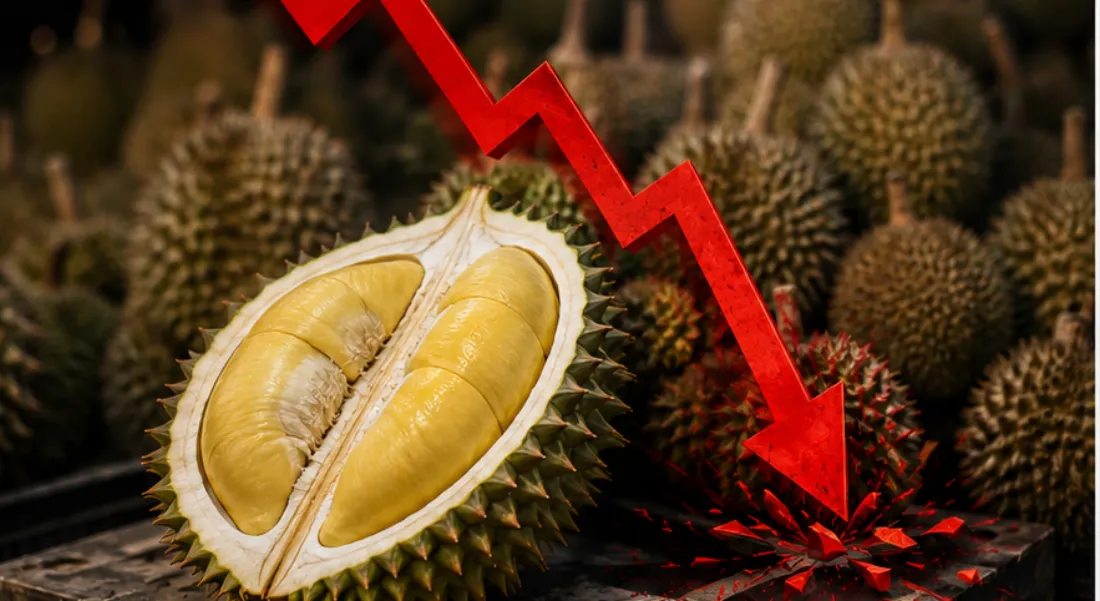
At its usual level, Musang King retails around RM90–100 a kilogram in a normal season. Through 2026, Malaysian media reported it dropping to as low as RM6–9 a kilogram at the deepest point of the glut — a fall of close to 90%. In some spots, sellers cleared whole fruit for a few ringgit each just to move volume.
That is why the buffet deals appeared: fill-a-sack-for-RM100 offers, seven fruits for RM100, and Musang King buffets from RM25 per person. When there is more fruit than there are mouths, sellers would rather sell it cheap than watch it spoil overnight.
"When there is more fruit than there are mouths, cheap is not a bargain — it is survival."
The Three Real Reasons
Three things landed at the same time, and together they flooded the market.
1. The planting boom came of age. Around five years ago, high durian prices set off a rush of new planting across the country. Durian takes years to bear seriously — so a big share of those trees hit full production together in 2026. More trees, more fruit.
2. El Niño synchronised the harvest. Weather drives flowering. An El Niño pattern nudged much of the country to flower and fruit around the same window instead of staggering naturally. When everyone's trees drop at once, the market gets a wall of fruit in a few short weeks.
3. Export-grade fruit stayed home. A large volume of durian that does not meet export standards has nowhere to go but the domestic market. Normally the premium fruit is skimmed for China; when export channels can only take so much, the rest floods local stalls and drags the whole price down.
Honest note: You may see headlines blaming an "export slowdown" or "weaker demand." That is not what our season looked like. Demand for good durian was strong — the problem was the sheer volume of fruit, especially lower-grade fruit that never had an export buyer to begin with.
Cheap Does Not Mean Bad
Here is the part most people get wrong. A glut does not make durian worse. The fruit growing on the tree is exactly the same fruit it was last year — there is just more of it, so the price falls across the board.
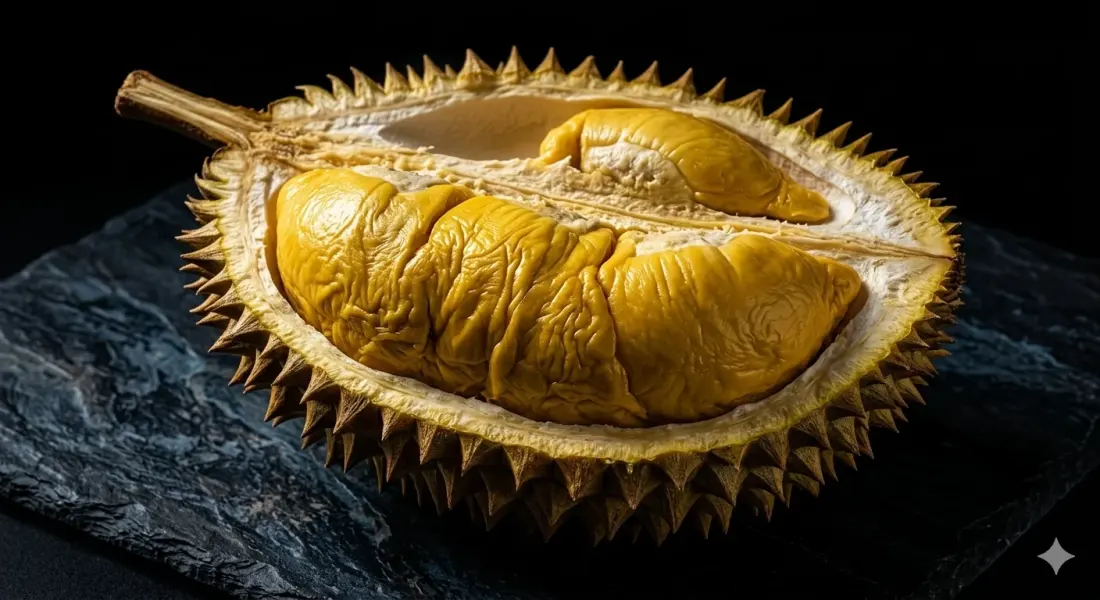
What actually moves with price is grade. The rock-bottom fire-sale lots are usually the small, odd-shaped, thin-fleshed, or lower-grade fruit — sold fast and by weight to clear stock. Perfectly good eating, if that is what you want. But it is not the same thing as a well-shaped, full-chambered Grade A fruit, and it should not be priced like one either.
Why Our Graded Fruit Held Its Price
On our own stall through the glut, the picture was more layered than the RM6 headlines suggest. Good Grade B and C Musang King still sold around RM20–25 a kilogram. Lower, bulk-grade fruit — what we sell as CC grade — went out at about RM100 for 10kg, roughly RM10 a kilo, for people who just want volume to share.
None of that is us holding out for a premium. It is grade doing what grade does: a fruit with more full chambers, cleaner shape, and better flesh yield is worth more than a small one with a single filled chamber, glut or no glut. The single-digit prices you saw at the roadside were, mostly, the very bottom of the grade ladder moving in a hurry.
Which is the real buyer's lesson from this crash: the price only makes sense once you know the grade. If you want to understand what those letters mean, our guide to the varieties we grow is a good place to start.
How Long It Lasts
Malaysia's Federal Agricultural Marketing Authority (FAMA) warned that the 2026 oversupply would run through August. That matches how a glut normally behaves: it is a mid-season wall of fruit, not a permanent reset. As the main harvest tapers and the synchronised drop passes, supply thins and prices drift back toward normal.
So if you love durian, the practical read is simple — a glut year is the best time in years to eat as much as you like. The window does not stay open forever.
What It Means — For You and For Us
For buyers: eat well and eat often, but know your grade. RM6 fruit can be a genuine steal or a small, hollow disappointment — the price alone will not tell you which. Ask the seller what grade it is, and buy from someone who will answer honestly.
For farms like ours: a crash is not free money for anyone. Prices this low, for this long, squeeze the small growers hardest — the same people who planted carefully and graded honestly. A good glut year for eaters can be a hard year for the orchards that feed them. Buying graded fruit from a named farm, even at glut prices, keeps that side of the trade alive.
Fresh, farm-graded durian from our own Bukit Serampang orchard — glut or no glut, priced for what it actually is. Stock changes daily; WhatsApp us before you visit.
Check Today's StockCommon Questions
At the peak of the glut, Malaysian media reported Musang King falling from the usual RM90–100 per kg to as low as RM6–9 per kg — a drop of nearly 90% — with some roadside deals selling whole fruit for a few ringgit each. Well-graded fruit from established farms held up better, closer to RM20–25 per kg for good B and C grade.
Three things hit at once: a wave of durian trees planted during the investment boom about five years ago reached full production, an El Niño weather pattern pushed much of the country to fruit at the same time, and a large volume of fruit that does not meet export standards was left to flood the local market. It was an oversupply crash, not a collapse in demand.
No. A glut means there is simply more fruit than buyers, so prices fall across the board — the fruit itself is the same. What actually changes with price is grade. The cheapest fire-sale lots are usually small, odd-shaped, or lower-grade fruit sold by weight to clear stock. Good graded fruit stays priced for what it is.
Malaysia's Federal Agricultural Marketing Authority (FAMA) warned the oversupply would run through August 2026. In practice, prices ease back up as the main harvest tapers and the peak of the glut passes, so the deepest discounts are a mid-season window rather than a permanent new price.
It can be, but check the grade. During the 2026 glut some sellers did clear whole fruit for a few ringgit each — usually small, lower-grade, or CC-grade fruit sold in bulk to move volume. That is a genuine bargain if you know what you are buying. Grade A and premium B fruit from a named farm did not fall to those prices.