Short answer: Grafted trees usually fruit in 4–6 years; seed-grown trees take 7–12 years. For a commercial orchard, plant grafted trees of a known variety and budget for about 5 years of care before the first real harvest.
If you have ever planted a durian seed and stood there waiting, you already know the short answer: durian trees take their time. But "a long time" is not useful when you are planning an orchard, budgeting for years of maintenance, or deciding whether to graft. The real timeline depends on the variety, the method of propagation, and how the tree is managed. Here is what actually happens, year by year.
Seedling Trees: 7 to 12 Years
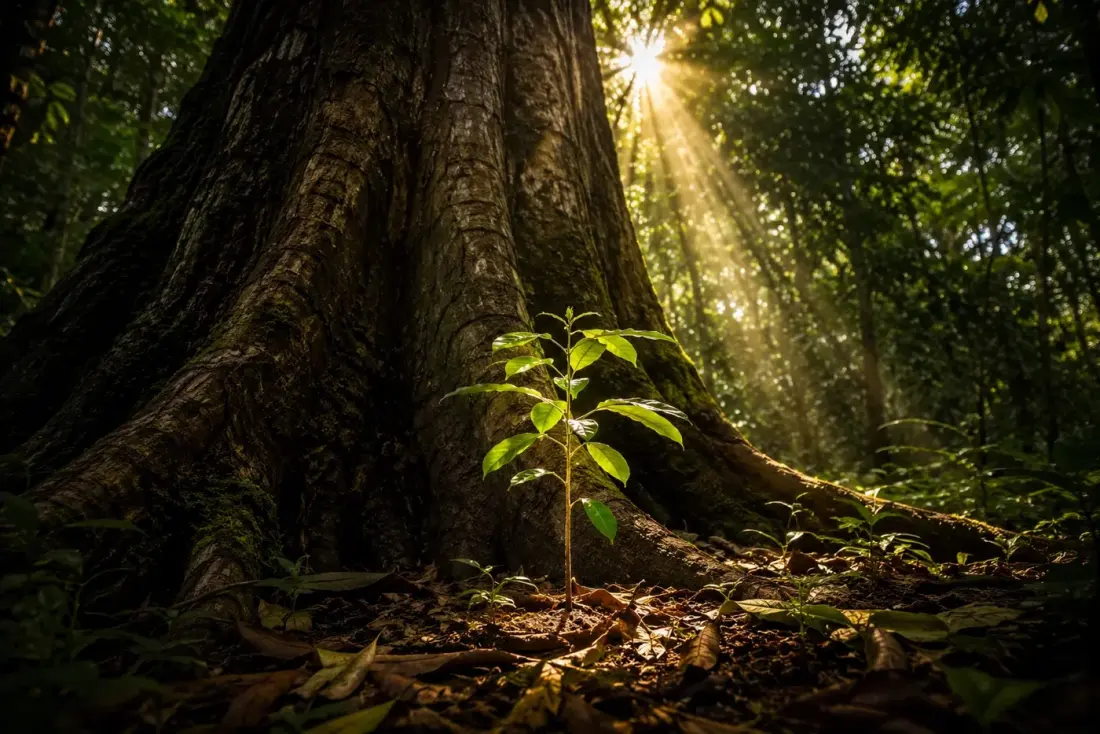
A durian tree grown from seed — meaning you plant a fresh seed and let it grow on its own roots — is the slowest route. Most seedling trees begin producing their first fruit between year 7 and year 12. Some late-maturing varieties, particularly certain Musang King and D24 lines, may not fruit until year 14 or even year 15.
There is another problem with seedlings: the fruit you get may not match the parent. Durian seeds are highly heterozygous, meaning the offspring is genetically unique. You might plant a seed from an excellent Musang King and end up with fruit that is smaller, less creamy, or more bitter. This is why commercial growers almost never rely on seedlings for production.
Grafted Trees: 4 to 6 Years
Grafting — attaching a scion from a known variety onto a rootstock — is the standard method in commercial orchards. A well-grafted tree, planted in good soil with adequate water and nutrition, typically fruits in 4 to 6 years after planting in the field.
The clock starts from the time the grafted tree is transplanted into its permanent position, not from when the graft was made. The graft union itself needs a season to fully heal and establish before the tree puts energy into reproduction.
Some experienced growers in Malaysia report first flowers appearing as early as year 3 on vigorous grafted trees in ideal conditions, but a meaningful harvest — enough fruit to justify the effort — usually comes in year 5 or 6.
Tissue Culture and Marcottage (Air-Layering): 3 to 5 Years
Tissue-cultured plantlets and marcottage (air-layered) trees carry the genetic maturity of the parent tree. Because the scion material is already physiologically mature, these trees can fruit sooner. Marcottage trees have been known to produce fruit within 3 to 4 years of planting.
Tissue culture is gaining popularity because it produces uniform, disease-free planting material. The timeline is similar to grafting, sometimes slightly faster because the plantlets are vigorous and well-rooted when they go into the ground.
What Affects the Timeline
Several factors can push the timeline forward or backward:
- Variety. D24 and Black Thorn tend to fruit earlier than Musang King. Local varieties like Chanee are often mid-range.
- Climate and rainfall. Trees in areas with consistent rainfall and no prolonged drought fruit more predictably. Water stress during the dry season can delay flowering.
- Soil and nutrition. Deep, well-drained, fertile soil with regular organic matter gives the tree what it needs to reach reproductive maturity faster. Poor, compacted, or waterlogged soil slows everything down.
- Sunlight. Durian trees need full sun. Trees planted under partial shade or too close together will take longer to fruit and produce less when they do.
- Pest and disease pressure. Stem canker, fruit borers, and phytophthora root rot all drain the tree's energy. A stressed tree delays reproduction.
Practical Takeaway
If you are planting durian commercially, use grafted or tissue-cultured trees of a known variety. Budget for 5 years of maintenance before your first real harvest. During those years, focus on building a strong trunk, a wide canopy, and a healthy root system. The tree that grows well in years 1 through 4 is the one that gives you heavy crops in years 6 through 20.
If you planted a seed in your backyard out of curiosity, enjoy the shade. The fruit will come — just not on a schedule that fits a business plan.
It is rare but not impossible. Marcottage trees in ideal tropical conditions with perfect management have fruited in under 3 years. For grafted trees, year 4 is more realistic as a minimum.
Common causes include insufficient sunlight (the tree is shaded), poor soil drainage, lack of a proper dry season trigger, or the tree being a seedling from a late-maturing parent. Check for root diseases and ensure the tree gets at least 6 hours of direct sun.
Fertilising supports healthy growth, which indirectly helps the tree reach fruiting age sooner. But over-fertilizing, especially with too much nitrogen, can push the tree to grow vegetatively at the expense of flowering. Balance is key.
A healthy durian tree can produce fruit for 50 to 100+ years. Peak production is usually between years 15 and 40. Some heritage trees in Malaysia and Thailand are over 100 years old and still fruiting.
For any serious planting, grafted or tissue-cultured trees are the only practical choice. Seedlings are useful for rootstock production or breeding programs, not for reliable fruit production.
Yes, indirectly. A larger planting hole (at least 60cm x 60cm x 60cm) filled with good topsoil and compost gives the young tree a better start, which can shave a year off the time to first fruit.
A controlled dry period of 2 to 4 weeks can induce flowering in mature trees. This is standard practice in Thailand. But this only works on trees that are already old enough to fruit — drought stress will not force a 2-year-old grafted tree to flower.
Fresh durian, farm-direct. Stock changes daily — WhatsApp us before you visit.
Check Today's Stock