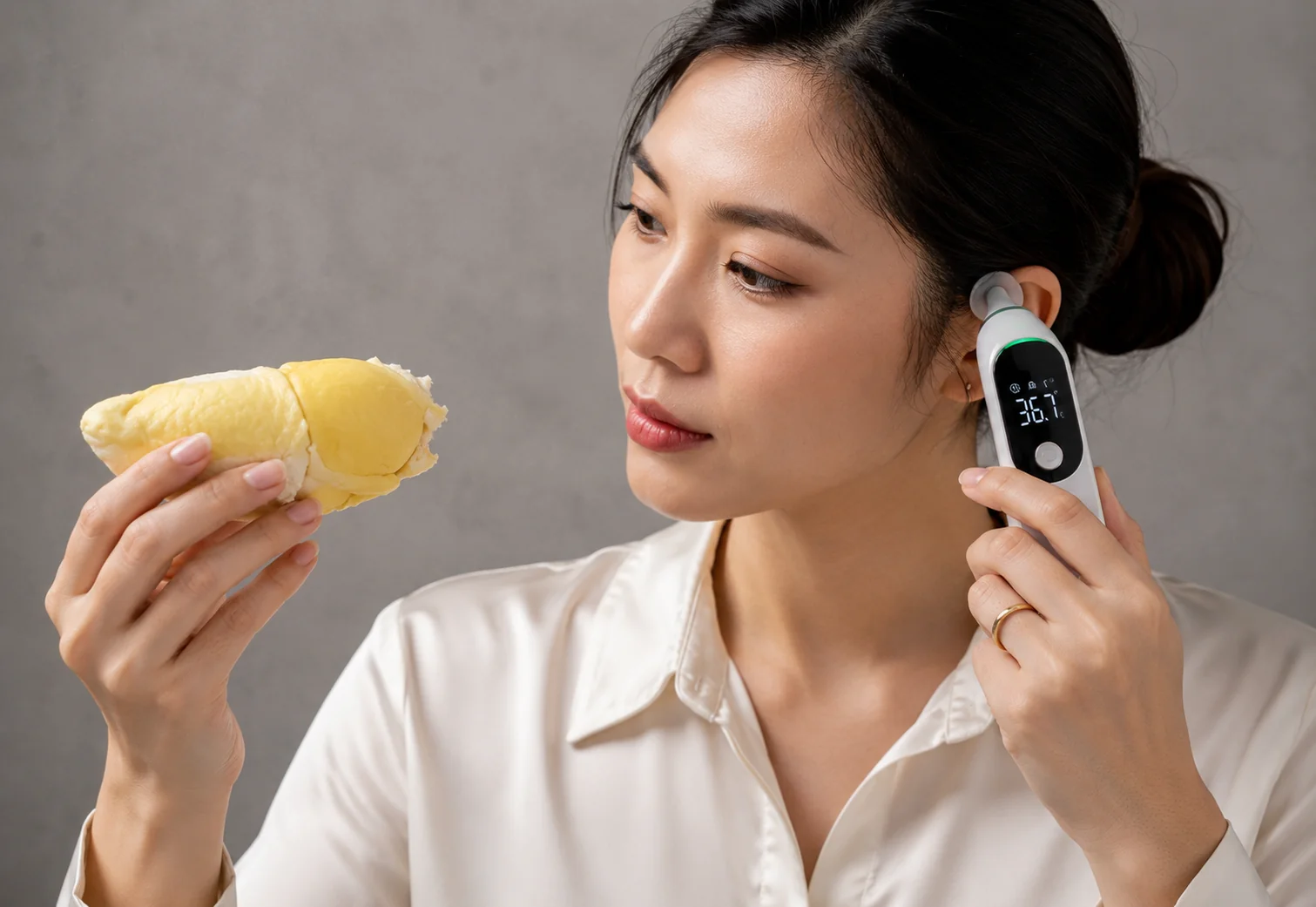
The moment a woman in Southeast Asia announces her pregnancy, someone — usually a well-meaning auntie — will warn her: "Jangan makan durian, nanti keguguran." Don't eat durian, you'll miscarry. This belief is deeply rooted across Malaysia, Indonesia, Thailand, and Singapore. But does eating durian during pregnancy actually cause miscarriage? Let's look at what we actually know.
The Claim: Eating Durian Causes Miscarriage
This belief likely comes from two properties of durian. First, durian contains high levels of sugar and calories. A single serving (about 243g of flesh) packs roughly 357 calories and 66g of carbohydrates. Second, durian is traditionally considered a "heaty" food in Chinese and Malay traditional medicine. The idea is that this internal "heat" can destabilize a pregnancy, especially in the first trimester.
What the Evidence Actually Shows
There is no peer-reviewed clinical study that links durian consumption to miscarriage in humans. Zero. The belief is entirely anecdotal and rooted in traditional humoral medicine systems (hot/cold food classifications), not in obstetric research.
Here is what we do know:
1. Durian does not contain any known abortifacient compounds. It does not contain chemicals that trigger uterine contractions or interfere with progesterone, the hormone that maintains pregnancy.
2. The "heaty" classification is a traditional framework, not a biomedical one. Eating durian may cause sensations of warmth, sweating, or thirst — especially in hot climates — but these are metabolic responses to a calorie-dense food, not a threat to the uterus.
3. The real risk with durian during pregnancy is blood sugar. Durian has a glycemic index that varies by variety but sits in the low-to-moderate range (around 44–49). However, the total carbohydrate content is high. For women with gestational diabetes or insulin resistance, a large serving of durian can spike blood sugar significantly. This is a legitimate concern, but it is a metabolic one, not a miscarriage risk.
4. Durian's nutrients are neutral to mildly beneficial. It contains tryptophan and various B vitamins, and some small studies suggest it has antioxidant properties.
5. Overripe durian may contain trace alcohol as a byproduct of natural fermentation. While the amount is tiny, pregnant women are generally advised to avoid alcohol entirely. This is a separate issue from the fruit itself.
What the medical community says: Obstetricians in Malaysia and Singapore generally do not tell patients to avoid durian entirely. The common advice is moderation — one or two segments is fine, but don't eat a whole fruit in one sitting, especially if you have gestational diabetes.
Conclusion
Eating durian does not cause miscarriage. The claim has no scientific basis. The real concern is blood sugar management, not pregnancy loss. If you are pregnant and have no gestational diabetes, eating a few segments of durian is safe. If you have gestational diabetes, limit your intake and monitor your blood sugar. As with everything in pregnancy, moderation is the practical answer.
Practical Takeaway
- Eat 1–2 segments if you crave durian. That is roughly 50–80g of flesh.
- Avoid eating durian on an empty stomach, which can worsen blood sugar spikes.
- If you have gestational diabetes, consult your doctor before eating durian.
- Do not eat overripe durian that smells strongly of alcohol.
- Stay hydrated. Durian is calorie-dense and can cause thirst.
Fresh durian, farm-direct. Stock changes daily — WhatsApp us before you visit.
Check Today's Stock