Short answer: Yes, but only cooked. Boil them for 25–30 minutes or roast at 180°C until soft, peel off the thin brown skin, and start with a small amount. Never eat them raw. The real risk is an upset stomach, not poisoning.
You've just finished a satisfying session of durian, and you're staring at a pile of large, pale seeds. A friend says they're poisonous. Another says they eat them roasted every time. Who's right?
The short answer: durian seeds are not poisonous, but they must be cooked before eating. Raw durian seeds contain compounds that can cause digestive discomfort. Once boiled, roasted, or fried, they become safe and mildly nutritious.
From our orchard
Every durian we sell comes from our own Bukit Serampang orchard, so we see a lot of seeds. Our advice at the stall is the same as this article: never eat them raw. Boil or roast them first, peel the skin, and treat them as a starchy snack in small amounts — not as a health food.
What's Actually Inside a Durian Seed
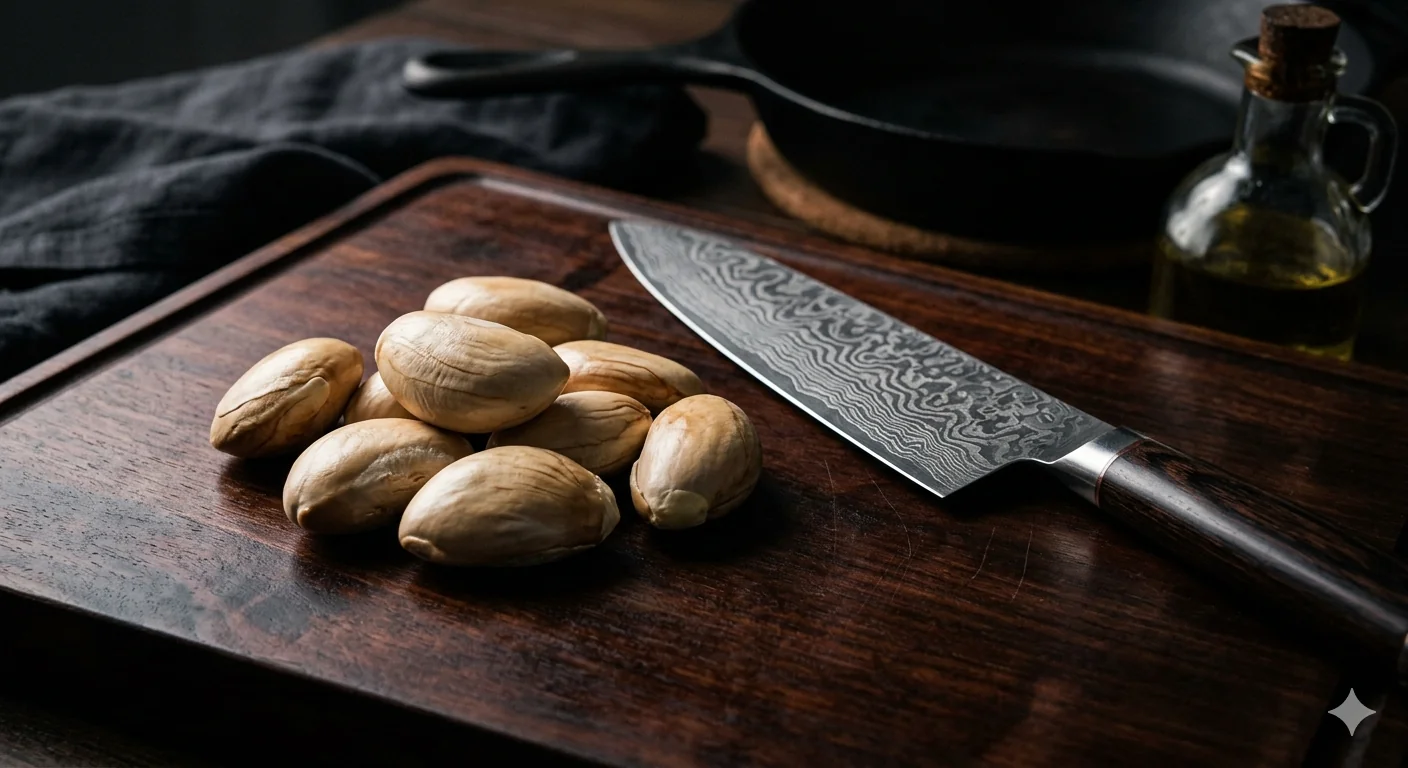
Durian seeds are starchy, similar in composition to chestnuts or taro. They contain:
- Complex carbohydrates (mainly starch)
- Small amounts of protein and fat
- Dietary fibre
- Trace minerals like potassium and magnesium
However, raw durian seeds also contain cyclopropenoid fatty acids (CPFAs) and trypsin inhibitors. These are naturally occurring anti-nutritional factors found in several tropical seeds and legumes. Trypsin inhibitors interfere with protein digestion in the gut, which can lead to bloating, nausea, or stomach cramps if consumed raw in any meaningful quantity.
This is the source of the "poisonous" myth. The seeds aren't toxic in the way arsenic is toxic — they contain compounds that your digestive system doesn't handle well when uncooked.
How Cooking Changes Everything
Heat deactivates trypsin inhibitors and breaks down most CPFAs. This is the same principle that makes kidney beans safe to eat (raw kidney beans contain lectins that cause severe gastric distress) or cassava safe after processing.
Common preparation methods across Southeast Asia:
- Boiling: 20–30 minutes until the seed softens. The texture becomes similar to a waxy potato or chestnut.
- Roasting: Over charcoal or in an oven at 180°C for 25–35 minutes. The outer skin cracks and the interior becomes slightly fluffy.
- Frying: Sliced thin and deep-fried into chips, particularly common in Indonesian and Malaysian home cooking.
- Steaming: Used in some Thai preparations, often with coconut milk.
After cooking, the starch becomes digestible and the anti-nutritional factors are largely neutralized.
What Do They Taste Like?
Honestly? Durian seeds are bland. They don't carry the sulfurous aroma of the flesh. The flavour is mild, slightly nutty, with a starchy density closer to chestnut than potato. Some people enjoy them. Most durian lovers discard them without a second thought because the flesh is the real prize.
In rural areas of Malaysia, Thailand, and Indonesia, cooked durian seeds are sometimes eaten as a snack or added to porridge. It's practical use of what would otherwise be waste.
Nutritional Value: Manage Expectations
Cooked durian seeds provide calories from starch and modest amounts of fibre. They are not a superfood. They don't contain significant vitamins or unique health compounds. If you're eating them, you're eating them because they're there and they're free — not because they'll transform your health.
Per 100g of cooked seed (approximate):
- Calories: 140–160 kcal
- Carbohydrates: 30–35g
- Protein: 2–3g
- Fat: 0.5–1g
- Fibre: 1–2g
The Real Risk: Digestion, Not Toxicity
The actual risk of eating raw durian seeds is not acute toxicity. It is that they are extremely difficult to digest in their raw state. Eating them raw can cause stomach discomfort, bloating, or intestinal blockage because your body cannot break down the dense starch and fibrous material. That physical discomfort is most likely what gave rise to the "poisonous" label in the first place.
Practical Takeaway
If you want to try durian seeds:
1. Wash the seeds thoroughly. 2. Boil for 25–30 minutes or roast at 180°C until the interior is soft. 3. Peel off the thin brown skin before eating. 4. Start with a small portion to see how your stomach handles them. 5. Never eat them raw.
If you don't want to bother, that's fine too. Billions of durian seeds get composted every season, and the world keeps turning.
Sources
- Berry SK (1980). Cyclopropene fatty acids in some Malaysian edible seeds and nuts: I. Durian (Durio zibethinus, Murr.). Lipids 15: 452–455. Link
Fresh durian, farm-direct. Stock changes daily — WhatsApp us before you visit.
Check Today's Stock