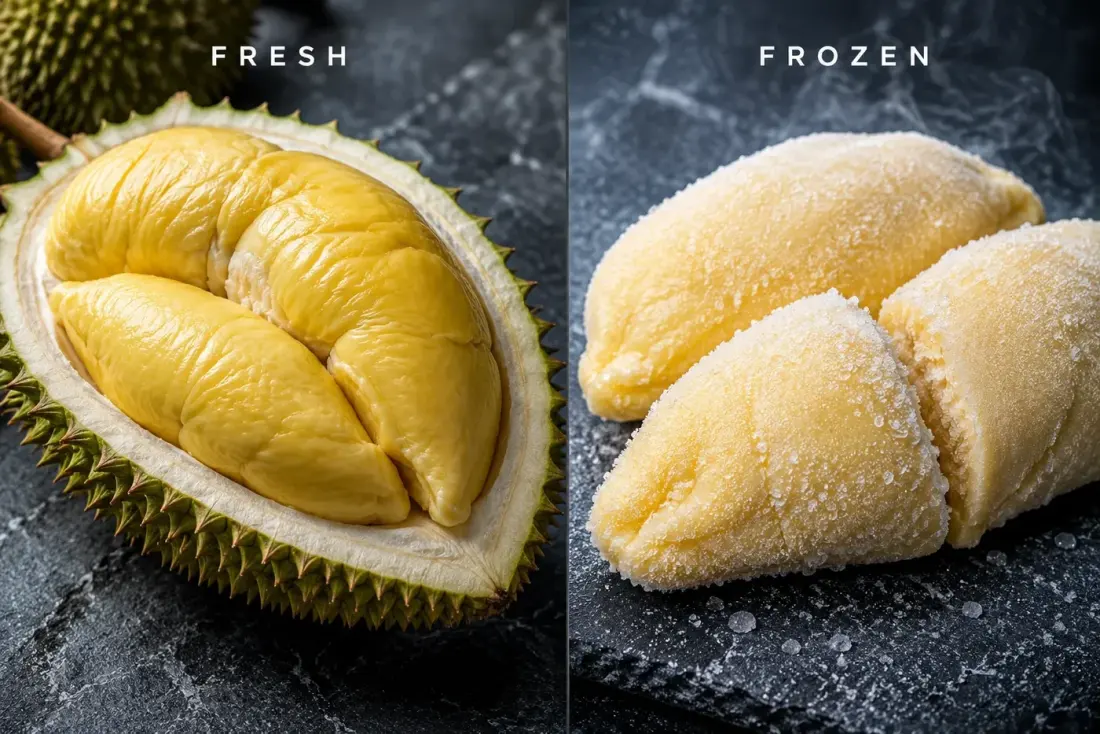
Short answer: Not on its own. Durian isn't a strong gout trigger; its fructose is the concern. If you have gout or high uric acid, keep portions small, don't pair it with beer or sugary drinks, and ask your doctor what's safe for you.
If you've ever been warned to stay away from durian because of gout, you're not alone. This is one of the most common dietary warnings passed around in Southeast Asian households. The logic seems straightforward — durian is rich, heavy, and often eaten alongside beer or liquor, a combination that sounds like a gout flare waiting to happen. But how much of this is backed by science, and how much is just kitchen-table wisdom?
The short answer: durian alone is unlikely to trigger a gout attack in most people, but the context in which it's eaten — and your personal health profile — matters a great deal.
What the Science Says About Durian and Uric Acid
Gout is caused by elevated levels of uric acid in the blood (hyperuricemia). When uric acid crystallizes in joints, it triggers intense inflammation — the sudden, excruciating pain people associate with gout flares. Uric acid is a byproduct of purine metabolism. Foods high in purine — organ meats, certain seafood, beer — are well-established triggers.
Durian's purine content is moderate. It is not in the same category as liver, anchovies, or beer. However, durian is high in sugar, particularly fructose. This is where the connection gets more interesting. Fructose metabolism in the liver increases uric acid production as a byproduct. Research published in major medical journals has found that fructose-rich beverages are significantly associated with higher serum uric acid levels and increased gout risk.
So the concern isn't durian's purine content per se — it's the fructose load, especially when consumed in large quantities.
The Real-World Risk Factors
In practice, a gout flare after durian season is rarely about the durian alone. Consider the typical scenario:
- A person eats several segments of durian (high fructose intake)
- Washes it down with beer or sweetened drinks (alcohol impairs uric acid excretion; more fructose)
- Is already borderline hyperuricemic without knowing it
- Has a family history of gout
In this context, durian is one contributor in a chain of factors. Blaming the durian by itself oversimplifies the physiology.
What About People Who Already Have Gout?
For individuals diagnosed with gout or chronic hyperuricemia, the calculus changes. During an active flare, most rheumatologists recommend avoiding all foods that could elevate uric acid — including high-fructose fruits. Between flares, moderate durian consumption (a few segments, not half a fruit) is generally considered acceptable, provided the person is on appropriate medication (allopurinol, febuxostat) and stays well-hydrated.
The key variable is portion. Eating 2–3 segments is physiologically different from eating 15 in one sitting.
Practical Takeaway
If you don't have gout or hyperuricemia: enjoy durian in reasonable portions. Drink water, not beer, alongside it. The fruit itself is not a gout trigger in isolation.
If you have gout or elevated uric acid: limit durian to small portions, avoid pairing it with alcohol or sugary drinks, and consult your doctor about your personal thresholds. The fructose content is the real concern, not some mystical property of the fruit.
Sources
- Choi HK, Curhan G (2008). Soft drinks, fructose consumption, and the risk of gout in men: prospective cohort study. BMJ 336: 309–312. Link
- U.S. Department of Agriculture. Durian, raw or frozen (FDC 168192). FoodData Central. Link
Durian Khakha is a durian grower, not a medical provider. For personal health advice, speak to your doctor.
Fresh durian, farm-direct. Stock changes daily — WhatsApp us before you visit.
Check Today's Stock