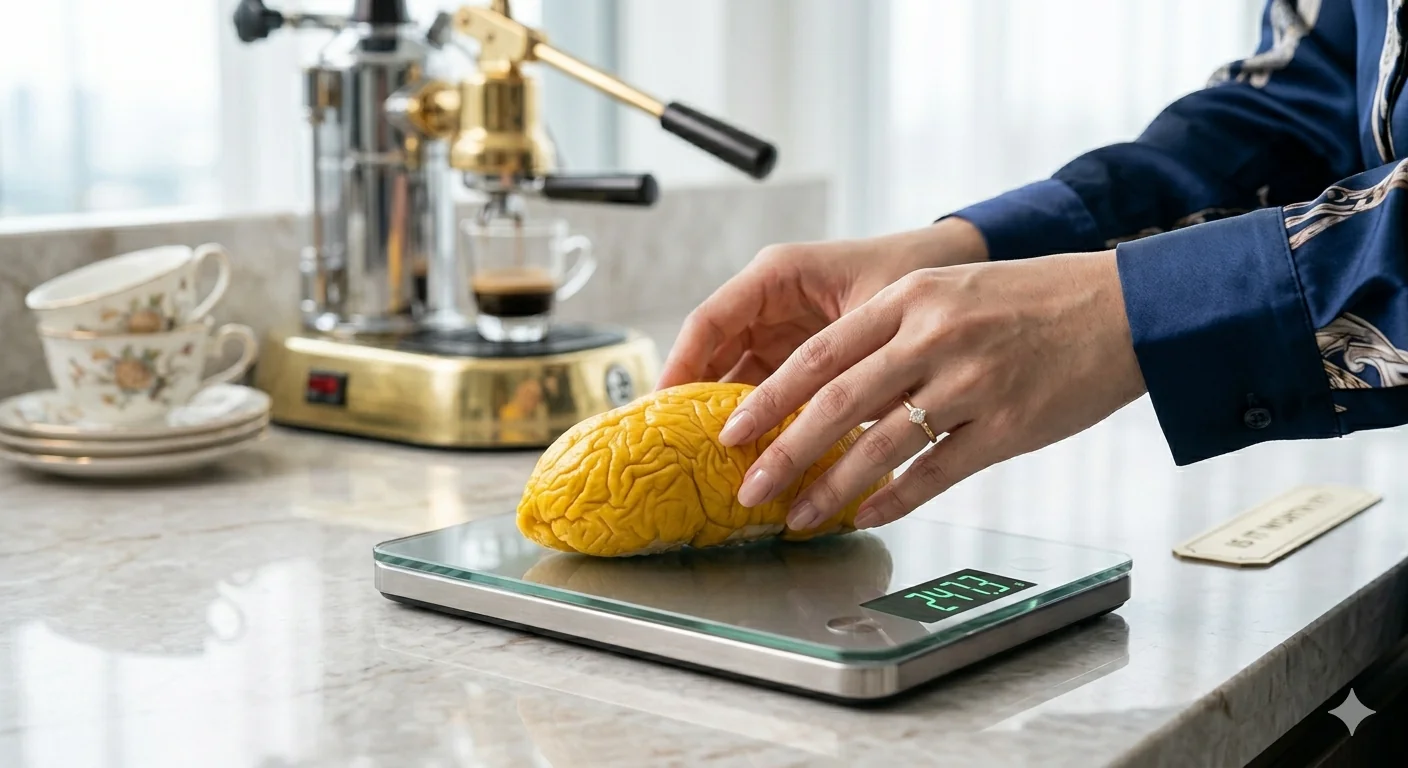
Short answer: It can, if you eat a lot. Durian is rich in fibre, fat and sulfur compounds. Stick to 2–3 pods on a stomach that isn't already full, drink water instead of soda, and avoid beer with it.
You ate two bowls of Musang King after dinner. An hour later, your stomach feels like a balloon, there is a slow burn creeping up your chest, and you are already planning your route to the bathroom. Is the durian really to blame, or is it something else? The answer is more nuanced than the warnings your mother gave you.
Why Durian Can Cause Bloating
Durian is unusually dense in fermentable carbohydrates. A 100-gram serving contains roughly 27 grams of carbohydrates, including oligosaccharides — short-chain sugars that your small intestine cannot fully break down on its own. When these reach the colon, gut bacteria ferment them and produce hydrogen, carbon dioxide, and methane as byproducts. That gas has to go somewhere, and the result is bloating.
The fat content makes this worse. Durian contains about 5 grams of fat per 100 grams, mostly monounsaturated and polyunsaturated fatty acids. Fat slows gastric emptying, which means food sits in your stomach longer. Combine slow digestion with active fermentation in the colon, and you have a recipe for that heavy, distended feeling.
People who eat durian on a full stomach — especially after a rice-heavy meal — report bloating more often. It is not magic. It is volume plus fermentation.
The Heartburn Connection
Durian's pH sits around 5.0 to 5.8, which is mildly acidic compared to many fruits. On its own, that is unlikely to trigger reflux in most people. The real problem is mechanical.
Because fat delays stomach emptying, the stomach remains distended for longer. A full, pressurized stomach pushes against the lower esophageal sphincter (LES) — the valve that keeps acid from flowing back up. If the LES relaxes even briefly, acid escapes into the esophagus and you feel the burn.
People who already have gastroesophageal reflux disease (GERD) or a weak LES are far more likely to experience this. For them, durian is not the root cause, but it is a reliable trigger.
There is also a thermal component. In traditional Chinese medicine, durian is classified as a "heaty" food. While that framework does not map directly to Western physiology, the sensation people describe — warmth in the chest, a flushed feeling — overlaps with what reflux patients report. The two explanations are not mutually exclusive.
Diarrhea: When Durian Moves Things Along
Durian contains about 3.8 grams of dietary fibre per 100 grams. That is moderate — more than a banana, less than a cup of lentils. For most people, this amount of fibre is beneficial and supports regular bowel movements.
However, if you are not accustomed to a high-fiber diet, a sudden large serving of durian can accelerate intestinal transit. The fibre draws water into the colon, softening stool and increasing volume. Your gut responds by moving things along faster. If you ate several segments in one sitting, especially on an empty stomach, loose stools or mild diarrhea is a predictable outcome.
There is a second factor. Durian contains sulfur compounds, particularly thiols and disulfides, which are the same family of molecules found in garlic and onions. In sensitive individuals, sulfur compounds can irritate the gut lining and contribute to looser stools.
What Actually Makes the Difference
Three variables determine whether durian will upset your stomach:
1. Quantity. Most people who report problems ate more than 200 grams in one sitting. A segment or two (roughly 80–120 grams of flesh) is well tolerated by the majority of adults.
2. What you ate with it. Durian plus a heavy meal, alcohol, or carbonated drinks multiplies the digestive load. Durian eaten alone or with light food is far less likely to cause issues.
3. Your baseline gut health. People with irritable bowel syndrome (IBS), GERD, or fructose malabsorption will react more strongly. Their guts are already sensitive; durian just adds fuel.
Practical Takeaway
If you want to enjoy durian without the gut drama, eat a moderate portion — two to three segments — on a stomach that is not already full. Drink water, not soda. Avoid pairing it with alcohol, especially beer, which adds its own gas and fermentation load. If you have a known digestive condition, start with a small amount and see how your body responds before committing to a full session.
Durian is not toxic. It is just rich. Treat it like you would a heavy cheese plate or a rich curry, and your stomach will likely cooperate.
Sources
- U.S. Department of Agriculture. Durian, raw or frozen (FDC 168192). FoodData Central. Link
- Li JX, Schieberle P, Steinhaus M (2012). Characterization of the major odor-active compounds in Thai durian (Durio zibethinus L. 'Monthong'). Journal of Agricultural and Food Chemistry 60(45): 11253–11262. Link
Durian Khakha is a durian grower, not a medical provider. For personal health advice, speak to your doctor.
Fresh durian, farm-direct. Stock changes daily — WhatsApp us before you visit.
Check Today's Stock