Short answer: Best: fresh coconut water, warm unsweetened green tea, young ginger tea or mangosteen. Neutral: plain water. Avoid: alcohol (it genuinely interacts with durian), fizzy drinks, and coffee on an empty stomach.
Durian is already a complete sensory experience. The wrong drink alongside it makes the experience worse — or in the case of alcohol, potentially uncomfortable for several hours. The right drink either clears the palate, aids digestion, or at minimum stays neutral.
This is not about "balance" in a vague culinary sense. It is about specific chemical interactions, practical digestion mechanics, and what actually works based on how durian's compounds behave in the body.
Why the Drink Pairing Matters
Durian contains 40+ volatile sulfur compounds including diethyl disulfide and ethanethiol. These compounds do two things relevant to pairing:
- They linger on the palate and in the throat for 15–30 minutes after eating.
- Some of them — particularly the thiols — inhibit aldehyde dehydrogenase (ALDH), the liver enzyme responsible for processing acetaldehyde from alcohol metabolism.
The second point is why the durian-plus-alcohol warning has a biochemical basis, not just folk wisdom. If ALDH is partially inhibited, acetaldehyde accumulates faster than normal. The result is accelerated flushing, nausea, elevated heart rate, and headache — the classic signs of acetaldehyde toxicity.
The practical implication: durian and alcohol is a combination to avoid on the same occasion, not just a cultural superstition.
What Works: Recommended Pairings
Fresh Coconut Water
The classic practical pairing. Coconut water is isotonic, lightly sweet, and provides potassium and electrolytes that support hydration after a high-sodium, high-sugar meal. The mild sweetness does not compete with durian's flavour profile. Chilled but not ice-cold works best — extremely cold liquids can cause digestive cramping after a rich meal.
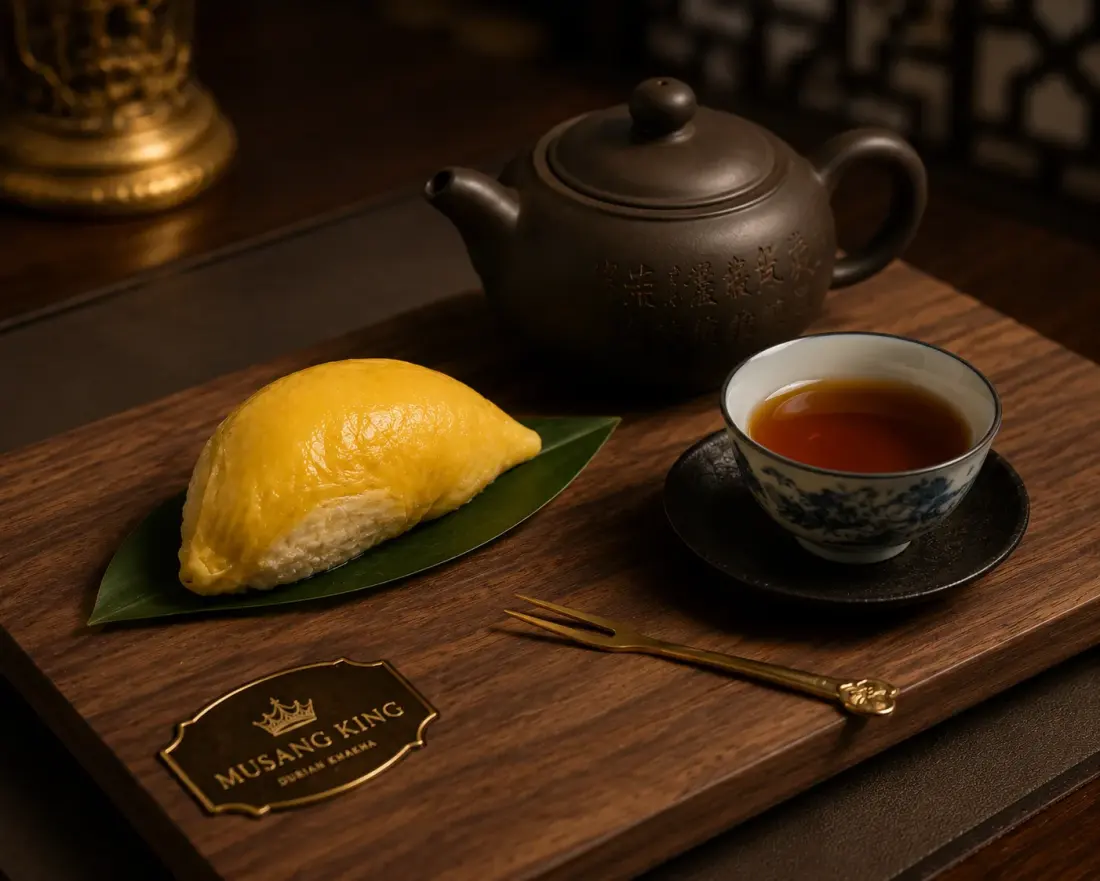
Unsweetened Green Tea (Warm or Room Temperature)
Green tea bitterness (from tannins and catechins) provides contrast against durian's sweetness and fattiness. It clears the aftertaste without introducing competing flavours. Warm green tea also supports digestion by stimulating bile production. Avoid sweetened versions — adding sugar after a high-carbohydrate fruit is unnecessary.
Mangosteen
The classic Southeast Asian folk pairing — "the king and queen of fruits." Mangosteen is mildly sour and cooling. Xanthones in mangosteen have anti-inflammatory properties, though there is no confirmed pharmacological mechanism for counteracting durian specifically. What it does do: the tartness cuts through the richness on the palate, and the high water content provides hydration. Treat it as a palate cleanser rather than an antidote.
Young Ginger Tea
Ginger has a well-documented pro-motility effect — it accelerates gastric emptying. Durian's fat content (5g/100g) slows digestion. A cup of young ginger tea (not heavily sweetened) helps move the meal through the stomach faster and reduces the bloating that some people experience after large portions.
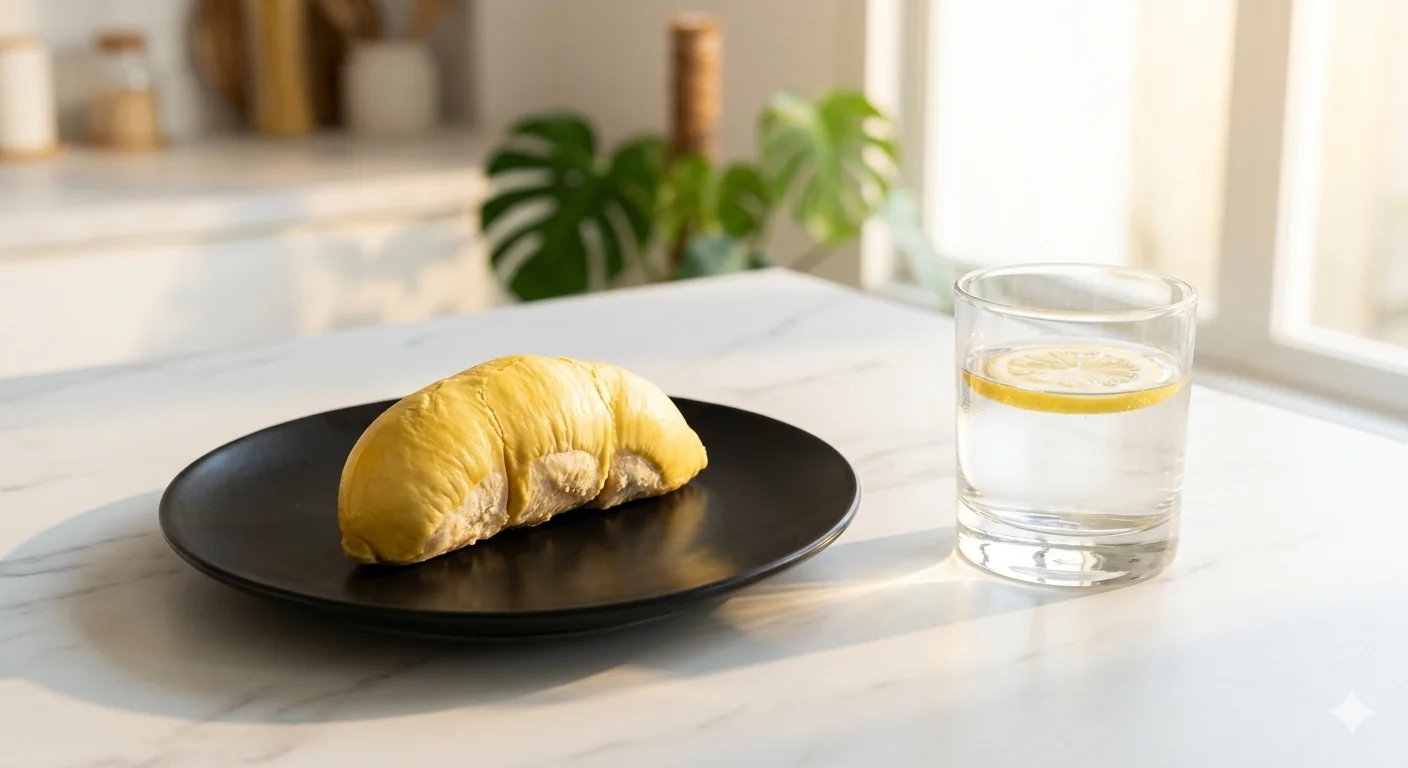
Plain Water (Room Temperature)
The baseline option. Room-temperature water does not shock the digestive system and does not interfere with any compounds. The recommendation to use the durian shell as a water cup (rinse shell, fill with water, drink) has a practical basis: the shell's tannins bind residual sulfur compounds in the mouth and esophagus. Whether this significantly affects systemic digestion is unproven, but the palate-clearing effect is real.
What to Avoid
Alcohol (Beer, Wine, Spirits)
Avoid. The ALDH inhibition mechanism is real. Studies have documented that durian's sulfur compounds, particularly disulfides, reduce ALDH activity in the liver. This does not mean one sip causes harm, but combining durian with significant alcohol consumption — a beer with durian, wine at a durian buffet — meaningfully increases the risk of acetaldehyde accumulation. The effect is dose-dependent: more durian and more alcohol = greater risk. This is not the same as an allergy; it is enzyme competition.
Carbonated Beverages
Carbonation introduces gas into the stomach. Durian is already high in fibre (3.8g/100g) and ferments somewhat during digestion, producing gas. Adding carbonated drinks significantly increases bloating risk. Colas also contain phosphoric acid and sugar, which adds unnecessary acidity and load.
Coffee
Coffee on an empty stomach with durian is a poor combination for sensitive individuals. Caffeine stimulates gastric acid secretion. Durian's fat content slows gastric emptying. The combination can cause acid discomfort in those prone to GERD or acid reflux. On a full stomach (after a meal, not during a durian session), one cup of black coffee is less likely to cause issues — but it adds no benefit to the experience.
Milk and Dairy
Durian with milk is a combination that folk medicine in Southeast Asia calls "heating." The actual mechanism is simpler: the combination of durian fat and lactose can cause digestive discomfort for those with any degree of lactose sensitivity — a substantial portion of Southeast Asian adults. It also creates a very rich, heavy sensation that is unlikely to be enjoyable for most people.
Strongly Flavoured Teas (Peppermint, Chamomile)
These tend to clash with durian's complex flavour profile rather than clear it. The menthol in peppermint in particular creates a conflicting sensation with durian's sulfurous warmth. Neutral teas (green, white, mild oolong) work; aggressively flavoured herbal teas generally do not.
Practical Sequence
- Eat durian first, drink after (not during). Drinking while eating dilutes digestive enzymes and slows breakdown of complex carbohydrates.
- Allow 10–15 minutes after eating before drinking large amounts of liquid.
- If using the shell-water method, rinse the shell interior once before filling.
- Limit durian to a reasonable portion (150–200g) before pairing. Pairings do not change the biochemistry of a 500g session — they can only support a normal one.
Practical Takeaway
Best: fresh coconut water, warm unsweetened green tea, mangosteen, young ginger tea. Neutral: room-temperature plain water. Avoid: alcohol, carbonated drinks, coffee on empty stomach.
The durian-and-alcohol interaction is real biochemistry, not superstition. Everything else is about palate management and digestion comfort.
Common Questions
No. Durian's sulfur compounds (specifically disulfides) inhibit aldehyde dehydrogenase (ALDH) in the liver. ALDH is what breaks down acetaldehyde — the toxic byproduct of alcohol metabolism. Reduced ALDH activity means acetaldehyde accumulates faster, causing flushing, nausea, and elevated heart rate. This has been documented in controlled research. The severity depends on quantity of both durian and alcohol consumed.
There is no established safe threshold. As a practical guideline: if you have eaten more than 100g of fresh durian pulp, the inhibitory effect on ALDH is likely to be significant enough to affect alcohol metabolism. The safest approach is to not combine them on the same evening.
Partially. The volatile sulfur compounds responsible for ALDH inhibition degrade at temperatures above 60°C. A thoroughly cooked durian product (baked, fried) has significantly lower sulfur compound content. A warm durian dessert that has not been fully cooked through still carries some risk. Cold frozen durian retains the compounds fully.
Not in any confirmed way. Xanthones in mangosteen have anti-inflammatory properties in laboratory settings, but there is no clinical evidence that eating mangosteen after durian counteracts specific durian compounds. What mangosteen does is provide palate contrast (tartness vs. sweetness) and hydration. It is a good sensory pairing, not a biochemical antidote.
The inner layer of durian shell contains tannins and polyphenols. Tannins bind sulfur compounds — the same chemistry that makes durian shell effective at deodorizing hands. Rinsing water through the shell, then drinking it, delivers a low dose of tannins that bind residual thiols in the mouth and throat. It will not reverse systemic effects, but it visibly reduces the oral aftertaste.
Chilled water is generally fine. Ice-cold water may cause stomach cramping in some individuals when consumed in large quantities after a fatty, high-sugar meal. Room temperature or lightly chilled is preferable. The folk warning against "cold water after durian" is likely an exaggeration of this digestive discomfort mechanism.
No. Commercially produced durian-flavored drinks (durian milk tea, durian smoothies from concentrate) are processed at temperatures that degrade most sulfur compounds. The "flavour" in these products comes primarily from added esters, not the thiols responsible for ALDH inhibition. They are effectively separate products from fresh durian pulp.
Sources
- Maninang JS, Lizada MCC, Gemma H (2009). Inhibition of aldehyde dehydrogenase enzyme by durian (Durio zibethinus Murray) fruit extract. Food Chemistry 117(2): 352–355. Link
Want to try fresh durian from our farm? We grow it at our own Bukit Serampang orchard in Tangkak, Johor, and sell it at our Melaka Mall stall. Stock varies daily — WhatsApp to confirm availability before you visit.
Ask About Today's Fruit