Walk into any durian stall in Malaysia or Thailand and you will see prices ranging from RM15 per kilogram to well over RM300. The gap is not marketing. It comes down to scarcity, labour, flavour complexity, and a supply chain that is still largely manual from orchard to table.
Here is a breakdown of the most expensive durian varieties in Southeast Asia and the real reasons behind their prices.
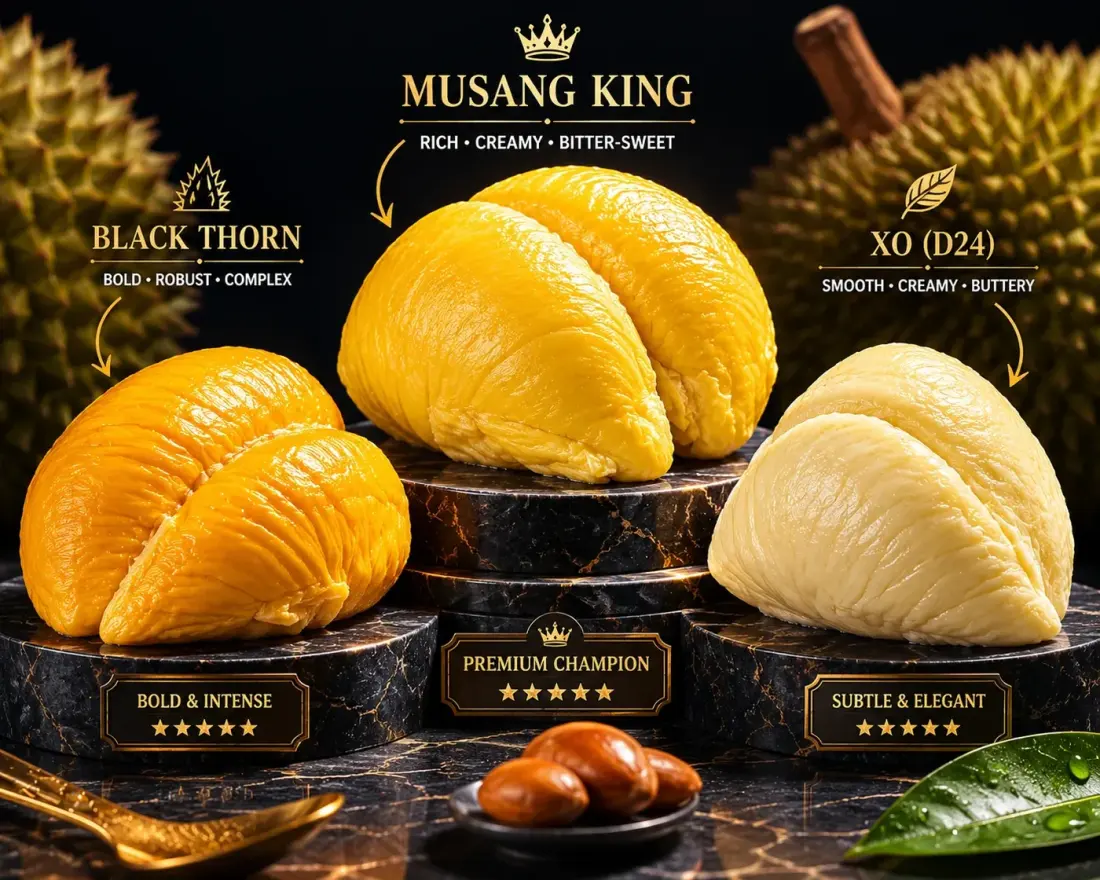
1. Musang King (Mao Shan Wang) — RM60–120/kg
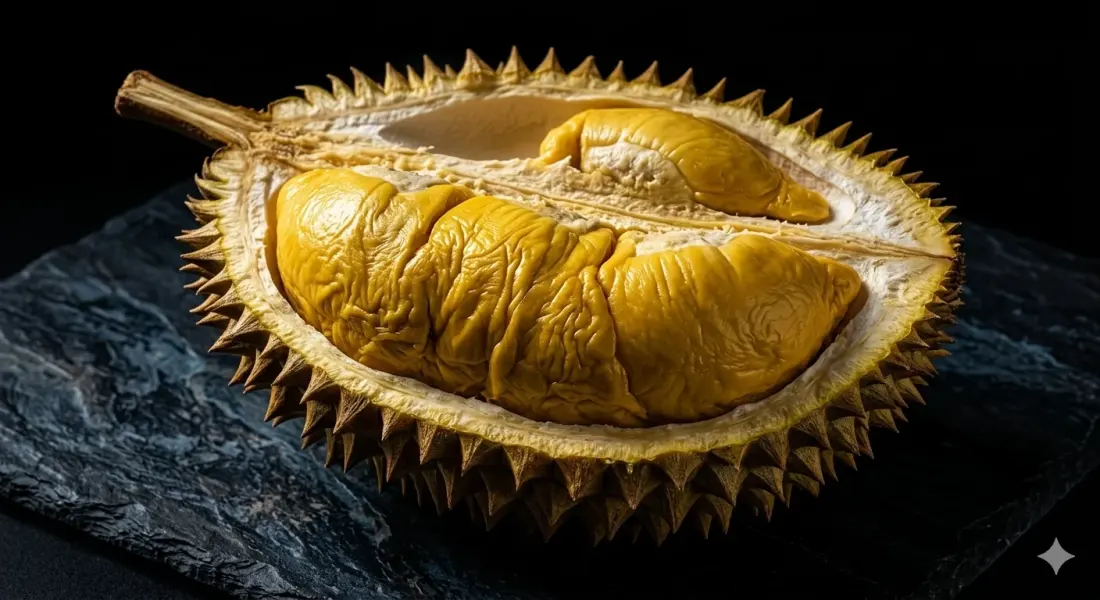
Musang King is the benchmark for premium durian in Malaysia. It accounts for a relatively small share of total Peninsular Malaysia durian output, yet it dominates export demand, especially from China.
Why it costs this much:
- Low yield per tree. A mature Musang King tree produces roughly 20–40 fruits per season, compared to over 100 for common varieties like D24.
- Thin flesh-to-seed ratio. Each pod is small relative to the whole fruit, meaning more raw fruit is needed per kilogram of edible flesh.
- Short shelf life. It drops naturally when ripe and must be consumed within 2–3 days. This limits how far and how long it can be stored.
- Export demand. China alone imports thousands of tonnes of Malaysian durian pulp annually, and Musang King is the most requested variety.
The flavour profile — bitter-sweet, creamy, with a distinct alcoholic aftertaste — is consistent enough that buyers recognise it across seasons.
2. Black Thorn (Ochee / Hei Tze) — RM80–150/kg
Black Thorn is a Penang-origin variety that has gained a cult following. It is less widely planted than Musang King, which keeps supply tight.
Why it costs this much:
- Very limited cultivation area. Most Black Thorn trees are concentrated in Penang and parts of Kedah. Expansion is slow because the variety is propagated by grafting, and mother trees are few.
- Distinctive taste. The flesh is orange-red, sticky, and intensely sweet with a light bitter note in the aftertaste. This polarising profile creates a loyal buyer base willing to pay more.
- Small fruit size. Individual fruits are often under 1.5 kg, so each fruit yields very little flesh.
3. D24 (Sultan) — RM25–50/kg
D24 used to be Malaysia's top-tier durian before Musang King overtook it. It is still widely grown and more affordable, but premium-grade D24 from older trees can command higher prices.
Why the price varies:
- Tree age matters. D24 trees over 30 years old produce flesh with a deeper, more complex bitterness and a smoother texture. Younger trees produce a milder, less interesting fruit.
- Higher yield. D24 trees are more productive than Musang King, which generally keeps prices lower.
- Processing use. A significant portion of D24 goes into durian paste, ice cream, and pastries, which creates steady demand but also means the best whole fruits are diverted to fresh consumption.
4. Thai Monthong (Golden Pillow) — THB300–600/kg (approx. RM40–80/kg)
Thailand's most famous export variety. Monthong is the durian most international consumers encounter first.
Why it is priced differently:
- Harvested before full ripeness. Thai durians are typically harvested at 80–85% maturity for export, which extends shelf life but sacrifices some flavour complexity compared to naturally dropped Malaysian durians.
- Large-scale plantation model. Thailand grows durians in vast commercial orchards, primarily in Chanthaburi and Rayong. Economies of scale keep per-kilogram costs lower.
- High yield. Monthong trees are prolific, often producing 80–120 fruits per tree per season.
The trade-off is consistency over intensity. Monthong is reliably sweet and creamy but rarely reaches the bitter-sweet depth of a top-grade Musang King.
5. Kan Yao (Long-Stem) — THB1,000–4,000/kg (approx. RM130–520/kg)
Kan Yao is Thailand's most expensive durian, and it is genuinely rare. In some seasons, auction prices for top-grade Kan Yao have exceeded THB4,000 per kilogram.
Why it costs this much:
- Extremely low supply. Kan Yao trees are almost exclusively found in a small area around Nonthaburi and Ayutthaya. The variety is difficult to propagate and slow to bear fruit.
- Long stem (pedicel). The fruit's stem is noticeably longer than other varieties, which is a key identification feature. This trait is genetic and does not appear in other Thai cultivars.
- Delicate flesh. Kan Yao flesh is pale, smooth, and sweet with almost no bitterness. The texture is less creamy than Monthong but more refined. It appeals to Thai consumers who prefer a clean, sweet durian.
- Auction culture. Premium Kan Yao fruits are sold at durian auctions in Nonthaburi, where wealthy buyers bid competitively. These auctions set the headline prices.
6. D1 (Pahang 1) and Other Rare Malaysian Clones — RM100–200/kg
Malaysia has over 200 registered durian clones. A handful of lesser-known varieties — D1, D101, D13 — occasionally appear at premium prices when supply is scarce.
Why they command high prices:
- Micro-season availability. Some clones fruit for only 2–3 weeks per year.
- Regional loyalty. Certain varieties are beloved in specific states (e.g., D101 in Pahang) and command local premiums.
- No export volume. These varieties are almost never exported, so prices are driven entirely by domestic demand.
What Actually Drives Durian Prices
Across all varieties, six factors determine price:
1. Scarcity of mother trees. Varieties that are hard to graft or slow to mature have limited supply by default. 2. Yield per tree. Low-yielding varieties cost more because each tree produces less sellable fruit. 3. Flavour complexity. Bittersweet, multi-layered profiles command higher prices than purely sweet varieties. 4. Shelf life. Fruits that must be consumed quickly (naturally dropped) are harder to distribute, adding logistics cost. 5. Export demand. Chinese demand for Malaysian durian has pushed prices up across all premium varieties since 2017. 6. Season timing. Early-season and late-season fruits are scarcer and priced higher than mid-season harvests.
Practical Takeaway
If you are buying durian and want value, understand what you are paying for. Musang King and Black Thorn cost more because they are genuinely harder to grow, yield less, and have flavour profiles that cannot be replicated by cheaper clones. Monthong is a solid entry point if you want a reliably sweet durian without the premium. Kan Yao is a collector's item — expensive because it is rare, not necessarily because it tastes better than everything else.
Price is not a guarantee of personal preference. Some people genuinely prefer the clean sweetness of D24 or Monthong over the intense bitterness of Musang King. Taste the variety before you commit to the most expensive option.
Fresh durian, farm-direct. Stock changes daily — WhatsApp us before you visit.
Check Today's Stock