Durian is not a forgiving tree if you plant it wrong. It takes years before you see a single fruit, and most of the decisions that determine whether those years are productive or wasted are made in the first few months. This guide walks through the process honestly — what the tree needs, what kills beginner efforts, and what you can actually expect from each stage.
Where Durian Can Grow: Geography And Climate
Before buying a single sapling, confirm that your location can support durian at all. Durian is a humid tropical tree that grows between 15°N and 15°S latitude. Outside this band — including most of southern China, northern India, and subtropical Australia — the tree will struggle or fail regardless of care.
Within the tropics, the climate requirements are specific:
- Annual rainfall: 800 to 2,500mm, reasonably distributed
- Temperature: optimal range is 24–32°C; below 15°C stunts growth; above 38°C can trigger flower and fruit drop
- Frost: durian has zero frost tolerance. Even a brief frost event will kill an established tree
- Elevation: 100 to 800 metres above sea level is ideal. Higher elevations moderate temperature but risk cold damage; lowland heat above 38°C routinely causes crop failures during flowering
If your site checks out on climate, the next factor is soil. Durian prefers deep, well-drained loamy soils with pH 6.0 to 7.0. Waterlogged conditions — even for short periods — cause root rot, which is one of the most common causes of durian tree death in the first three years.
Selecting Your Sapling: The Most Important Decision
This is where most beginners make a mistake that costs them years.
Seed-grown durian trees take 7 to 12 years to produce fruit. Because durian flowers cross-pollinate freely, seeds are genetically unpredictable — you will not reliably get the same variety as the parent fruit. If you buy a packet of Musang King seeds and grow them out, you may get something interesting or something completely mediocre. It's a gamble.
Grafted clones, by contrast, produce fruit in 4 to 6 years from planting and carry the exact genetics of the mother tree. If the graft source is a certified Musang King clone, your tree will produce Musang King fruit — predictably, year after year.
In Malaysia, the Department of Agriculture (DOA) maintains a registered variety system. When buying grafted clones, ask for trees from a DOA-registered nursery and ask to see the variety documentation. "Musang King" saplings without verifiable graft source documentation are common — and unreliable.
Cost to expect: seed-grown seedlings typically run RM 5 to 15 each. Certified grafted Musang King clones range from RM 25 to 80 each, depending on tree size and nursery. The higher cost is justified by the time difference alone.
Site Preparation
Once you've confirmed your climate and selected your sapling, prepare the planting site properly. Don't rush this step.
- Clear the site of weeds and competing vegetation within a 2-metre radius of each planting point.
- Assess drainage. If the area retains standing water after heavy rain, either raise your planting mound 30–50cm above ground level or install a drainage channel before planting. Do not plant in poorly drained soil and hope for the best.
- Test soil pH if possible. Durian prefers pH 6.0–7.0. Very acidic soils (below pH 5.5) benefit from agricultural lime application 4–6 weeks before planting.
- Mark your planting points at the correct spacing. Minimum 9m × 9m between trees. For hobbyists planting a few trees, 12m × 12m is easier to manage and gives each tree better canopy room.
Step-by-step Planting Process
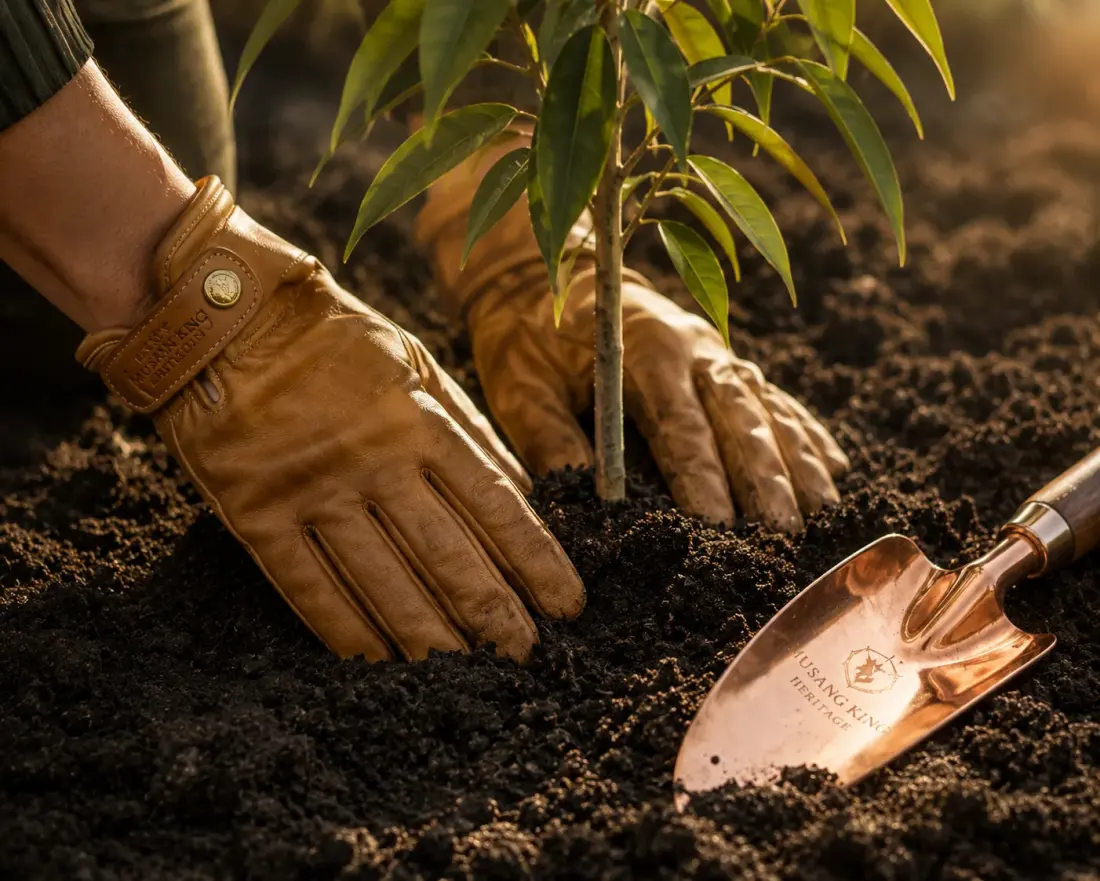
Step 1 — Dig the planting hole. Minimum dimensions: 60cm wide × 60cm deep × 60cm long. Larger is better. This gives roots room to establish before encountering undisturbed subsoil.
Step 2 — Prepare your backfill mix. Mix the excavated topsoil with an equal volume of organic compost (1:1 ratio). Add 200–300g of rock phosphate or organic phosphorus fertiliser to the mix. Do not add chemical nitrogen fertilisers to the hole at planting — they can burn new roots.
Step 3 — Create a mound at the base. Fill the bottom of the hole with your backfill mix so that when the sapling is placed inside, the graft union (the visible swelling or join on the lower trunk) sits 5–10cm above the soil line. Never bury the graft union.
Step 4 — Remove the sapling from its bag carefully. If the roots are circling the polybag, gently loosen them. Place the root ball on the mound inside the hole.
Step 5 — Fill and firm. Fill around the root ball with your backfill mix. Press firmly but not hard — you want soil contact without compaction.
Step 6 — Stake the tree. Durian saplings are vulnerable to wind movement in the first year. Drive a stake into the ground and tie the trunk loosely to it. Do not tie it so tight that it restricts trunk growth.
Step 7 — Mulch. Apply a 10–15cm layer of organic mulch (wood chips, dry grass, or composted bark) in a 1-metre radius around the tree. Keep mulch 10cm away from the trunk itself — contact with the trunk promotes rot.
Step 8 — Water immediately and establish a routine. Water thoroughly on planting day. During the dry season, young durian trees need approximately 10 to 15 litres of water daily. In the wet season, natural rainfall is usually sufficient, but monitor for waterlogging.
First-year Care
Shade: Young durian trees (0–2 years old) prefer 30 to 50% shade — they can suffer leaf scorch in full tropical sun. Temporary shade structures, or planting under existing light canopy, helps establishment. Remove shade by year 3 as the tree matures.
Fertilisation: From month 2 onward, apply a balanced NPK fertiliser (e.g. 15:15:15) at 100–150g per tree every 2 months. Gradually increase dose as the tree grows.
Pest and livestock protection: Young durian is attractive to livestock and burrowing animals. Fence your planting area or cage individual saplings if necessary.
Root sucker monitoring: If your tree is grafted, watch for sucker growth from below the graft union. These suckers grow from the rootstock and are a different (usually inferior) variety. Remove them immediately when spotted — they will outcompete the grafted portion if left unchecked.
Common Beginner Mistakes To Avoid
Planting too close: Mature durian canopies reach 12 to 18 metres in diameter. Trees planted too close will compete for light within 6–8 years, leading to reduced flowering and fruiting. The spacing decision is essentially permanent.
Overwatering: Standing water around the root zone kills durian. More trees die from root rot than from drought. If the soil stays wet for more than 2–3 days after rain, you have a drainage problem.
Skipping drainage planning: This is the single most common fatal error in new orchards. Fix drainage before planting, not after the tree starts dying.
Planting seed-grown trees for commercial purposes: If you intend to sell fruit, seed-grown trees represent a decade or more of lost income compared to grafted clones. Use grafted trees.
What To Expect And When
Year 1–2: Establishment. Focus on root system development. No flowers, no fruit. Maintain staking, mulching, watering, and shade. Year 3–4: Canopy growth phase. Remove shade structures. Increase fertiliser. The tree is building the structural framework for future flowering. Year 4–6 (grafted): First flowering is possible, though first-year crops are often small. Don't expect full production from a young tree. Year 7–10: Production matures. Yield and fruit quality typically improve each year as the tree ages and roots deepen. Year 10+ (seed-grown): First fruit possible, if the seed-grown approach was chosen and the tree survived.
Growing durian takes patience. The decisions you make in the first planting season determine what you'll be harvesting — or not — a decade later.
Common Questions
Not practically. Durian trees develop deep root systems and large canopies. Container growing stunts the tree and will never produce meaningful fruit.
Minimum 60cm in all dimensions. Deeper is better if your subsoil is compacted or has drainage issues.
At the start of a rainy season, when natural rainfall reduces the need for daily watering and helps establishment.
Remove any dead or damaged branches. Otherwise, leave the canopy intact — the sapling needs its leaves for photosynthesis during establishment.
With difficulty. Heavy clay retains water and restricts drainage — root rot risk is high. Raise planting mounds and improve drainage before planting. Sandy loam is far preferable.
Check for rootstock suckers below the graft union. If a sucker has grown large, it diverts nutrients from the grafted portion. Remove it completely.
Scratching around the base can disturb shallow roots and the mulch layer. Fence the tree base during establishment.
Grafted trees typically enter meaningful production around year 5–7. Full canopy production often takes until year 10 or beyond, depending on management.
Want to try fresh durian from our farm? We grow it at our own Bukit Serampang orchard in Tangkak, Johor, and sell it at our Melaka Mall stall. Stock varies daily — WhatsApp to confirm availability before you visit.
Ask About Today's Fruit