You made a judgment call and bought two whole durians home in the back seat. Now it's 11pm, the fruit is gone, and the smell isn't. Durian's aroma compounds — primarily ethanethiol, diethyl disulfide, and hydrogen sulfide — are volatile sulfur molecules that bind aggressively to soft surfaces, porous materials, and enclosed spaces. They don't evaporate quickly. They settle.
This guide covers the specific methods that actually work for cars, fridges, and hands, and explains why they work.
The Chemistry, Briefly
Durian's smell comes from 40+ volatile compounds, with sulfur-based molecules dominating at low concentrations. The same class of compounds found in onions, garlic, and rotten eggs. These molecules are:
- Hydrophilic (attracted to water and moisture in surfaces)
- Low vapour pressure at room temperature (they linger)
- Neutralized by oxidation or by binding to other compounds
This tells you what works: absorbers, oxidizers, and ventilation. Not sprays that just cover the smell.
Car: Getting Durian Smell Out
Step 1 — Remove the source. Check under seats, in cup holders, and in the boot. Any durian residue, shells, or juice left behind will regenerate the smell daily. Dispose of husks in a sealed bag, outside the car.
Step 2 — Ventilate fully. Park with all windows down for 2–4 hours on a dry day. Sunlight and airflow are free and surprisingly effective. Don't skip this step.
Step 3 — Activated charcoal bags. Place 2–3 bamboo charcoal bags (100–200g each) in the car overnight. Activated charcoal is porous and binds sulfur compounds. Leave for 24–48 hours. This works passively.
Step 4 — White vinegar spray. Dilute white vinegar 1:3 with water. Lightly mist fabric seats and carpet (do not soak). Vinegar helps lift some of the sulfur odour molecules out of the fabric. Allow to dry completely. The vinegar smell disappears within an hour of drying.
Step 5 — Baking soda on fabric. Sprinkle baking soda on seats and carpet, leave 4–6 hours, vacuum thoroughly. Sodium bicarbonate absorbs odours and is gentle on fabrics.
Step 6 — Coffee grounds (optional). Place a small open container of fresh coffee grounds in the car overnight. Coffee absorbs and partially masks residual sulfur. Effective for the final 10–20% of odour.
What does NOT work: Air fresheners and car deodorizers. They add fragrance on top of the sulfur smell. After the fragrance fades, the durian returns. Address the source, not the surface.
Leather seats: Use the vinegar dilution sparingly (1:5 ratio) to avoid drying the leather. Wipe with a leather conditioner afterward.
Fridge: Getting Durian Smell Out
The fridge is worst-case: enclosed, cold air recirculates, and the evaporator fan distributes odour through every shelf.
Step 1 — Empty and wipe. Remove all items. Wipe interior walls with a mixture of warm water and white vinegar (1:2 ratio). Reach into crisper drawers and shelf edges where moisture collects.
Step 2 — Baking soda box. Place an open box of baking soda (or a bowl of baking soda) on the centre shelf. Replace every 3 months during normal use. After durian, replace after 1 week.
Step 3 — Coffee grounds in an open cup. Effective for 48-hour odour reduction in enclosed spaces.
Step 4 — Activated charcoal fridge deodorizer. Commercially available, more effective than baking soda for persistent sulfur odours. Costs around RM 15–25 for a replaceable pack.
Step 5 — Run the fridge empty for 24 hours with the deodorizer inside. Cold air circulation through charcoal will clear residual compounds from the evaporator and coils.
Prevention: Store durian in two layers — first a heavy-duty zip-lock bag, then a secondary sealed container. The double barrier prevents sulfur compounds from escaping into the fridge environment.
Hands: Getting Durian Smell Off
The sulfur molecules in durian bind to the oils in your skin.
Most effective method — Stainless steel trick: Rub your hands on any stainless steel surface under cold running water for 30 seconds. Stainless steel contains iron oxide, which binds sulfur molecules and removes them from the skin. This is the same principle behind commercial "soap stones." Fast, zero chemical residue.
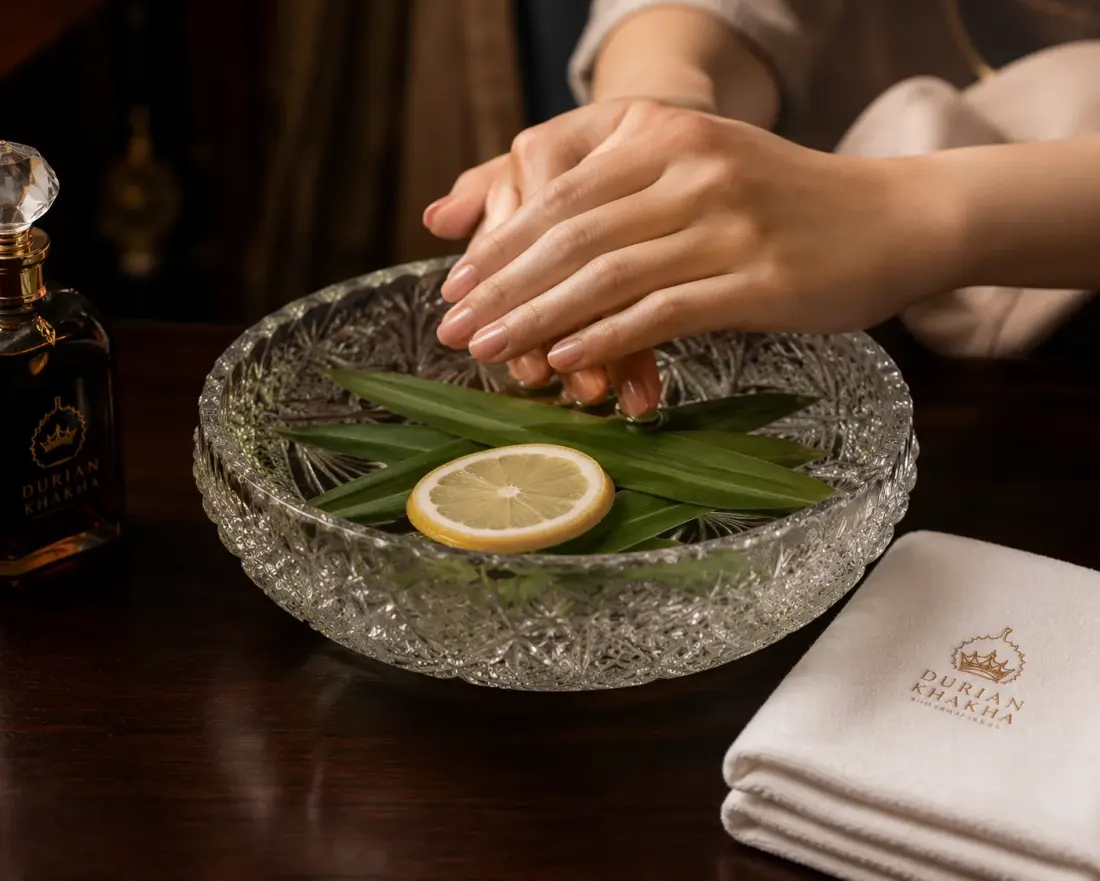
Second method — Salt and lemon scrub: Combine 1 tablespoon of coarse salt with the juice of half a lemon. Scrub hands for 60 seconds, rinse. The acidity of the lemon oxidizes sulfur compounds; the salt physically scrubs the molecules off the skin surface.
Third method — Toothpaste: Apply a small amount of white toothpaste and scrub for 30 seconds. Toothpaste's mild abrasives and fluoride compounds help neutralize sulfur. Works well for residual smell on fingertips.
The durian shell trick: This is a well-known folk method in Malaysia — rinse your hands inside an empty durian shell using clean water. The inner husk contains compounds (tannins, polyphenols) that bind and neutralize the sulfur molecules. Genuinely effective, and satisfying to use.
For stubborn odour under fingernails: Use a nail brush with the salt-lemon mixture. The smell concentrates under nails.
Practical Takeaway
Car: ventilate + activated charcoal + vinegar spray, in that order. Two days minimum. Fridge: wipe with vinegar + charcoal deodorizer + 24 hours empty. Hands: stainless steel under running water, 30 seconds. Works every time.
Common Questions
Untreated, the sulfur smell in an enclosed car can persist 5–10 days. Soft surfaces like cloth seats and carpet absorb and slowly re-release the compounds. Air fresheners do nothing to speed this up.
Yes. Iron in stainless steel reacts with sulfur compounds (particularly thiols) to form iron sulfide, removing the molecules from your skin. The same chemistry explains why stainless steel soap bars are sold commercially as fish and garlic odour removers.
Febreze and similar products use cyclodextrin, a sugar molecule that traps odour compounds. They're more effective than pure fragrances, but still not as effective as activated charcoal or vinegar for sulfur-based odours. Use as a supplement after primary treatment.
Running the AC on fresh air mode (not recirculate) with windows cracked helps ventilate. Avoid recirculate mode — it cycles the same air repeatedly and does not help remove the odour.
The inner white husk contains tannins and polyphenols that form stable complexes with sulfur compounds, effectively removing them from the skin surface. This is the same class of chemistry behind tannin-based leather tanning and wine astringency.
Wash with an enzyme-based detergent (look for "biological" or "enzymatic" on the label). Enzymes break down the organic sulfur compounds. Add half a cup of white vinegar to the rinse cycle for persistent cases. Air dry outside rather than tumble drying, as heat can partially set the odour.
Double-bag in heavy-duty zip-lock bags before putting in the car or fridge. Durian sealed airtight in two layers produces no detectable odour. The problem is almost always inadequate containment, not the fruit itself.
Want to try fresh durian from our farm? We grow it at our own Bukit Serampang orchard in Tangkak, Johor, and sell it at our Melaka Mall stall. Stock varies daily — WhatsApp to confirm availability before you visit.
Ask About Today's Fruit