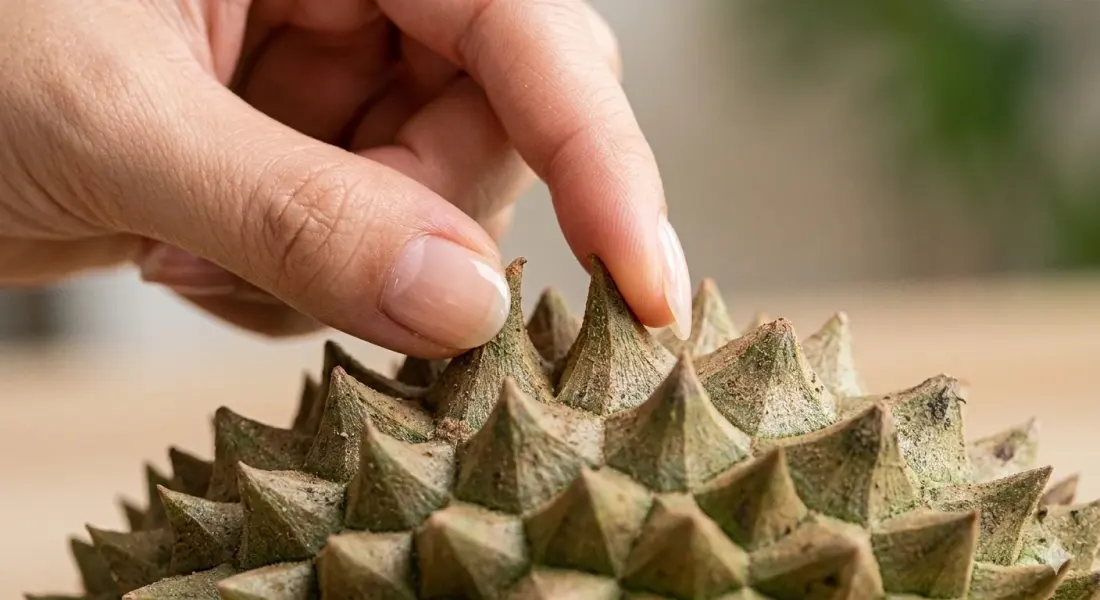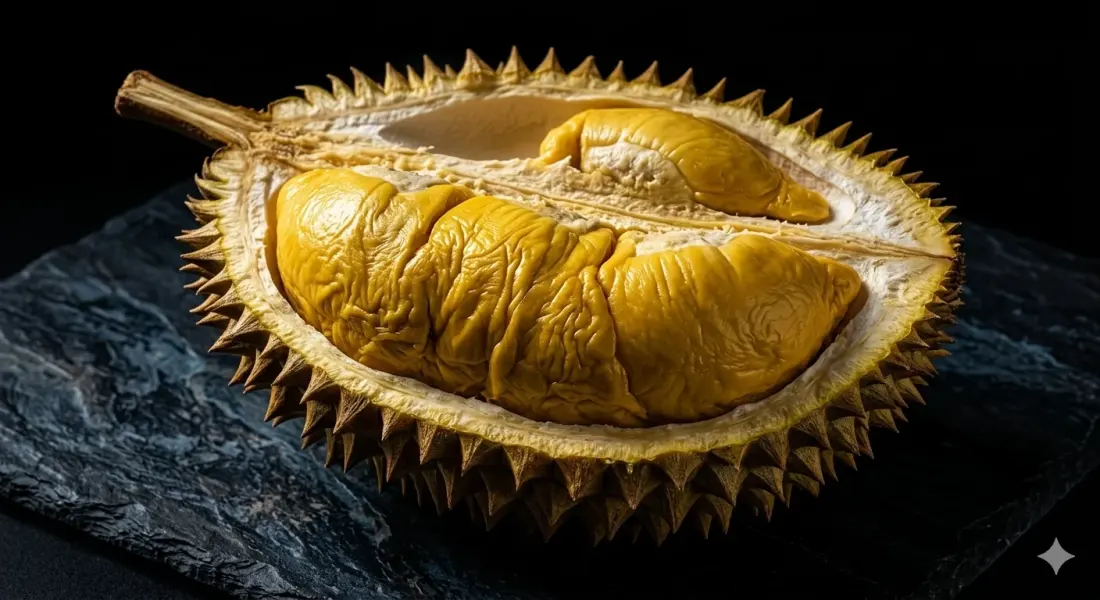
Architecture borrows from nature constantly — seashells, beehives, spider webs. But few natural forms have inspired as many buildings as the durian, whose convex, spike-covered shell happens to be structurally elegant: the triangulated surface distributes load efficiently, the spines add stiffness, and the overall dome shape is inherently stable.
The Esplanade — Theatres on the Bay, Singapore
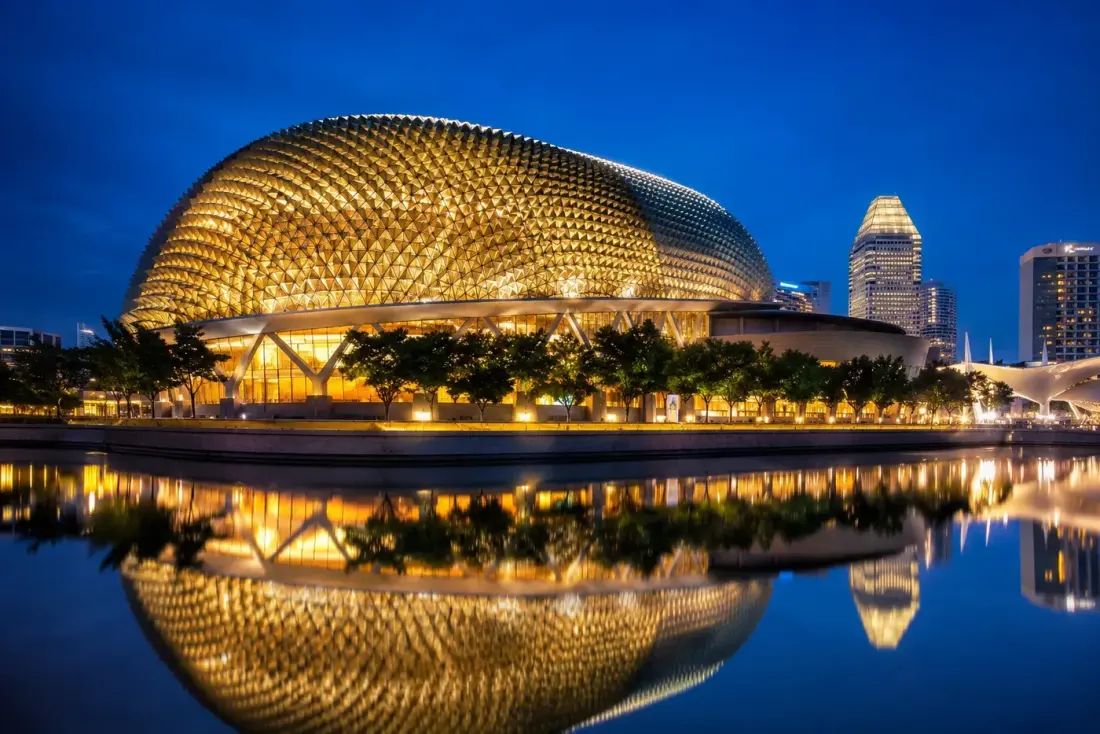
The Esplanade is the most famous durian building in the world — Singaporeans nicknamed it "the durian" when it opened in 2002. The building was designed by DP Architects and Michael Wilford and Partners, and the spiky shell was specifically an architectural response to Singapore's tropical climate.
The outer skin is composed of over 7,000 triangular aluminum sunshades, each angled to block direct sunlight while admitting indirect light. The angle of each shade varies depending on its position on the dome — facing south the shades are larger and more densely packed; on the north face they are smaller. The result from a distance is the unmistakable spiked texture of a durian shell.
The architects did not set out to design a building that looked like a durian. They set out to solve a solar shading problem on a curved building surface. The spiky appearance was the outcome of an optimization process — not unlike how the durian shell itself evolved.
Guangzhou Opera House, China
Zaha Hadid's Guangzhou Opera House (completed 2010) does not look like a durian at first glance — its twin boulders are smooth, not spiked. But the durian comparison comes from the interior: the auditorium ceiling fractures into triangular panels at varying angles, creating a textured, crystalline surface that bears strong visual similarity to a cut durian's radial chambers. The acoustic engineering drove the geometry — the angled panels are positioned to optimize sound reflection and diffusion.
Lotus Temple, New Delhi, India
The Bahai Lotus Temple (completed 1986, architect Fariborz Sahba) is primarily associated with the lotus flower — but its structural logic is identical to a durian's shell geometry. The building consists of 27 marble petals arranged in clusters of three, creating a shell structure that distributes load through surface geometry rather than internal columns.
The triangulated shell geometry, the way the petals radiate from a central point, and the overall hemispherical form are structurally analogous to a durian shell. Both use the same structural principle: a curved, segmented surface that is stronger than the sum of its parts.
Malaysia and Southeast Asia: Regional Architecture
Durian-inspired architecture appears in several Malaysian and Southeast Asian structures.
Kuala Lumpur: Several commercial buildings in the Klang Valley feature spiked or faceted facades that earn informal durian comparisons.
Why the Durian Shell Is Structurally Interesting to Architects
The durian's outer shell is not just decorative — it is a highly optimized structure. The spines are triangular in cross-section, which is the strongest geometric form for a beam in bending. They are hollow in larger species, reducing weight while maintaining stiffness. The interlocking segments distribute impact load across the entire surface rather than concentrating it at impact points.
Computer simulations of the durian shell geometry show load distribution patterns very similar to geodesic domes. Buckminster Fuller's geodesic dome principle (triangulated curved surfaces) and a durian shell operate on the same mathematical basis. When engineers solved tropical solar shading or stadium roofing, they independently arrived at the same geometry.
Common Questions
No. The spiky appearance was a consequence of solving a solar shading problem on a curved glass-and-steel building in equatorial Singapore. Singaporeans named it the durian when it opened in 2002, and the nickname stuck.
Not in any well-documented case we know of. Most “durian buildings” are nicknames given by the public — the Esplanade in Singapore is the best-known example.
Three things: the spines are triangular in cross-section (maximally stiff for their weight), the overall dome shape distributes load efficiently in compression, and the segmented nature of the shell allows impact energy to spread across the structure.
Singapore, thanks to the Esplanade. Elsewhere, durian comparisons are mostly informal nicknames for buildings with spiked or faceted facades.
The nautilus shell (logarithmic spiral used in staircase design), honeycomb hexagons (used in facade panels and structural cores), termite mounds (inspired passive cooling ventilation systems). The durian's triangulated spike shell is most closely analogous to geodesic dome architecture — both solve the same geometric problem of spanning large spaces with minimum material.
Want to try fresh durian from our farm? We grow it at our own Bukit Serampang orchard in Tangkak, Johor, and sell it at our Melaka Mall stall. Stock varies daily — WhatsApp to confirm availability before you visit.
Ask About Today's Fruit