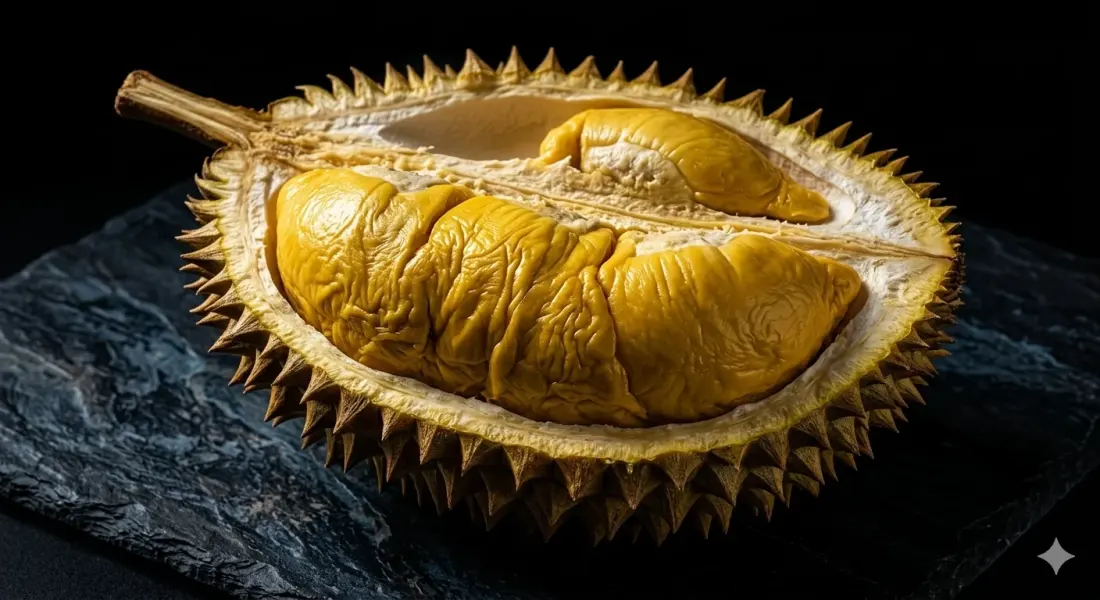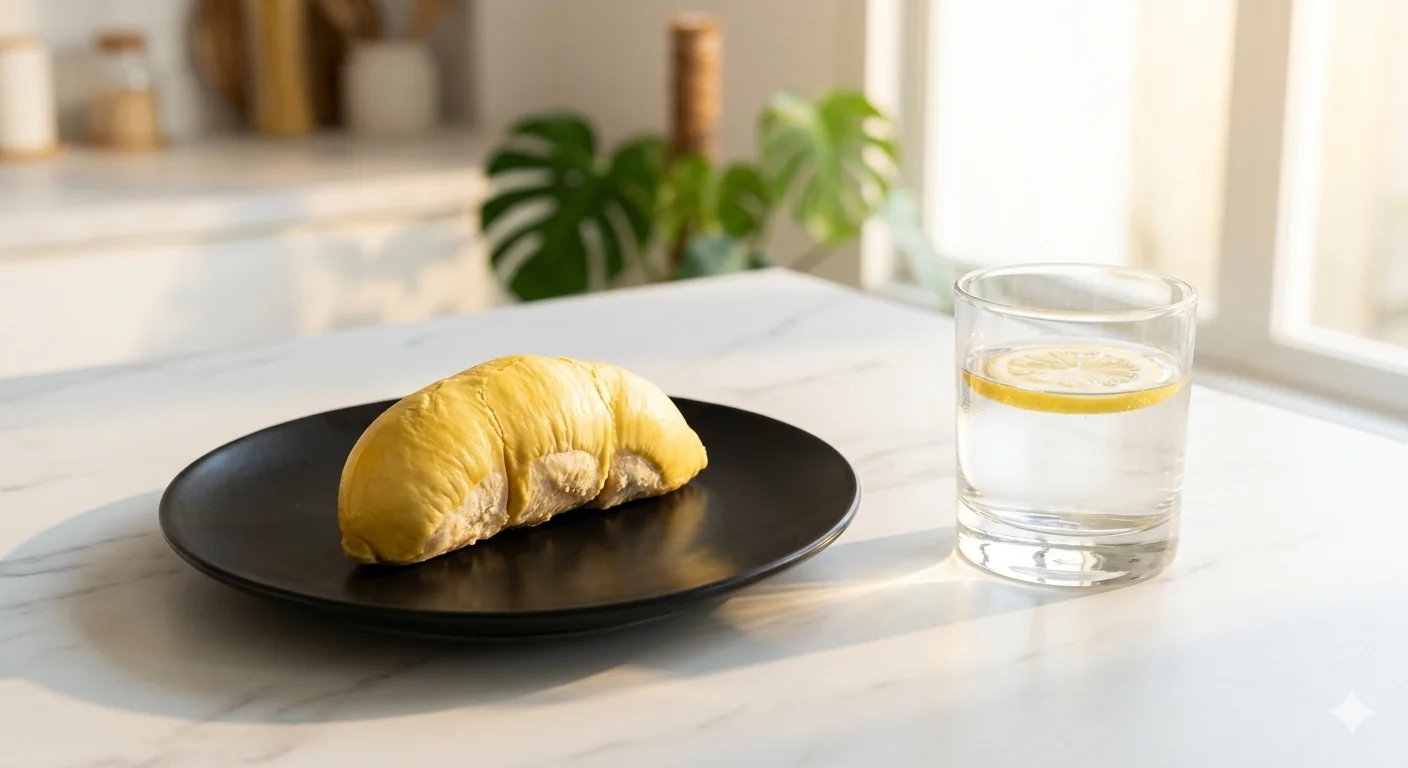
Short answer: It can work. For a 70–80 kg person, about 150–250g of flesh (four to six pods) 60–90 minutes before training gives 40–67g of carbs plus potassium. It is higher in fat than a banana, so don't eat it just before you start.
The bodybuilding community has a long history of unconventional pre-workout nutrition. Dates, raw oats, sweet potatoes — anything that delivers fast, sustained energy without a heavy gut load. Durian has started appearing in this conversation, and the reasoning is more grounded than it sounds.
Durian Macronutrient Profile vs. Common Pre-Workouts
Per 100g of durian flesh:
- Carbohydrates: 27g (approximately 21g sugars, primarily sucrose, glucose, fructose)
- Fat: 5.3g (mostly oleic and linoleic acid)
- Protein: 1.5g
- Calories: approximately 147 kcal
- Potassium: 436mg (roughly equivalent to 1 large banana)
- Vitamin B6: 0.3mg (about 23% of daily value)
- Thiamine (B1): 0.37mg (approximately 31% daily value)
Durian outperforms banana and dates on carbohydrate density and potassium per 100g, though it is significantly higher in fat.
Why the Carbohydrates Matter
Muscle glycogen is the primary fuel for high-intensity training. Depleting glycogen stores leads to earlier fatigue and reduced output. Sports nutrition consensus: 1 to 4g carbohydrates per kg bodyweight in the 1 to 4 hours before training optimizes glycogen availability.
About 200g of durian flesh (roughly four to five pods) delivers 54g of carbohydrates in the form of fast-acting natural sugars. Sucrose digests into equal parts glucose (immediate glycogen replenishment) and fructose (processed by the liver for a secondary energy wave).
The Potassium Angle
Potassium is critical for muscle contraction and nerve signal transmission. Athletes training in high heat can lose 200 to 400mg of potassium per hour of intense training.
At 436mg per 100g, durian is among the higher-potassium whole foods. A 200g serve delivers nearly 900mg of potassium — substantially more than a banana (422mg total), a sweet potato (542mg total), or a sports drink (typically 30 to 70mg per serving).
The Timing Window
Pre-workout durian works best eaten 60- to 90-minutes before training. The fat content (5.3g per 100g) slows gastric emptying compared to a banana or white rice — eating durian 15 to 20 minutes before a heavy session is likely to cause GI discomfort. The 60- to 90-minute window allows digestion to progress far enough that carbohydrates enter circulation without the undigested fat sitting heavily during training.
Post-workout is also viable. Durian's combination of fast sugars and potassium makes it a reasonable whole-food recovery option, though protein content is too low to drive meaningful muscle protein synthesis on its own.
The Honest Caveats
Caloric density: At 147 kcal per 100g, 200g of flesh (approximately 294 kcal) is a meaningful caloric load compared to a banana (approximately 90 kcal). Account for this if in a cutting phase.
Individual GI tolerance: High fibre, fat, and fructose may cause GI discomfort during exercise if consumed too close to training. Test your tolerance on low-intensity training days first.
Keep alcohol out of it: Durian's sulfur compounds can partly block aldehyde dehydrogenase (ALDH), the enzyme that clears acetaldehyde, so durian and alcohol together can bring on flushing, nausea and a racing heart. Durian on its own before training is fine.
Quality matters: Overripe durian has higher alcohol content from fermentation. Use firm, freshly opened durian.
Common Questions
For a 70 to 80kg athlete, 150 to 250g of flesh (roughly four to six pods) 60 to 90 minutes before training is a reasonable starting point. This delivers 40 to 67g of carbohydrates.
Durian delivers more carbohydrates per 100g (27g vs 23g) and more potassium (436mg vs 358mg). However, durian is significantly higher in fat, which slows digestion. Bananas are better for short eating windows before training (under 30 minutes). Durian suits the 60- to 90-minute pre-workout window better.
Yes, but account for the caloric density. At 147 kcal per 100g, durian is more calorically expensive than most fruits. The micronutrient profile (potassium, B vitamins) provides value that plain carbohydrates do not.
For some people, yes. Durian contains significant fibre and fructose, which can cause GI discomfort during high-intensity exercise if consumed too close to training. The 60- to 90-minute buffer significantly reduces this risk.
The fat content in durian moderates the glycemic response. The glycemic index of durian is approximately 49 to 53 — about the same as banana (51) and lower than white rice (72) or watermelon (72). Most athletes will not experience a significant energy crash at typical serving sizes.
Sources
- U.S. Department of Agriculture. Durian, raw or frozen (FDC 168192). FoodData Central. Link
Want to try fresh durian from our farm? We grow it at our own Bukit Serampang orchard in Tangkak, Johor, and sell it at our Melaka Mall stall. Stock varies daily — WhatsApp to confirm availability before you visit.
Ask About Today's Fruit