Durian and coffee have coexisted in Malaysia for a long time. Kopitiam durian coffee — strong black coffee with a spoonful of durian pulp stirred in — has been around for decades, ordered by uncles who probably couldn't tell you why it works, only that it does. But lately, something different is happening in specialty cafes from KL to Singapore: baristas are experimenting with cold brew pours over durian flesh, avocado-durian smoothie-latte hybrids, and durian affogatos. Some of these are very good. Some are genuinely unpleasant. The line between the two has a lot to do with chemistry.
What Happens When Durian Meets Coffee
Durian's distinctive aroma comes primarily from sulfur-containing volatile compounds — ethanethiol, diethyl disulfide, and propanethiol, among others. These same compound classes appear in other fermented or aged foods, and they interact strongly with other aromatics. Coffee, depending on processing method, contains hundreds of volatile compounds of its own: pyrazines (earthy, nutty), furans (caramel, roasted), and organic acids (bright, sharp) all play a role.
When durian and coffee share a cup, the sulfur compounds from the durian don't just add to the flavour — they react with and modify coffee's own aromatics. The interaction can go in two directions:
When it suppresses bitterness: sulfur compounds can bind with certain bitter phenolic compounds in coffee, reducing perceived bitterness. This is more pronounced in cold preparations, where the lower temperature slows some of the competing reactions.
When it creates metallic off-notes: in high-acid coffee (espresso, light roast pourover), the combination of sulfur compounds and organic acids produces what many tasters describe as a metallic or chemical note. The reaction is similar to what happens when you combine fermented notes with citrus — the acids amplify certain aromatic compounds in ways that don't read as pleasant.
Which Coffees Pair Better
Natural process coffees Natural process (dry process) coffees are fermented before the cherry is removed, which produces fruity, wine-like, or funk-adjacent flavours in the cup. These coffees already carry some of the same aromatic compound families as durian — the overlap creates harmony rather than clash. A natural Ethiopian or Brazilian, served at room temperature or as cold brew, tends to work well with a small addition of durian.
Cold brew Cold brew is brewed at low temperature over 12–18 hours, which extracts a different flavour profile than hot brewing — smoother, lower in acidity, with more sweetness and less of the sharp aromatic volatiles. The lower acidity is the key: it reduces the chance of the metallic reaction with durian's sulfur compounds.
Milk-forward preparations Milk fat coats the palate and moderates the intensity of both the coffee and the durian. A flat white or latte with durian added is more forgiving than a black preparation. The fat suppresses some of the sulfur aromatics while preserving the sweetness.
What clashes Espresso-based drinks with high extraction, light roast pourover with citrusy acidity, and any preparation that emphasizes brightness and sharpness will likely produce off-notes when combined with durian. High heat also accelerates the reaction between sulfur compounds and acids, worsening the result.
Where The Avocado Comes In
The avocado-durian combination is not as strange as it sounds. Avocado flesh is neutral in flavour, high in fat, and has a creamy texture that blends smoothly with durian pulp. In food science terms, the fat in avocado plays the same role as dairy fat — it disperses the sulfur aromatics rather than concentrating them, effectively buffering the pungency.
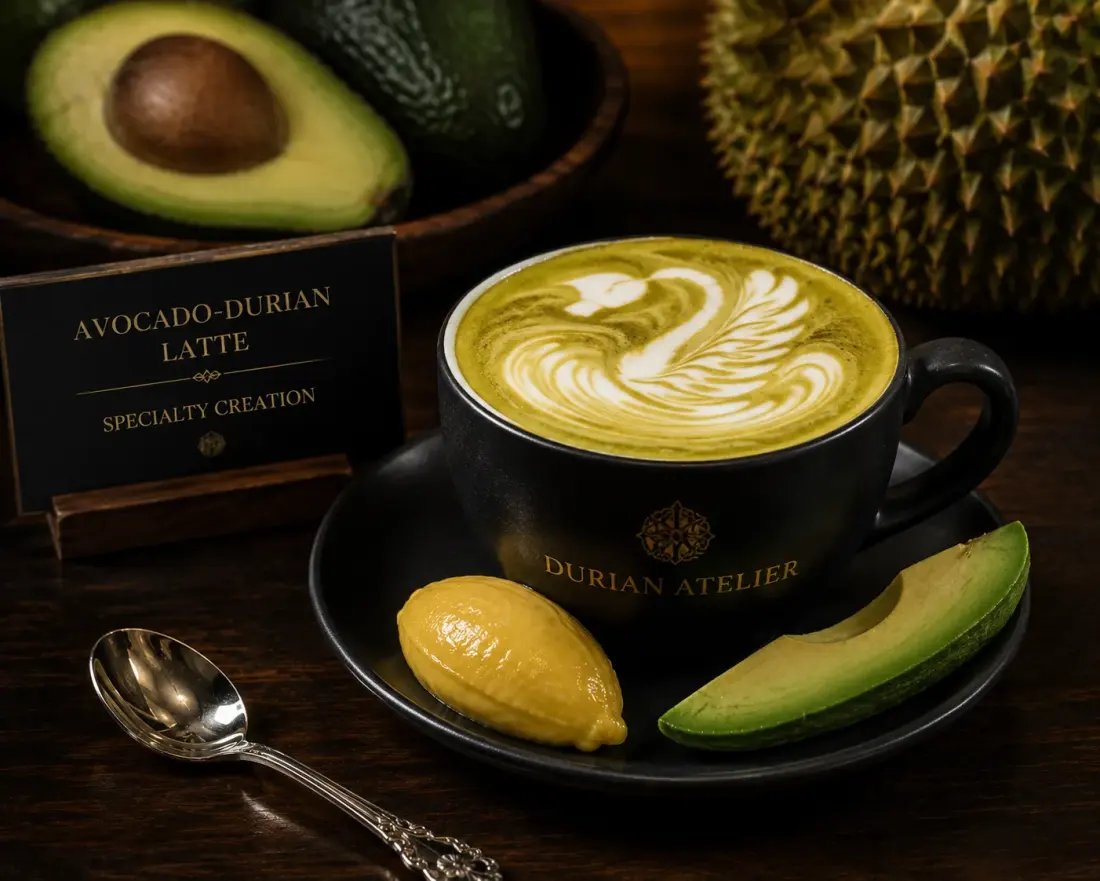
The avocado-durian-coffee hybrid that's gained traction in some KL and Singapore cafes typically works like this: avocado and durian pulp are blended together (often with a sweetener and ice), then layered with cold brew or topped with a small espresso shot. The avocado handles the texture, moderates the durian's intensity, and creates a creamy base that carries the coffee notes without letting them clash.
The ratio matters. Too much durian and the sulfur dominates. Too little and you're just drinking a coffee smoothie with green colouring. A rough working ratio: 1 part durian pulp to 1.5–2 parts avocado flesh works for most preparations. The coffee component should be cold brew, not espresso, for the reasons above.
Which Durian Variety Works Best
Not all durian varieties have the same sulfur intensity. Musang King is actually among the more sulfur-forward varieties — it has a rich, complex aroma that includes more of those reactive compounds. For coffee pairing, this makes it more challenging to work with.
D24 and XO, by contrast, have a milder, creamier aromatic profile with less sulfur intensity. The sweetness and bitterness in both varieties comes through more cleanly without the heavy aromatic load. For cafe applications, D24 or XO pulp is more manageable and produces a more consistent result.
Frozen durian (widely available and used in most cafes) has some of its volatile aromatics reduced during freezing, which actually makes it slightly more forgiving in coffee applications than fresh. The compromise is that the flavour is less vibrant overall.
Where To Find It
The avocado-durian latte format has been appearing in independent specialty cafes in Bangsar, Taman Tun, TTDI, and the Bukit Bintang corridor in KL, and in some Singapore cafes around Tanjong Pagar and Tiong Bahru. It's still niche — most cafes that offer durian-infused drinks keep to durian milk tea or simple durian smoothies rather than the coffee hybrid format.
Some Penang hawker stalls around Gurney Drive have served durian coffee in some form for years, though usually the old-school kopitiam version rather than specialty café style.
A Practical Recipe Framework
Cold Brew Durian Latte (serves 2):
- 250ml cold brew concentrate (12–18hr steep, medium roast or natural process)
- 80g durian pulp (D24 or XO recommended)
- 100ml full-cream milk or oat milk
- Optional: 60g ripe avocado for creaminess
- Ice
Method: Blend durian (and avocado if using) with milk until smooth. Pour over ice. Top with cold brew. Stir gently before drinking — the layers look good left separate, but the flavour balance requires mixing.
Adjust durian quantity to taste. The first time you make it, start with 60g and increase from there.
Practical Takeaway
Durian-coffee combinations are not inherently good or bad — they work when the coffee is selected for compatibility and the ratio is calibrated. The combination fails when high-acid espresso meets full-sulfur Musang King without any buffering fat. It works when natural process cold brew meets D24 pulp with avocado and milk providing structure.
It's a niche within a niche, and most people who encounter it either become interested or dismissive after one try. The format has genuine culinary logic behind it — it's not just novelty for the sake of novelty.
Common Questions
It's genuinely niche. Durian milk tea has broader acceptance. The coffee hybrid format attracts adventurous drinkers but hasn't crossed into the mainstream in either Malaysia or Singapore as of 2025. The kopitiam version (black coffee with durian pulp) has a loyal following among older customers.
In a properly made cold brew version with avocado, the combination is more like "creamy, tropical, slightly funky coffee" than "durian with coffee in it." The key is ratio and the choice of low-sulfur variety. Musang King in hot espresso is a different story.
Yes. You need cold brew (make it the night before), ripe durian pulp — D24 or XO works best — and if you want smoothness, half a ripe avocado. Blend, layer, serve cold. Start with less durian than you think you need.
There is a real basis for it. Durian's sulfur compounds can partly block aldehyde dehydrogenase (ALDH), the enzyme that clears acetaldehyde after drinking, so some people get flushing, a racing heart and nausea. It won't kill a healthy person, but it's best not to combine a big durian session with heavy drinking.
A small number of overseas Malaysian restaurants — mainly in London, Melbourne, and parts of the US — have offered durian-based drinks, but usually as novelty items. The format hasn't penetrated mainstream specialty coffee culture in Western markets.
Cold — 4–8°C works well. Warm durian has more volatile aromatics active, which can clash more aggressively with coffee. Chilling it slightly suppresses some of the more reactive sulfur compounds.
Want to try fresh durian from our farm? We grow it at our own Bukit Serampang orchard in Tangkak, Johor, and sell it at our Melaka Mall stall. Stock varies daily — WhatsApp to confirm availability before you visit.
Ask About Today's Fruit