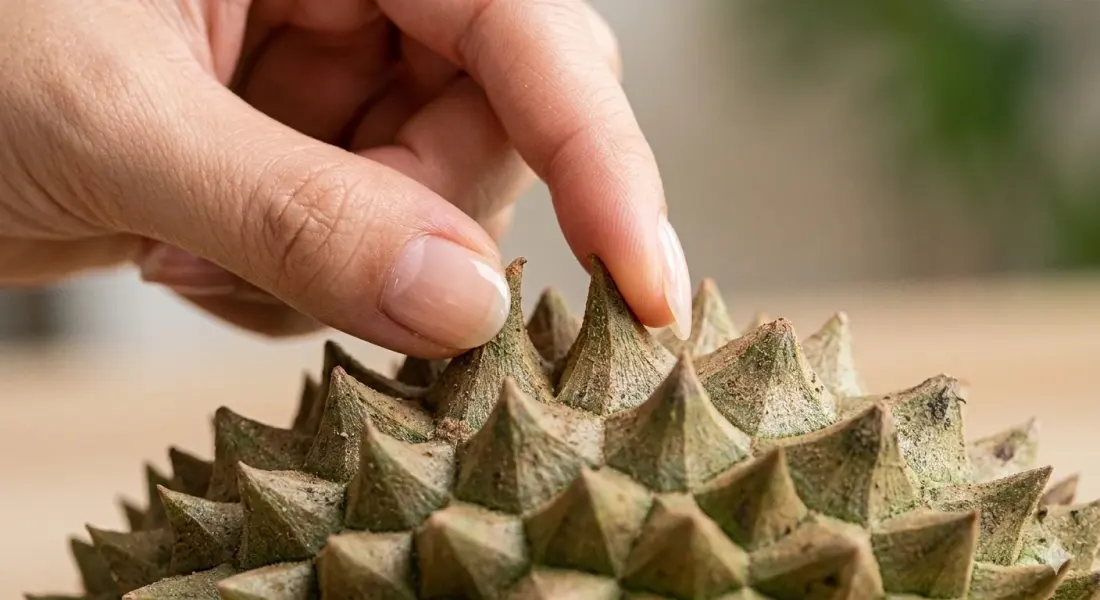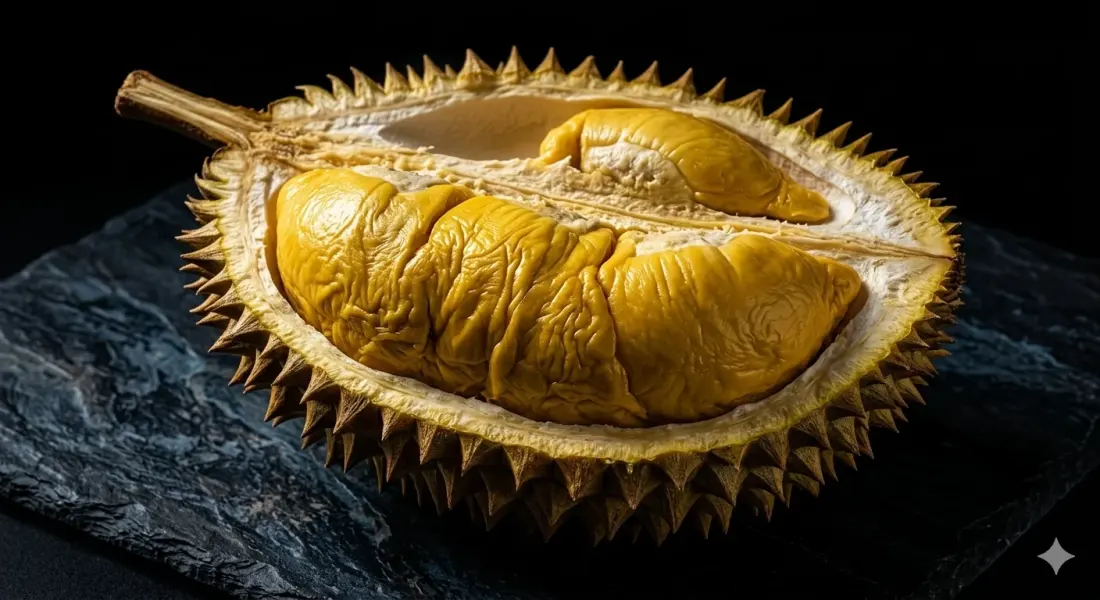
The durian husk is the part almost everyone throws away. But the husk makes up 60–75% of the total fruit weight. A durian that weighs 3 kg delivers approximately 750g–1.2kg of edible flesh. The remaining 1.8–2.25kg — the spiky green-brown shell — goes directly into the rubbish bin for most households and the waste pile at most orchards.
This is an enormous volume of organic material. In Malaysia and Thailand alone, durian production generates hundreds of thousands of tonnes of husk per season. Research institutions and a growing number of growers have found practical, science-backed ways to use it.
Here are five that actually work.
1. Compost and Soil Amendment
What it does: Durian husk decomposes into excellent organic matter. The husk is high in cellulose and lignin, with significant mineral content — particularly potassium (K), calcium (Ca), and magnesium (Mg). Durian husk compost improves soil structure, increases water-holding capacity, and contributes macronutrients.
The challenge: Fresh durian husk is extremely high in moisture and has a strong odour during the initial decomposition stage (3–6 weeks). If composted in an enclosed bin near the house, this can be problematic. Open-pile composting at a distance from living areas, or hot composting with a carbon source (dried leaves, wood chips) to raise temperature and accelerate decomposition, manages this.
Nutrient values: Durian husk ash is rich in potassium — potassium oxide (K₂O) constitutes approximately 25–35% of ash content, making it a meaningful potassium supplement for garden soil. The raw husk (before composting) also contributes nitrogen as it breaks down.
Time to usable compost: 6–12 weeks with active turning; 3–6 months passively. The resulting compost is dark, rich, and appropriate for fruit trees, vegetables, and ornamental plants.
Practical tip: Chop the husks before composting to accelerate breakdown. Whole husks take significantly longer due to the thickness of the shell walls.
2. Biochar Production
What it is: Biochar is a form of charcoal produced by heating organic material (in this case, durian husk) in the absence of oxygen (pyrolysis). The result is a stable, porous carbon structure that can be incorporated into soil.
What it does in soil: Biochar improves soil water retention, provides habitat for beneficial soil microbes, raises soil pH (useful in Malaysia's typically acidic laterite soils), and sequesters carbon long-term (biochar resists decomposition for decades to centuries).
Production: Durian husk biochar can be produced at farm scale using simple retort kilns or modified drum kilns. Temperature range: 400–600°C, oxygen-restricted atmosphere. Yield: approximately 25–30% of input weight as biochar. One tonne of durian husk produces approximately 250–300kg of biochar.
Application rate: 5–10 tonnes of biochar per hectare, incorporated into the top 15–20cm of soil. Effects on soil structure are long-lasting — unlike compost, biochar does not fully break down.
Research basis: MARDI and several Malaysian universities have studied durian husk biochar application in local soil contexts. Results generally show improved water retention in sandy soils, improved drainage in clay soils, and increased crop yield in nutrient-poor laterite soils. This is an active area of agricultural research in Malaysia.
3. Activated Carbon from Durian Husk
What it is: Activated carbon is a highly porous form of carbon used for adsorption — it captures molecules from liquids or gases due to its enormous surface area. Durian husk is a viable feedstock for activated carbon production at research and industrial scale.
Production: Durian husk is first carbonized (converted to char at 400–600°C in limited oxygen), then activated — typically with steam activation at 800–900°C, or chemical activation with potassium hydroxide (KOH) or phosphoric acid (H₃PO₄). The activation process creates additional pore structure, massively increasing surface area (typically 800–1,200 m²/g for activated carbon vs. 10–30 m²/g for raw char).
Applications: Durian husk-derived activated carbon has been studied for water treatment (removal of heavy metals, dyes, and organic pollutants), air purification, and odour control applications. Researchers in Malaysia, Thailand, and Indonesia have published results showing effectiveness comparable to commercially produced activated carbon at lower cost.
Current commercialization status: Small-scale and research-phase. Industrial-scale production from durian husk feedstock is not yet widespread commercially, but several initiatives exist. Some charcoal-based water filter systems in Southeast Asia use agricultural waste derived carbon.
Practical DIY application: Durian husk charcoal (not fully activated but partially porous) can be used in home garden applications — placed in plant pots as a drainage layer, incorporated into potting mix to prevent compaction.
4. Natural Deodorizer (Using the Tannin in the Husk)
The science: The inner layer (pulp-facing side) of durian husk contains significant tannin and polyphenol content. Tannins are astringent polyphenolic compounds that bind effectively to sulfur-containing molecules — including the very thiols that produce durian's odour. This makes the inner husk surface a natural, effective odour-binding material.
The hand-washing application: This is already traditional practice in Southeast Asia — washing hands inside a fresh empty durian shell under running water removes durian odour from hands. The tannins in the husk inner layer bind the thiol molecules from skin, rinsing them away. It is more effective than soap alone for this specific purpose.
Extended applications:
- Deodorizing refrigerators and enclosed spaces: Place a small piece of fresh inner husk (inner side exposed) in a closed container for 24–48 hours. The tannins passively bind sulfur compounds in the air. Less effective than activated charcoal for ongoing use, but works for initial odour reduction immediately after a durian event.
- Natural surface treatment: The tannin-rich husk water (boiled inner husk pieces in water, then cooled) can be used as a rinse for cutting boards and other surfaces that have absorbed durian odour.
Limitations: Fresh husk only — dried or old husk loses tannin activity. The husk itself also smells during decomposition, so it should be used promptly and disposed of quickly.
5. Fibre for Packaging and Industrial Material
What it is: Durian husk contains cellulose fibres that can be processed into composite material, paper, or filler for packaging. The spines are lignified and resistant to compression, making them structurally interesting for composite applications.
Research stage: Several Malaysian and Indonesian universities have produced composite boards and packaging prototypes using durian husk fibre. Properties include adequate tensile strength, low thermal conductivity (potential insulation value), and water absorption characteristics that can be managed with treatment.
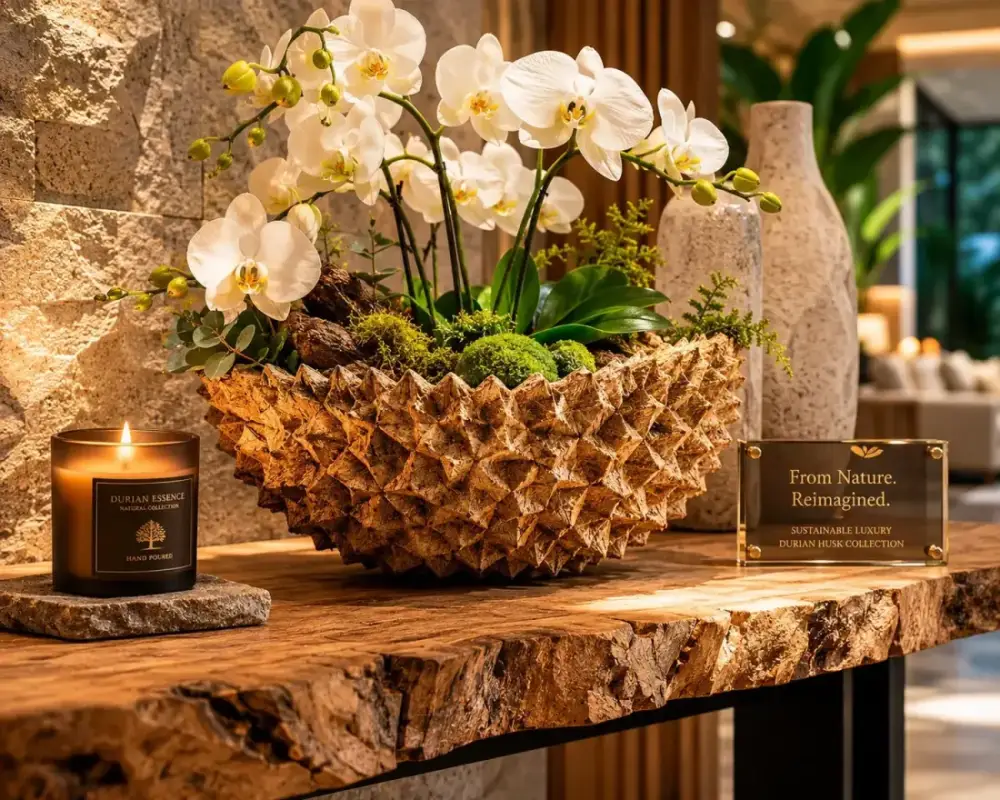
Practical current state: Not yet commercially available as a consumer product. Research-stage material with promising properties. Some artisan producers in Malaysia have made small-batch items (decorative trays, simple packaging) from durian husk fibre as demonstration products.
The broader potential: At the scale of Malaysian durian production, a viable fibre extraction industry would represent a significant waste-to-resource conversion. The main barrier is establishing consistent feedstock supply and processing infrastructure near production regions — durian orchards are often in areas without nearby industrial processing capacity.
Practical Takeaway
The most practical applications for household use:
- Composting: Chop husks, add to compost pile with carbon material. 6–12 weeks to usable compost.
- Hand deodorizing: Use fresh inner husk under running water directly — immediately after eating durian.
- Refrigerator deodorizing: Place fresh inner husk piece in the fridge for 24 hours after a durian storage incident.
For farm-scale operations:
- Biochar production: Requires a basic pyrolysis kiln. The carbon soil amendment has long-lasting value for orchard soil health.
- Large-scale composting: Husk windrows composted over 3–6 months become premium organic fertiliser.
Common Questions
Durian husk has high cellulose and mineral content, including significant potassium (K₂O ~25–35% of ash), calcium, and magnesium. As it breaks down, these minerals become plant-available. The high potassium content makes durian husk compost particularly suitable for fruiting plants, which have high potassium demands.
The spines can puncture skin. Use thick gloves when handling whole husks for composting or processing. The inner flesh-facing surface (after opening) is soft and safe to handle bare-handed. Avoid contact with eyes after handling inner husk with tannin content.
In tropical conditions (high temperature, humidity), whole durian husks decompose in 4–8 weeks in open outdoor conditions. Chopped husks decompose significantly faster. In sealed landfill conditions without adequate oxygen and moisture, decomposition is much slower.
Yes. Chopped durian husk (3–5cm pieces) makes a practical mulch layer for fruit tree base circles. It suppresses weeds, retains soil moisture, and contributes nutrients as it decomposes. The spines reduce (but don't eliminate) rodent and pest activity near tree bases. Replace annually as it breaks down.
Potassium in wood/husk ash is water-soluble and immediately plant-available — unlike the potassium in raw organic matter, which must first be released through decomposition. Durian husk ash applied to soil and watered in delivers potassium rapidly. Use sparingly — ash is alkaline and excess application can raise soil pH significantly, which is problematic for acid-preferring plants.
Want to try fresh durian from our farm? We grow it at our own Bukit Serampang orchard in Tangkak, Johor, and sell it at our Melaka Mall stall. Stock varies daily — WhatsApp to confirm availability before you visit.
Ask About Today's Fruit