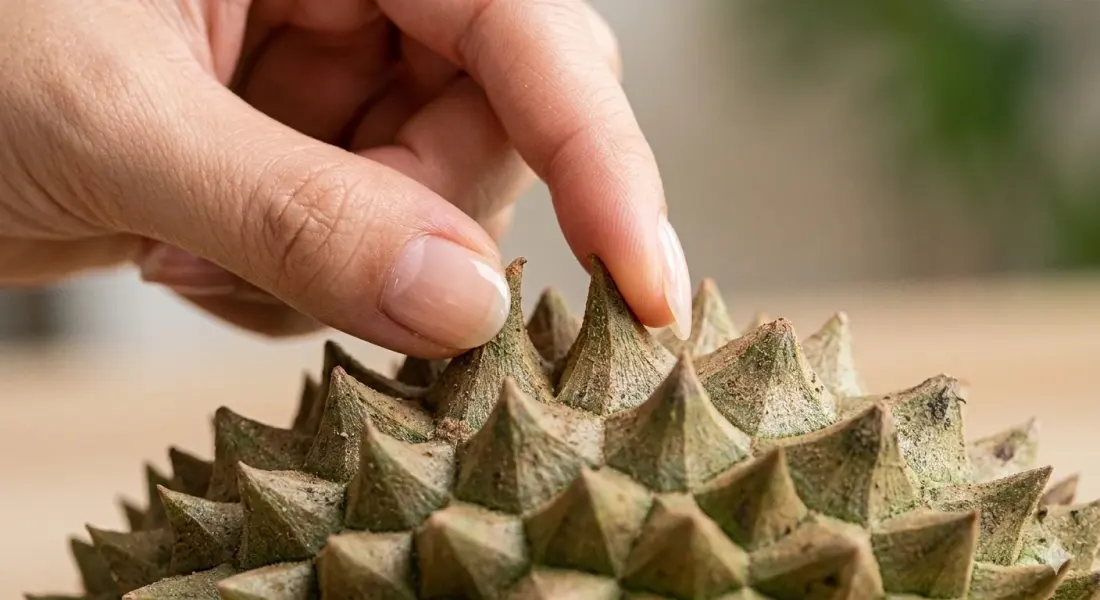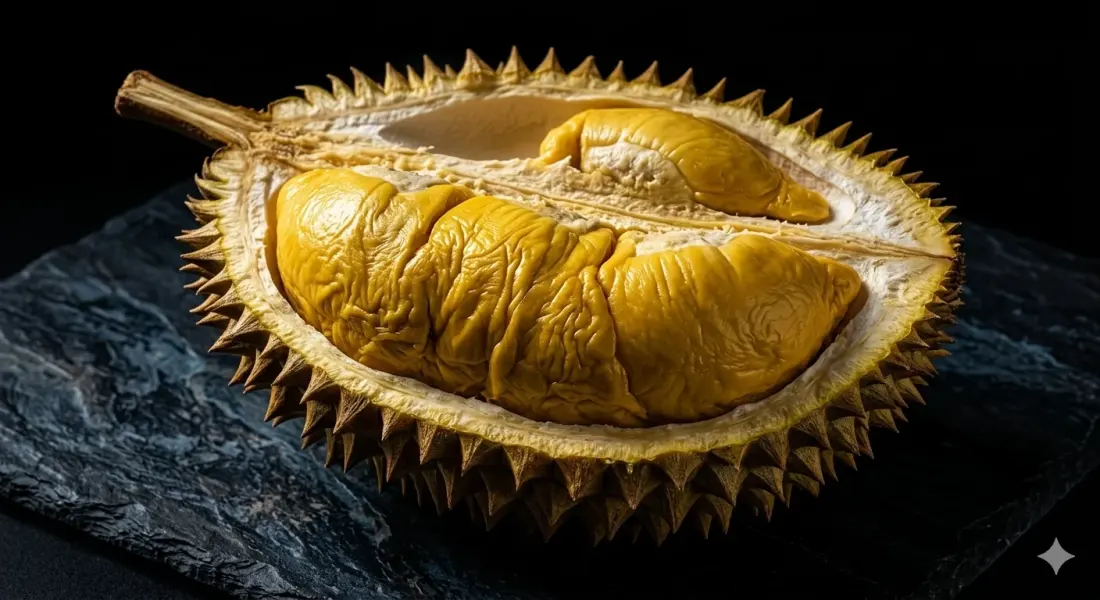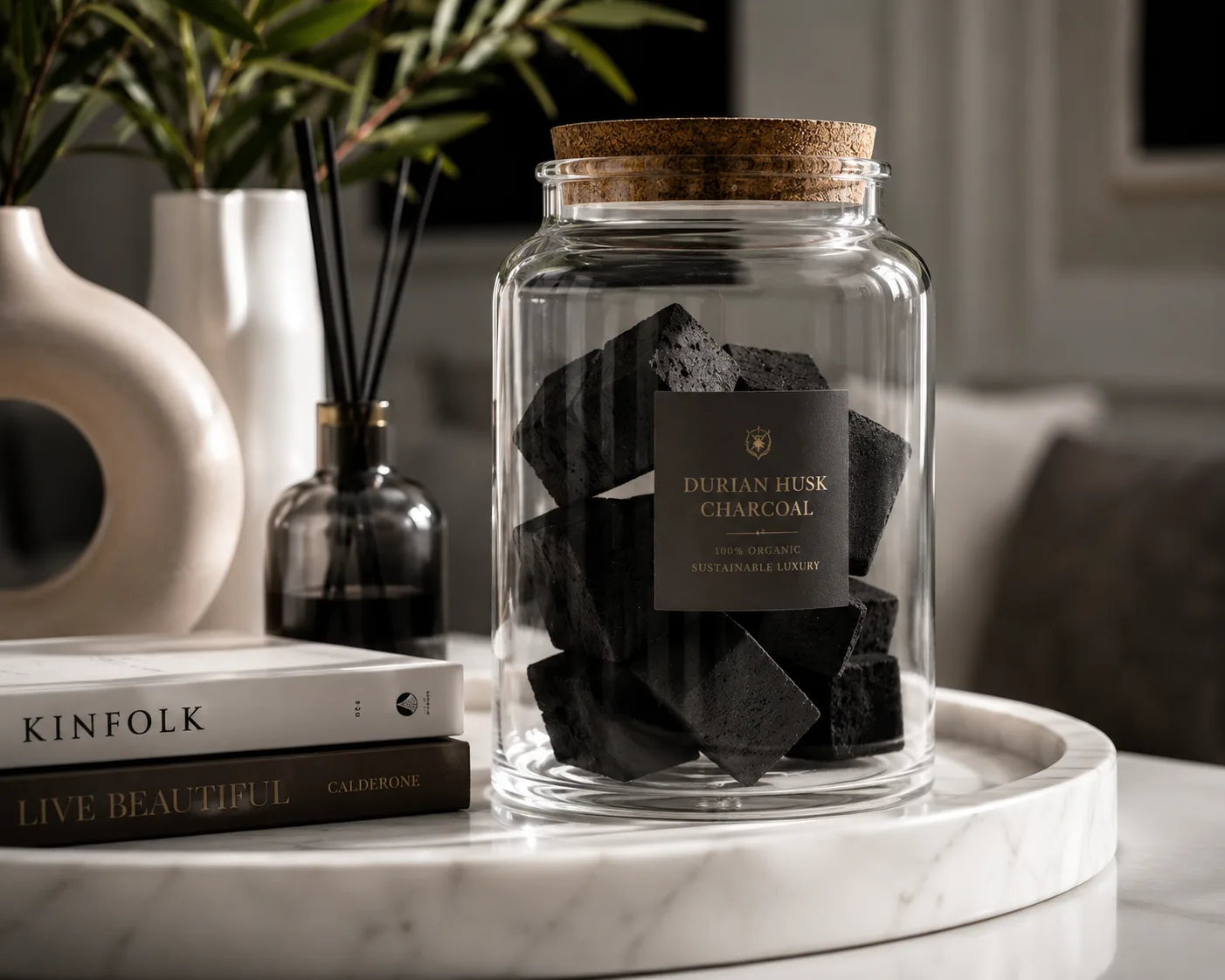
Most people throw away the husk without a second thought. It goes into the bin, or onto a pile at the side of the road, and within 48 hours it smells exactly as bad as you'd expect from decomposing durian. Understandable. But the husk is actually a reasonably good source of biochar if you treat it right — and biochar made from durian husk can pull odours out of a fridge better than baking soda.
This article explains the science behind why it works, how to make it at home, and what you can realistically use it for.
Why Durian Husk Charcoal Works
Durian husk is what materials scientists call a lignocellulosic biomass — it contains cellulose, hemicellulose, and lignin in a fibrous matrix. When you heat this material in a low-oxygen environment (pyrolysis), the organic compounds break down and you're left with a carbon-rich structure full of microscopic pores.
Those pores are what make charcoal useful as an odour absorber. Research on activated durian husk carbon has measured surface areas of 300–800 m²/g, which is within the range of commercial activated carbon products. To put that in perspective: a gram of well-activated durian husk charcoal could theoretically cover an area equivalent to several tennis courts. That enormous internal surface area is what traps gas molecules — including the volatile compounds responsible for odours.
The DIY version you make at home won't reach 800 m²/g. Proper chemical activation (using KOH or ZnCl₂ at high temperatures) or steam activation at 700–900°C produces the most porous structure. A simple backyard burn produces biochar in the 300–400 m²/g range — still useful, and still free.
The Simple Diy Method
What you need:
- Dried durian husk (see below)
- A metal container with a tight-fitting lid (an old paint tin or biscuit tin works)
- A nail or drill to make a small vent hole (3–5mm diameter)
- Outdoor space — away from anything flammable
Step 1: Dry the husk thoroughly Fresh durian husk contains a lot of moisture. Spread the husks out under direct sun for 2–3 days until they feel light and the spikes are brittle. If it rains, start over. Wet husk will not pyrolyze properly — it steams instead of charring, and you get a grey, crumbly mess rather than proper biochar.
Step 2: Break into pieces Cut or break the husk into pieces that fit inside your container. Smaller pieces (roughly fist-sized) allow more even heat distribution.
Step 3: Pack into the container Fill the tin with husk pieces, and put the lid on firmly. The small vent hole is important: it allows gases to escape during heating (which prevents pressure buildup and keeps the burn going) while limiting oxygen enough to prevent full combustion into ash.
Step 4: Apply heat Place the sealed tin on a fire or gas burner outdoors. You'll see smoke coming from the vent hole — this is the volatile gases escaping. Keep the heat steady. The process takes 45–90 minutes depending on husk volume.
Temperature matters. The ideal range for effective biochar is 300–400°C internal temperature. At this range, most of the volatile organic compounds have been driven off, leaving a stable porous carbon structure. Below 250°C, you get incompletely charred material that doesn't adsorb well. Above 500°C without proper activation, the pores can collapse and you lose surface area.
You don't need a thermometer for the basic version. A rough guide: when the smoke from the vent hole starts to thin out and turns from white/grey to nearly colorless, the process is close to complete.
Step 5: Let it cool completely inside the tin Do not open the tin while it's still hot. If oxygen enters while the charcoal is hot, it will ignite and burn to ash — wasting everything. Leave the sealed tin to cool for 2–3 hours, or overnight.
Step 6: Inspect and store Open the tin carefully. Good biochar is black, lightweight, and holds its shape. It should not be grey (incomplete pyrolysis) or powdery white (burned to ash). Store dry in an airtight bag until use.
Safety — Non-negotiable
Carbon monoxide is produced during pyrolysis. This is odourless and will accumulate in enclosed spaces.
- Always burn outdoors, away from buildings and people
- Never do this inside a shed, garage, carport, or kitchen
- Keep children and pets away from the burning area
- Have water nearby in case the tin overheats and the seal fails
This is not a project for indoors or balconies with poor ventilation.
What To Use It For
Fridge odour absorber Place 50–100g of the finished biochar in a small bowl or mesh bag and leave it in the fridge, uncovered. It pulls volatile compounds (the source of "fridge smell") into its pore structure. Works better than baking soda because the surface area is far greater. Replace or reactivate every 6–12 months.
Shoe deodorizer Pack loose charcoal into small cotton bags (a clean sock works) and leave inside shoes overnight. Effective against the isovaleric acid that causes foot odour. Lasts 2–3 months before needing reactivation.
Soil amendment Durian husk biochar improves sandy tropical soils by increasing water-holding capacity and cation exchange capacity (CEC) — meaning it helps soil hold nutrients rather than letting them leach away in rain. Work it into the top 15–20cm at roughly 1–5% by volume. This also sequesters carbon, though that benefit is modest at home-garden scale.
Car interior A small mesh bag of charcoal under a car seat absorbs that damp, musty smell — particularly useful in Malaysian humidity.
Reactivating Spent Charcoal
Once the pores are saturated, the charcoal stops working. You can extend its life by sun-drying for 2–3 days — heat drives the trapped volatile compounds back out, reopening the pores. This works for 2–3 reactivation cycles before the charcoal starts to break down structurally. After that, it's still good for the garden.
Cost Comparison
Commercial activated carbon: roughly RM 15–30/kg DIY durian husk biochar: near zero, assuming you already ate the durian
The performance gap is real — commercial activated carbon typically has higher surface area and more consistent pore sizing. But for household odour control (fridge, shoes, car), DIY biochar is more than sufficient.
Practical Takeaway
Durian husk is a genuinely useful material that most people discard. The science behind it is solid — lignocellulosic biomass converts efficiently to carbon-rich biochar through pyrolysis, and the resulting material has real adsorptive capacity. The DIY method described here won't produce laboratory-grade activated carbon, but it will produce effective, free odour absorbers for everyday use.
The main discipline required is patience: dry the husk properly, control the oxygen during burning, and let it cool before opening. Get those three things right and you'll produce something useful out of what would otherwise be in a bin.
Common Questions
Technically possible at 300–350°C, but not recommended. Pyrolysis produces combustible gases. A conventional kitchen oven is not designed to handle these safely, and indoor use poses serious carbon monoxide risk. Stick to outdoor methods.
Yes — once the husk has been pyrolyzed, the volatile sulfur compounds (the source of the durian smell) are destroyed in the process. The finished charcoal does not smell like durian. It has a mild smoky odour when fresh, which fades quickly.
You'll notice improvement within 24 hours. Full effect typically by 48–72 hours as the pores begin trapping volatile compounds. The effect is gradual, not instant.
Yes. Coconut shell charcoal, in particular, is one of the best natural biochar materials and is widely available. The durian husk method is specifically interesting because it converts a problematic waste material into something useful.
Grey material means incomplete pyrolysis — the husk wasn't hot enough or the process was cut short. You can try reheating in the tin for another 20–30 minutes, or use the grey material in the garden anyway. It won't be effective as an odour absorber.
Yes. Biochar is chemically stable and non-toxic. It improves soil structure and nutrient retention. Mix into soil rather than leaving it on the surface, as exposed charcoal can blow away.
The fridge will start smelling again, or the shoes won't be fresh. There's no visible sign on the charcoal itself — it's the odour performance that tells you.
Want to try fresh durian from our farm? We grow it at our own Bukit Serampang orchard in Tangkak, Johor, and sell it at our Melaka Mall stall. Stock varies daily — WhatsApp to confirm availability before you visit.
Ask About Today's Fruit