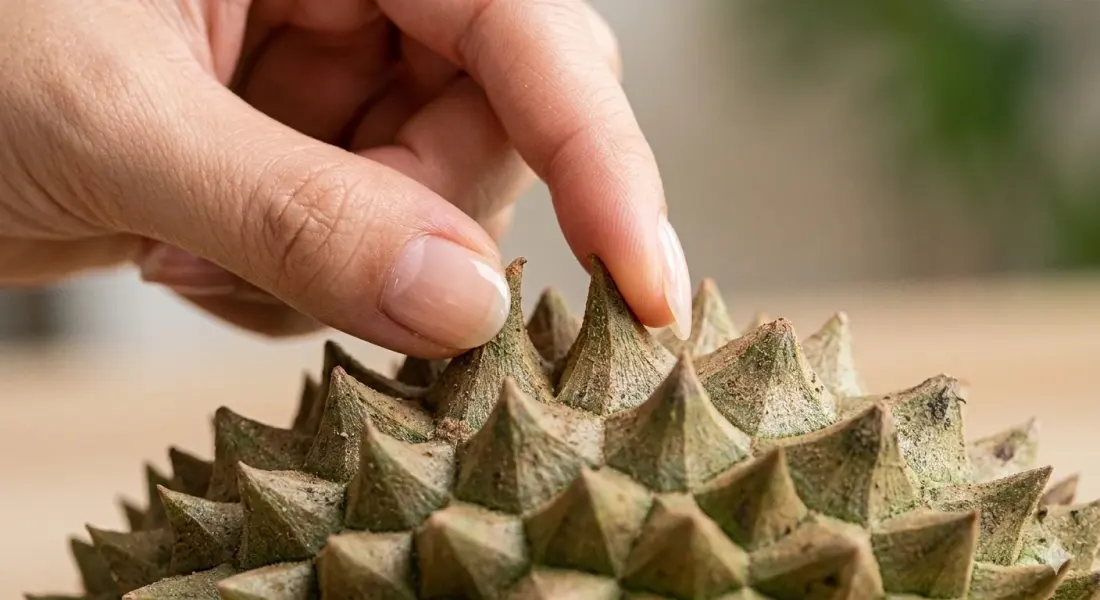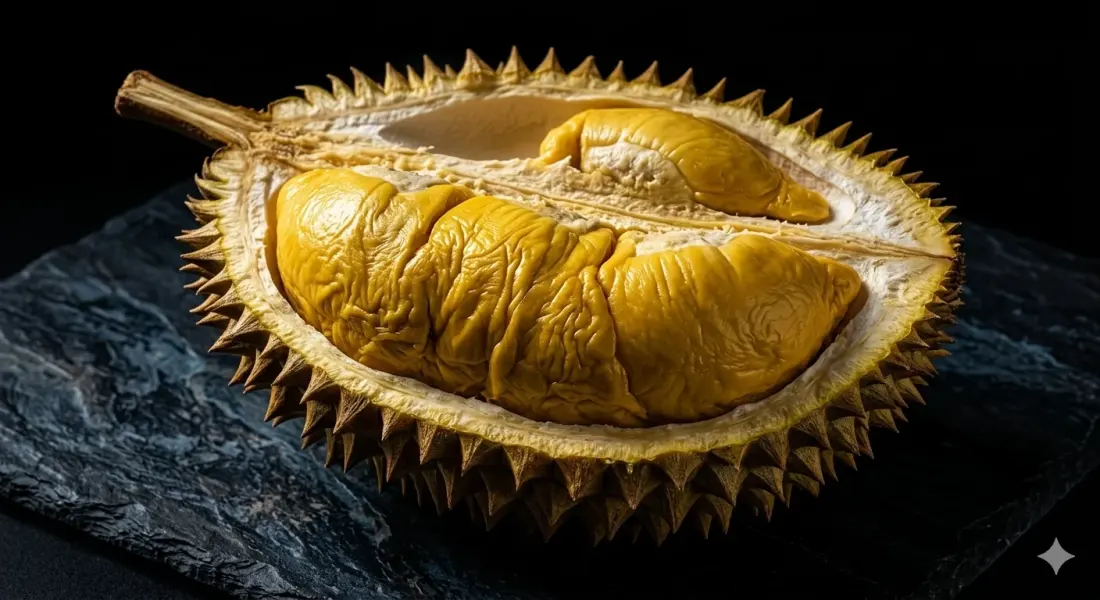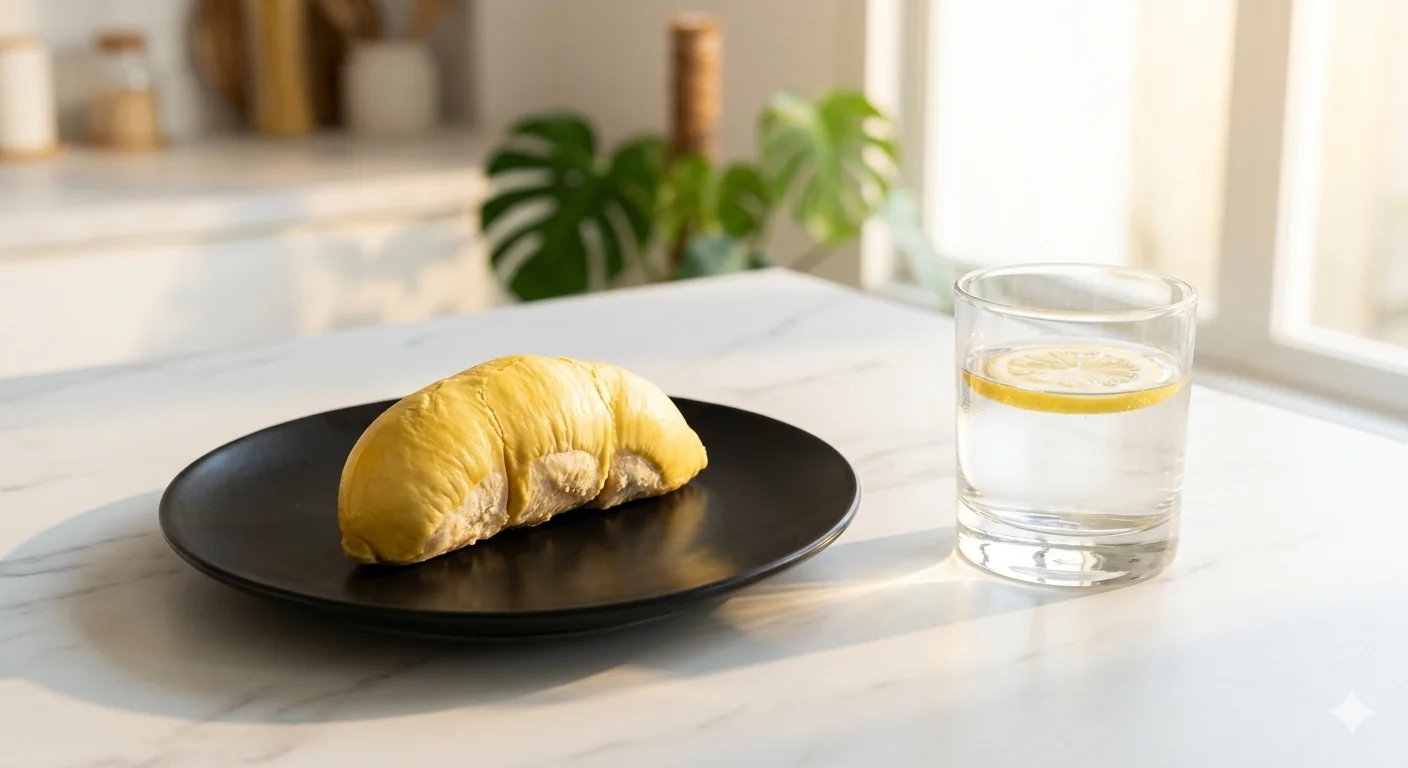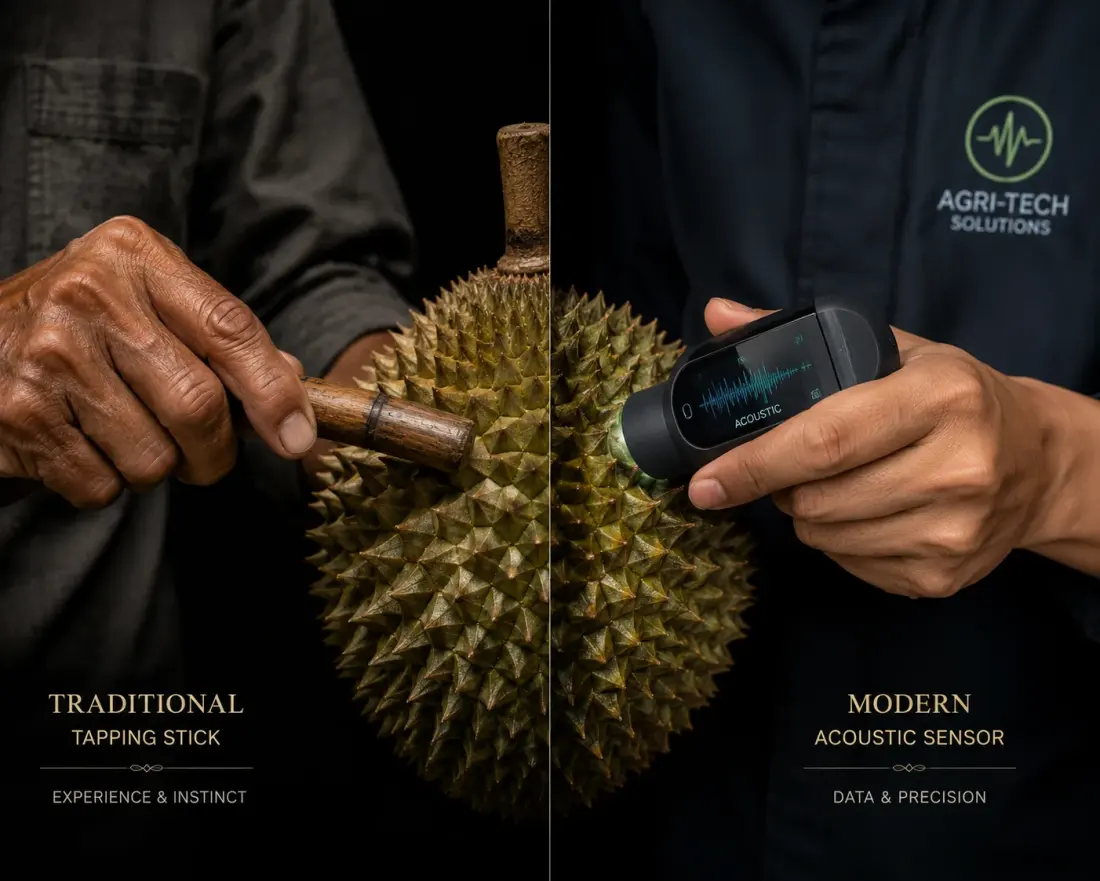
If you've ever watched an experienced durian farmer tap a fruit with a knuckle or a small stick, listen for a fraction of a second, and pronounce it ready or not — you've witnessed a skill that takes years to develop and cannot easily be transferred. The acoustic resonance of a ripening durian changes in ways a trained ear can read, but that the farmer can't fully explain or quantify.
This is a real problem for the industry. Skilled tappers are a limited resource. Thirty to forty percent of durian sold at retail markets is either under-ripe (dense, not sweet, disappointing) or over-ripe (fermented, returned). Not all of this is tapping failure — logistics and shelf time play roles — but maturity assessment at harvest and packing stages is a significant contributor.
Digital maturity grading tools are trying to solve this. Three different technologies are now in field use or advanced development, each approaching the problem differently. Here's what they are, what they measure, and where the accuracy actually stands.
Technology 1: Nir Spectroscopy
Near-Infrared spectroscopy is the most mature of the three technologies for this application. A handheld NIR device emits light in wavelengths from roughly 800–2500 nanometres and measures how the fruit tissue absorbs and reflects it. Different molecular bonds — sugars, water, dry matter, fats — absorb at characteristic wavelengths. The device's software translates the reflectance spectrum into predicted values for internal properties: Brix (sugar content), dry matter content, and seed-to-flesh ratio.
For durian, research trials show NIR can predict Brix within ±1–2° — meaning if the actual internal sugar content is 28 Brix, the device predicts somewhere between 26 and 30. This is commercially viable for quality sorting. It won't tell you the exact sweetness of every fruit, but it will reliably separate low-Brix fruit from high-Brix fruit in a packing line.
Device cost: RM 3,000–15,000 for handheld NIR units. Higher-end units are faster, more accurate, and have better calibration databases for tropical fruits. Some Malaysian exporters are already using NIR for China-bound shipments to meet both maturity requirements and MRL (maximum residue level) screening workflows.
Technology 2: Acoustic Resonance Devices
This is the digital version of the tapping technique — the idea being to replicate and quantify what the experienced farmer's ear is doing when they knock on a fruit.
An acoustic resonance device delivers a controlled mechanical tap to the fruit surface and records the resulting vibration with a sensitive microphone or piezoelectric sensor. The vibration signal — its frequency, damping rate, and resonance pattern — is analyzed by software. Ripe durian has different acoustic properties than unripe durian: the flesh softens, the air pockets between flesh segments develop differently, and the overall stiffness of the fruit changes.
Controlled trial accuracy: comparable to an experienced farmer's tapping judgment under consistent conditions. Field accuracy is more variable — fruit position, surface irregularities, ambient noise, and the skill of the person holding the device all affect results. The device doesn't require years of ear training, but it does require a consistent application technique.
These devices are less commercially widespread than NIR units currently, but several products are available in Southeast Asian agricultural markets.
Technology 3: Computer Vision For Visual Indicators
The third approach doesn't touch the fruit at all — it analyzes photographs.
Experienced farmers read several visual cues for ripeness: skin colour change (Musang King shifts from bright green to an olive-yellow tinge at the base as it approaches maturity), spine separation (the gaps between spines widen slightly as flesh softens), and stem condition (the steam dries and cracks when the fruit is naturally ripe).
Computer vision systems trained on large databases of durian images can detect these changes. The accuracy for this visual approach is 75–85% for ripeness prediction — lower than NIR for internal property measurement, but useful when physical scanning isn't possible (for trees before harvest, or in retail settings where NIR devices aren't available).
Why This Matters: The Under-ripe And Over-ripe Problem
The commercial problem being solved is real and measurable. When 30–40% of retail durian is at the wrong maturity stage, consumer satisfaction suffers, return rates rise, and price premiums become unsustainable.
Under-ripe fruit is the more common failure at retail. It happens because the industry pressure is to harvest early (reduces collection risk, extends shelf life, easier logistics) even at the cost of eating quality. NIR and acoustic devices applied at the packing stage could flag under-ripe fruit before it ships, giving the packer actionable data rather than a farmer's estimate.
Over-ripe fruit is the failure at the other end — fruit that was held too long after natural drop, or that ripened faster than expected in transit. This is harder to solve with device scanning alone, since it involves time-temperature management through the supply chain.
Where These Tools Are Actually Deployed
Commercial deployment is happening, but unevenly. Malaysian durian exporters targeting China have the strongest incentive to adopt NIR — the combination of maturity compliance and MRL screening creates a documented paper trail that export logistics require.
At retail and wet market level, digital grading tools are not yet present at meaningful scale. Most purchases still rely on the seller's tapping ability or verbal assurance. The price differential for certified-ripe fruit at export level hasn't yet translated to a consumer-level grading standard at local retail.
The likely near-term development is integration at packing house level: a sorting conveyor with built-in NIR scanner, acoustic sensor, and weight measurement, outputting an automated grade for each fruit at packing line speed.
Practical Takeaway
For export-oriented durian operations, NIR is the most proven and commercially available tool right now. The RM 3,000–15,000 device cost is recoverable if it meaningfully reduces returns from export customers.
For farm-level use, acoustic resonance devices offer a way to institutionalize tapping skill without requiring years of individual training — useful for operations that can't rely on one or two highly skilled individuals.
For retail-level consumer confidence, the gap between current technology deployment and widespread use remains large. Buying durian at a pasar malam in 2025 still depends largely on the seller's judgment and reputation.
Common Questions
Similar technology. NIR is used for fruit quality assessment across many species. Durian-specific calibration databases are still being developed — the technology works but accuracy improves as more durian samples are added to training datasets.
Consumer-grade NIR devices exist (Tellspec, SCiO, etc.) but their accuracy for durian is lower than research-grade or commercial units. At RM 3,000–15,000 for reliable units, it's not a typical consumer purchase.
Visual AI (computer vision for skin colour, spine separation, stem condition) runs at 75–85% accuracy for ripeness prediction. NIR predicts internal Brix within ±1–2° in research trials. For internal property measurement, NIR is significantly more accurate.
Some applications exist as smartphone apps using the phone microphone — lower accuracy. Dedicated acoustic resonance devices use controlled mechanical tapping mechanisms and precision sensors — significantly more accurate than a phone microphone picking up ambient tapping.
Not immediately. The devices improve consistency and reduce training time, but experienced assessment still outperforms current devices in field conditions where multiple factors — fruit position, skin variation, unusual maturity patterns — require judgment that device algorithms don't yet handle well.
Multiple causes: pressure to harvest early to reduce field losses, inconsistent tapping skill across the supply chain, and time-temperature failures in logistics that accelerate or stall ripening post-harvest.
The integration of weight, NIR, and acoustic sensors on a sorting conveyor is technically feasible and in development. Packing house deployment at commercial scale is the most likely next step for these technologies before consumer-level adoption.
Brix is a measure of sugar content — degrees Brix (°Bx). For Musang King, well-ripened flesh typically runs 37–48°Bx. Monthong tends to be lower, in the 20–28°Bx range. NIR can measure this non-destructively without cutting the fruit.
Want to try fresh durian from our farm? We grow it at our own Bukit Serampang orchard in Tangkak, Johor, and sell it at our Melaka Mall stall. Stock varies daily — WhatsApp to confirm availability before you visit.
Ask About Today's Fruit